8618566785362 8618566785362 8618566785362 phoenix08@bbamachine.com
- All
- Product Name
- Product Keyword
- Product Model
- Product Summary
- Product Description
- Multi Field Search

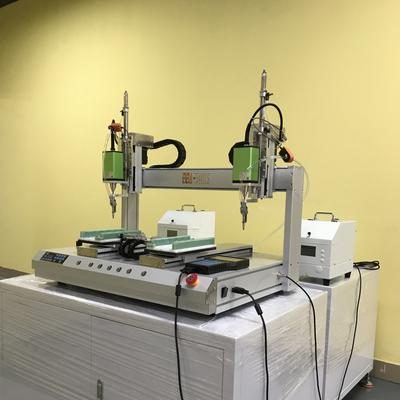
Product Name Applicable industries Servo Screwdriver Robot LED Lighting Industry Adoption of Screw Locking Robots in Southeast AsiaAs Southeast Asia solidifies its position as a global manufacturing powerhouse, regional manufacturers are rapidly embracing automation technologies to maintain competitiveness. Among the transformative innovations gaining significant traction are screw locking robots – sophisticated systems revolutionizing assembly line efficiency and precision across multiple sectors.Driving Forces Behind AdoptionThe region's manufacturing expansion, particularly in electronics, automotive components, and consumer goods, creates intense pressure for speed and consistency. Traditional manual screw driving struggles with challenges like operator fatigue, inconsistent torque application, and high defect rates – issues magnified by the region's tightening labor market. Meanwhile, evolving international quality standards demand unprecedented levels of product reliability. These converging factors make robotic screw locking not merely advantageous but increasingly essential.Operational Advantages Transforming ProductionScrew locking robots deliver transformative benefits that directly address regional manufacturing pain points:Enhanced Precision: Equipped with advanced torque sensors, robots consistently apply exact fastening specifications, eliminating under/over-tightening errors that lead to product failures or recallsDramatically Accelerated Cycle Times: Automated systems operate continuously at optimal speeds, achieving outputs up to 300% faster than manual processes while maintaining zero deviationLabor Reallocation & Cost Reduction: Automating repetitive screw driving tasks allows skilled workers to focus on value-added processes while reducing per-unit labor costs by 15-25%Comprehensive Quality Tracking: Built-in data logging documents every fastener applied, creating immutable quality records essential for compliance audits like IATF 16949Ergonomic Improvements: Removing workers from repetitive motion tasks decreases musculoskeletal injuries, boosting overall operational morale and retentionSector-Specific ImplementationThe versatility of modern screw locking systems enables broad industry adoption:Electronics & Semiconductors: Crucial for micro-fastening in smartphone, circuit board, and hard drive assembly where microscopic tolerances are non-negotiableAutomotive Components
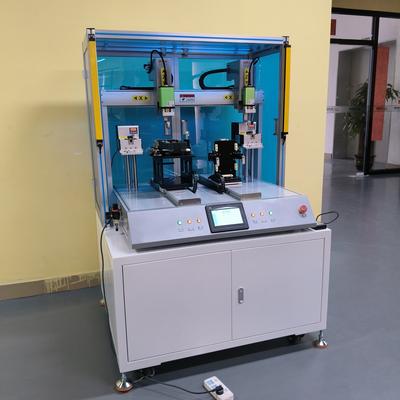
Product Name Applicable industries Desktop Screwdriver Robot Power Tool Assembly Lines In the rapidly evolving world of electronics manufacturing, precision and efficiency are paramount. As devices shrink in size while growing in complexity, traditional assembly methods face unprecedented challenges. This is where compact multi-axis tightening systems emerge as game-changers, revolutionizing how electronic components are secured during production. The Precision Imperative in Electronics Assembly Modern electronics demand microscopic accuracy. Circuit boards with high-density components, delicate connectors, and sensitive microchips require controlled, repeatable fastening. Under-tightening risks connection failures and vibration damage, while over-tightening can crack PCBs or deform housings. Conventional single-axis tools struggle to maintain consistent torque across multiple points, particularly in confined spaces where smartphones, wearables, and IoT devices leave minimal room for error. Space-Saving Engineering Marvels Compact multi-axis systems overcome spatial constraints by integrating multiple independently controlled tightening spindles into remarkably slim footprints. Unlike bulky traditional setups requiring separate tools for each fastener, these unified units perform simultaneous operations—fitting seamlessly into automated lines where real estate is precious. Their modular architecture allows tailored configurations, with 2 to 8+ spindles arranged linearly, radially, or in custom patterns to match assembly layouts perfectly. Accelerating Production with Synchronized Performance Time is critical in high-volume electronics manufacturing. Multi-axis systems dramatically reduce cycle times by executing parallel fastening operations. While a single-axis tool might require 30 seconds to secure six screws sequentially, a multi-axis equivalent completes all six simultaneously in under five seconds—slashing process time by over 80%. This synchronization eliminates bottlenecks in PCB mounting, display installations, heat-sink attachments, and battery pack assemblies where multiple connections must be secured concurrently. Intelligent Control for Flawless Results Smart torque management is where these systems truly excel. Each spindle features independent servo control with real-time monitoring, applying precise force profiles tailored for M1.6 micro-screws or fragile composite materials. Advanced systems incorporate angle monitoring and yield-point detection to prevent cross-threading, while automatic feed systems ensure continuous operation. Crucially, integrated data logging documents every fastener—tracking torque curves, sequence compliance, and quality metrics for full traceability. Implementing Flexible Solutions Modern assembly lines thrive on adaptability. Compact multi-axis systems support quick-change tooling and programmable recipes, enabling seamless transitions between product variants. For automated settings, their compact dimensions allow smooth integration with SCARA robots or Cartesian positioners. In lean manufacturing layouts, they enable single-station multi-point fastening for LCD module installations or EMI-shield attachments, replacing multiple workstations and reducing floor space requirements by up to 40%. As electronics assembly continues its trajectory toward miniaturization, compact multi-axis tightening systems solve critical challenges: enabling micron-level precision, accelerating throughput, ensuring data integrity, and maximizing production density. These sophisticated solutions represent not merely incremental improvements but fundamental advancements that will power next-generation manufacturing capabilities for increasingly complex electronic devices.
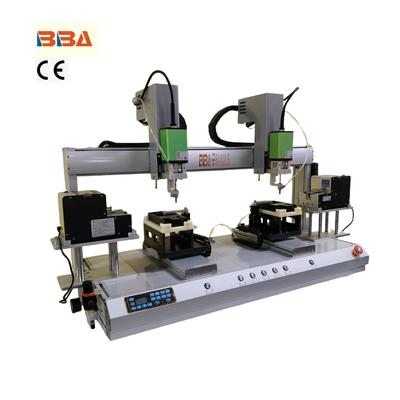
Unlocking Global Potential: Export Opportunities for Robotic Screw Driving Machines The industrial automation revolution continues accelerating worldwide, with robotic screw driving machines emerging as indispensable tools in modern manufacturing. As factories globally strive for greater precision, efficiency, and cost-effectiveness, demand for these sophisticated automation solutions has expanded dramatically, creating unprecedented export opportunities. Driving Forces Behind Global Demand Robotic screwdriving systems deliver transformative advantages in assembly processes: reducing production errors by up to 98%, cutting labor costs by 30-50%, and enabling 24/7 operation with consistent quality. These benefits resonate powerfully in regions like Southeast Asia, where electronics manufacturing growth fuels demand for high-precision automation. Meanwhile, established markets in Europe and North America increasingly adopt these robots to reshore production and comply with stringent quality standards. Emerging economies in Eastern Europe and Latin America are heavily investing in automation infrastructure, viewing robotic assembly as essential for future competitiveness. Strategic Market Expansion Considerations Successfully penetrating international markets requires strategic adaptation according to regional needs: Regional Specialization: Southeast Asia's electronics sector needs compact, high-speed machines, while automotive manufacturers in Germany demand robust systems with maximum torque precision. Compliance Integration: European CE safety standards must be implemented alongside region-specific certifications. UL certification remains critical for North American entry. Service Infrastructure: Establishing local technical support hubs reduces downtime concerns within markets and builds long-term trust in regions like India and Mexico. Technological Evolution Expanding Horizons Next-generation robotic screwdrivers feature vision-guided positioning, AI-powered error detection, and IoT connectivity, enabling remote performance monitoring. These advancements attract high-value industries like aerospace and medical device manufacturing globally. The emergence of collaborative models (cobots) allows seamless integration into existing workflows, particularly appealing to small and medium enterprises in price-sensitive emerging markets. Flexible deployment options now permit rapid reconfiguration for varying screw types and sizes—vital for manufacturers handling diverse export orders. Capitalizing on Global Macro Trends Three powerful trends amplify export opportunities: Supply Chain Regionalization drives automation investments as manufacturers relocate facilities closer to consumer markets The Industrial Internet of Things (IIoT) makes remote support feasible, turning service limitations into competitive advantages Labor shortages worldwide accelerate automation adoption even in historically low-cost manufacturing regions Forward-thinking manufacturers are leveraging these trends by developing modular systems tailored to regional voltage regulations and workcell dimensions, with multi-language interfaces to ease global deployment. Future-Proofing Export Strategies As trade barriers continue evolving, successful exporters preemptively implement design modifications for tariff optimization. Partnerships with industry consortia provide essential market intelligence, helping manufacturers anticipate sector-specific surges like renewable energy equipment assembly in emerging economies. Progressive companies are exploring subscription-based models to overcome capital investment barriers in developing markets. Customizable turnkey cells represent profitable middle-ground solutions. The global appetite for robotic automation shows no signs of slowing. By combining adaptable technology with market-specific strategies, manufacturers of robotic screw driving solutions stand positioned to achieve significant international growth as factory automation becomes the universal language of industrial progress. Product Name Applicable industries Automatic Screw Feeder Medical Device Manufacturing
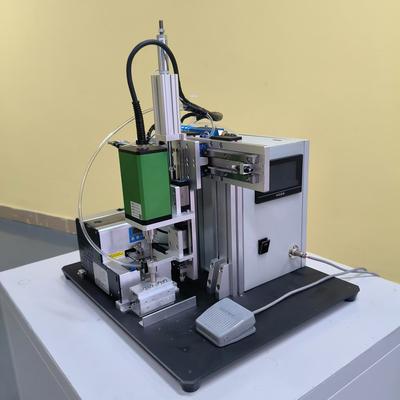
Mobile Phone Production with Precision Fastening Modern smartphone manufacturing requires microscopic accuracy at scale. Every camera module, circuit board, and enclosure demands consistent fastening tolerances under 0.1mm – thinner than a human hair. Precision fastening solutions enable this flawless assembly, ensuring durability and performance in devices handling over 100 billion operations over their lifespan. The Microscopic Battleground Today's smartphones contain up to 200 fasteners securing fragile components like flexible printed circuits and wafer-thin displays. Marginless screens shatter under minimal pressure variations, demanding dynamic torque control during installation. Secure solutions for multi-material bonding must overcome thermal expansion differences between aluminium frames and ceramic substrates. Each fastener must hold position against drops measuring 200,000 shaking events in lifecycle testing. Intelligent Fastening Systems Advanced automated drivers now incorporate force-feedback loops for real-time torque correction monitored by multi-axis sensors. Vision-guided robotics place fasteners into prep-filled holes with positional accuracy within ±5 microns. Predictive maintenance algorithms track thread engagement metrics at 500 data points per second, detecting microscopic wear in tool heads days before deviations occur. Such systems prevent £25,000-per-hour downtime costs during high-volume production runs. Quality at Nano Scale Microscopic gaps caused by uneven fastener distribution accelerate moisture ingress on waterproof devices. Precision solutions eliminate these risks with statistical process control monitoring socket depth variations below 2% across millions of units. Thermal mapping confirms uniform heat spreading from chips through fastener-sealed paths in milliseconds. Devices assembled this way withstand 72-hour salt spray tests while maintaining signal integrity through electromagnetic interference (EMI) thresholds exceeding 60GHz. Future-Proof Assembly As smartphones incorporate foldable displays and modular components, fastening systems are evolving beyond screws. Laser-assisted micro-riveting forms sub-0.3mm joints without surface deformation, while conductive adhesives replace hardware in millimeter wave antenna arrays. Subsequent operations now measure joint integrity through ultrasonic resonance frequency analysis at full production tempo. These innovations extend to recyclable designs where robotic disassembly sequencing preserves reusable components. Precision fastening underpins smartphone reliability in unseen ways. From protecting processor operations during impact to enabling seamless 5G connectivity, these microscopic connections transform conceptual designs into functional masterpieces. Continuous advancements ensure compatibility with developments toward flexible electronics, quantum dot integration, and sustainable manufacturing methodologies redefining mobile technology possibilities. Product Name Applicable industries Screw Fastening Unit Laptop and Tablet Assembly
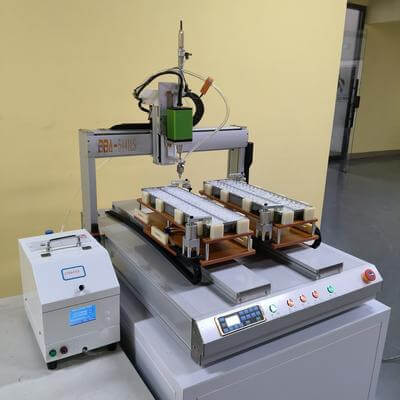
AI-Powered Screw Tightening Robots: Revolutionizing Industrial Assembly Screw fastening remains one of the most fundamental yet critical operations in industrial manufacturing. Traditional automated systems often struggle with complex geometries, material variations, or unexpected obstacles on assembly lines – leading to quality inconsistencies and production bottlenecks. These limitations demand a smarter solution capable of real-time adaptation and precision. Enter AI-powered screw tightening robots – intelligent machines that leverage neural networks and deep learning algorithms to transform assembly processes. Equipped with high-resolution vision sensors and torque feedback mechanisms, these robots dynamically map workpieces in 3D space to identify optimal fastener positions. As they rotate each screw, embedded algorithms process data from pressure and angular sensors at 100ms intervals. This enables real-time calibration: if a screw encounters unexpected resistance, the robot instantly adjusts rotational force to prevent damage, compensating for material inconsistencies or minor misalignments with sub-millimeter accuracy. Unparalleled Precision Meets Adaptive Intelligence The integration of machine learning creates self-improving systems where each tightening operation enhances future performance. Over thousands of cycles, these robots build proprietary datasets that refine torque profiles for specific materials, thread types, and environmental conditions. This capability yields several transformative advantages: Zero Defect Guarantee: Continuous monitoring detects cross-threading, stripped screws, or under-torquing with 99.8% accuracy Lightning-Speed Changeovers: Switch between product variants in under 5 minutes via cloud-configured settings Predictive Maintenance Alerts: Sensors identify worn components up to 200 operating hours before failure Applications Across Industries These autonomous systems excel in complex scenarios mainstream automakers rely on them to install interior components around intricate wiring harnesses without causing damage. In aerospace manufacturing, they ensure perfectly calibrated torque on turbine assemblies where ±0.05 Newton-meters determines safety compliance. Electronics producers utilize machine vision-integrated arms to fasten microscopic screws on circuit boards – operating at scales beyond human dexterity. Their flexibility makes them equally valuable for small-batch production lines frequently retooled for new designs. Future Horizons Ongoing research focuses on multi-robot swarm intelligence – fleets of coordinated units sharing real-time data to manage complex assemblies simultaneously. Emerging digital twin technology creates virtual replicas of physical systems to simulate improvements without interrupting production. With AI processing power doubling every four months, future generations will likely incorporate natural language programming allowing engineers to verbally command assembly alterations during live operations. Industrial automation has entered its cognitive era. AI screw tightening robots represent more than incremental upgrades – they signify a paradigm shift toward self-optimizing manufacturing ecosystems. By eliminating variability in foundational processes, they unlock unprecedented levels of quality assurance and operational agility. As production environments grow increasingly complex, these intelligent systems stand ready to deliver precision that scales with innovation's accelerating pace. Product Name Applicable industries Screw Locking Robot Telecommunication Equipment Assembly

Product Name Applicable industries Servo Screwdriver Robot Medical Device Manufacturing Basic Working Principles of Automatic Screw Assembly Equipment Industrial automation has revolutionized manufacturing processes, with automatic screw assembly equipment serving as a fundamental component in production lines worldwide. These systems accelerate assembly tasks while ensuring consistent quality and reducing labor intensity. Understanding their core mechanics provides valuable insight for engineering teams optimizing production efficiency. Screw Feeding Mechanisms The process initiates with a vibratory bowl feeder or step feeder that orients screws correctly. These systems utilize tuned vibrations to align screws based on weight distribution or geometric features. Optical sensors verify orientation accuracy before screws progress to the shuttle mechanism—typically a pneumatic tube or conveyor belt—that transports them to the tool head. Feeders maintain screw supply continuity, enabling uninterrupted operation even at high cycle speeds. Precision Driving Dynamics At the assembly point, an electric or pneumatic spindle descends to engage the screw. Electric systems employ servomotors with real-time torque monitoring for intelligent tightening control, while pneumatic versions use pressure regulation. Critical functions include: Force feedback to prevent cross-threading Precision depth control protecting sensitive materials Self-correcting alignment compensates for minor positioning variance Automation Control Integration A central PLC coordinates operations through integrated sensors. Vision systems and position transmitters validate component placement prior to screw driving. During operation, sensors continuously monitor critical metrics like screw depth, insertion force, and angular rotation using tension-compression load cells or rotary encoders. This sensory network facilitates immediate fault detection—terminating cycles upon identifying errors such as stripped threads or missing components. Advantages and Applications Compared to manual assembly, automated systems demonstrate significant reliability in electronics, automotive, and aerospace manufacturing. They execute operations with micrometer-level accuracy at sustained speeds of 40-60 assemblies per minute, substantially reducing error rates. Configurations span collaborative robotic arms for variable-path assembly to dedicated machines performing repetitive tasks in confined spaces unsuitable for human workers. These systems integrate advanced technologies including multi-axis coordination, error-proofing algorithms, and IoT-enabled predictive maintenance analytics. Their evolution continues toward modular architectures allowing flexible reconfiguration for changing production demands and mixed-product assembly lines. Conclusion Automatic screw assembly technology transforms manufacturing through sophisticated synchronization of sensor-guided positioning, force-optimized driving, and intelligent control systems. As component miniaturization increases and quality requirements tighten, this equipment evolves with enhanced data analytics capabilities. For lean manufacturing environments aiming for precision, speed, and adaptability, automated screw assembly remains an indispensable engineering solution.

Product Name Applicable industries Smart Screw Driving Machine LED Lighting Industry Exporting Automatic Screw Locking Machines: A Global Overview Automatic screw locking machines have become indispensable assets in modern manufacturing ecosystems worldwide. These precision-engineered systems streamline assembly processes by delivering unmatched speed, accuracy, and repeatability in fastener installation. As industries from automotive to electronics increasingly adopt automated solutions, the global demand for these machines continues its upward trajectory. Driving Forces in International Markets The expansion of automated assembly is accelerating across key regions. Asian manufacturing hubs prioritize machines combining ultra-high speed with minimal footprint to maximize space utilization. European manufacturers demand precision engineering with integrated quality control systems adhering to strict ISO standards. North American industries seek modular platforms that integrate seamlessly into existing Industry 4.0 environments. Emerging economies show particular interest in robust, maintenance-friendly models capable of operating in diverse industrial conditions. Technological Advancements Shaping Exports Cutting-edge innovations are propelling global competitiveness. Modern machines feature smart torque control systems that self-calibrate for different screw types and materials, eliminating manual adjustments. IoT-enabled sensors continuously monitor performance metrics like cycle times and error rates, transmitting real-time diagnostics to maintenance teams. Advanced vision systems now perform automated quality inspections during operation, rejecting defective assemblies at rates exceeding 99.95% accuracy. Flexible robotic integration has become essential, with export models featuring universal interfaces that connect with diverse automation platforms. Sophisticated anti-jamming mechanisms automatically reorient misaligned screws, reducing downtime by up to 50%. Energy-efficient servo-drive technology meanwhile lowers operational costs - a critical advantage in regions with high electricity prices. Navigating Global Export Complexities Successful international distribution requires meticulous attention to regional requirements. Export-compliant designs incorporate universal voltage compatibility (85-265V AC) and standardized safety circuits that meet both CE and UL certifications. Strategic packaging solutions protect sensitive components against humidity and shock during extended ocean shipments. Technical documentation is meticulously localized with multilingual operation manuals, maintenance guides, and safety protocols. Forward-thinking suppliers establish regional technical support centers with native-language technicians, complemented by augmented reality troubleshooting platforms that enable remote guidance. Supply chain diversification has proven crucial for maintaining delivery timelines amidst geopolitical uncertainties, with leading exporters developing multiple manufacturing and logistics pathways. Sustainability as Market Differentiator Environmental considerations increasingly influence procurement decisions globally. Modern screw locking machines feature energy recovery systems that regenerate up to 25% of operational power during deceleration cycles. Lightweight aerospace-grade aluminum construction reduces both material waste and shipping emissions. European manufacturers especially value closed-loop lubrication systems that eliminate oil waste and maintenance downtime. Future Market Evolution Emerging trends point toward hyper-customizable platforms that adapt to changing production needs without hardware modification. Self-optimizing machines that learn from operational data to prevent potential failures will soon become standard. Modular designs allowing field-upgradable components will extend equipment lifecycles to match evolving technical standards. As global manufacturing becomes increasingly interconnected, automatic screw locking technology continues to break new ground. Suppliers who master the balance between technological sophistication, regional adaptation, and sustainable practices lead this dynamic sector. The capacity to deliver precision automation solutions across continents remains pivotal for supporting worldwide industrial advancement.
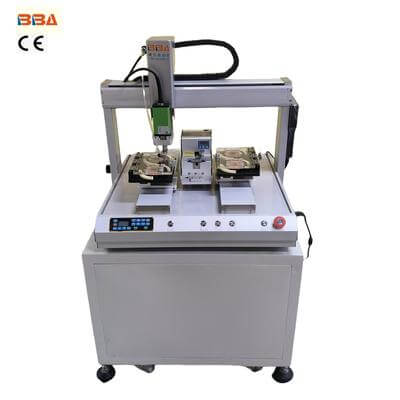
Product Name Applicable industries Smart Screw Driving Machine Drone and UAV Manufacturing Adaptive Motion Profiles: Revolutionizing Complex Assembly Automation Industrial assembly environments face escalating complexity: miniature electronics demand micron-level precision, while heavy machinery assembly requires robust force control amidst unpredictable variables like part tolerance variations or environmental shifts. Traditional fixed-motion trajectories struggle with such dynamics, leading to alignment failures, equipment stress, or costly downtime. This is where adaptive motion profiles transform the automation landscape. Beyond Static Programming: Intelligence in Motion Execution Conventional motion control relies on pre-programmed paths—efficient in stable conditions but rigid when anomalies occur. Adaptive profiles integrate real-time sensor feedback (vision systems, torque sensors, LiDAR) to dynamically adjust trajectories during operation. Imagine a robotic arm inserting a gear shaft: If the target hole is 0.2mm misaligned, force sensors detect resistance AI algorithms recalculate optimal insertion path within milliseconds Motion parameters (acceleration, jerk, path curvature) adapt smoothly to complete the task This continuous loop of sense-adjust-react enables systems to handle variances without reprogramming. Embedded machine learning further refines responses by correlating historical performance data with real-time variables. Technical Advantages for Demanding Applications Adaptive motion delivers tangible operational gains across intricate assembly scenarios: Precision Under Uncertainty: In aerospace component assembly, where thermal expansion alters part dimensions, adaptive profiles maintain micron-level accuracy by compensating for material drift. Collision Avoidance: Autonomous guided vehicles (AGVs) navigating dynamic warehouses use adaptive pathing to recalculate routes instantly when obstacles appear, ensuring zero downtime. Energy Optimization: By minimizing unnecessary acceleration/deceleration cycles during variable-speed processes like CNC machining, adaptive control cuts power consumption by up to 18%. Simultaneously, component wear reduces significantly since mechanisms follow efficient, strain-minimized paths tailored to immediate loads instead of worst-case scenarios. Future Horizons: AI-Driven Autonomy The frontier lies in predictive adaptation. Future systems will leverage digital twins and neural networks to: Anticipate errors using real-time and simulated data convergence Autonomously refine motion algorithms without human intervention Enable self-calibrating production lines transitioning between mixed products This evolution transforms adaptive profiles from reactive tools to cognitive systems—capable of learning assembly nuances, streamlining changeovers, and managing variability as standard procedure. Accelerating Next-Generation Manufacturing As products grow smaller, materials more diverse, and batch sizes narrower, adaptive motion isn’t optional—it’s essential. For industries like medical device manufacturing, battery production, or semiconductor fabrication, it bridges the gap between complex task requirements and cost-effective automation. The flexibility it introduces revolutionizes how machines interact with unpredictable physical realities, making previously unautomateable processes viable. Ultimately, this technology elevates precision, resilience, and intelligence in manufacturing ecosystems, turning assembly challenges into competitive advantages.