8618566785362 8618566785362 8618566785362 phoenix08@bbamachine.com
- All
- Product Name
- Product Keyword
- Product Model
- Product Summary
- Product Description
- Multi Field Search

Views: 0 Author: BBA AUTOMATION Publish Time: 2025-06-20 Origin: BBA AUTOMATION


Screw fastening remains one of the most fundamental yet critical operations in industrial manufacturing. Traditional automated systems often struggle with complex geometries, material variations, or unexpected obstacles on assembly lines – leading to quality inconsistencies and production bottlenecks. These limitations demand a smarter solution capable of real-time adaptation and precision.
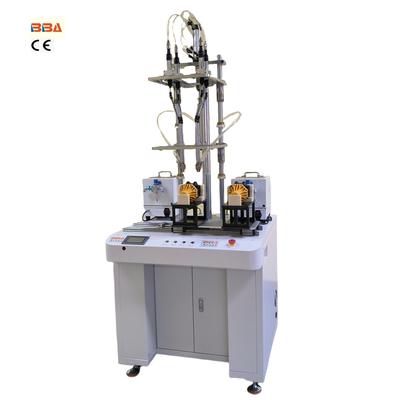
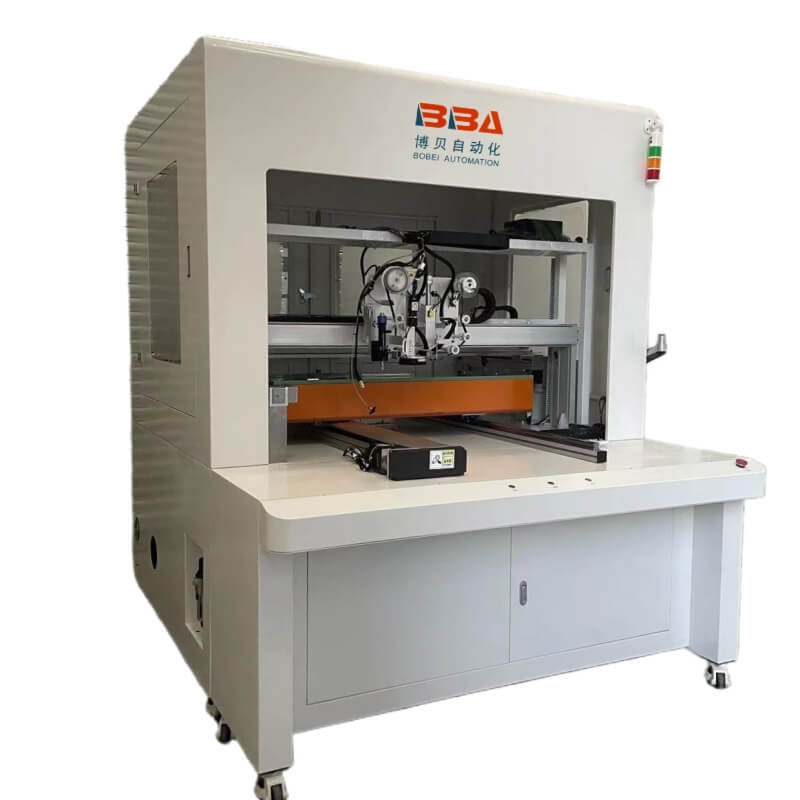
Enter AI-powered screw tightening robots – intelligent machines that leverage neural networks and deep learning algorithms to transform assembly processes. Equipped with high-resolution vision sensors and torque feedback mechanisms, these robots dynamically map workpieces in 3D space to identify optimal fastener positions. As they rotate each screw, embedded algorithms process data from pressure and angular sensors at 100ms intervals. This enables real-time calibration: if a screw encounters unexpected resistance, the robot instantly adjusts rotational force to prevent damage, compensating for material inconsistencies or minor misalignments with sub-millimeter accuracy.
The integration of machine learning creates self-improving systems where each tightening operation enhances future performance. Over thousands of cycles, these robots build proprietary datasets that refine torque profiles for specific materials, thread types, and environmental conditions. This capability yields several transformative advantages:
These autonomous systems excel in complex scenarios mainstream automakers rely on them to install interior components around intricate wiring harnesses without causing damage. In aerospace manufacturing, they ensure perfectly calibrated torque on turbine assemblies where ±0.05 Newton-meters determines safety compliance. Electronics producers utilize machine vision-integrated arms to fasten microscopic screws on circuit boards – operating at scales beyond human dexterity. Their flexibility makes them equally valuable for small-batch production lines frequently retooled for new designs.
Ongoing research focuses on multi-robot swarm intelligence – fleets of coordinated units sharing real-time data to manage complex assemblies simultaneously. Emerging digital twin technology creates virtual replicas of physical systems to simulate improvements without interrupting production. With AI processing power doubling every four months, future generations will likely incorporate natural language programming allowing engineers to verbally command assembly alterations during live operations.
Industrial automation has entered its cognitive era. AI screw tightening robots represent more than incremental upgrades – they signify a paradigm shift toward self-optimizing manufacturing ecosystems. By eliminating variability in foundational processes, they unlock unprecedented levels of quality assurance and operational agility. As production environments grow increasingly complex, these intelligent systems stand ready to deliver precision that scales with innovation's accelerating pace.
| Product Name | Applicable industries |
| Screw Locking Robot | Telecommunication Equipment Assembly |