8618566785362 8618566785362 8618566785362 phoenix08@bbamachine.com
- All
- Product Name
- Product Keyword
- Product Model
- Product Summary
- Product Description
- Multi Field Search

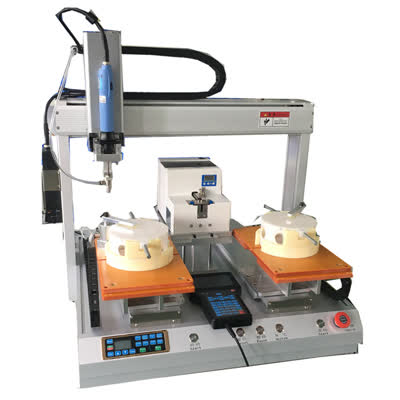
Custom Fixture Design for Multi-Axis Screwing: Precision in Industrial Automation Multi-axis screwing systems have revolutionized assembly lines, enabling simultaneous fastening of multiple points with unmatched speed. Yet their true potential relies on a critical behind-the-scenes component: custom fixturing. Unlike generic holders, tailored fixtures transform these systems from capable tools into precision orchestrators of production. Why Customization is Non-Negotiable Standard fixtures often fail in multi-axis applications due to inconsistent part geometries, tolerance stack-ups, or accessibility constraints. A bespoke design eliminates guesswork by accounting for: Part-Specific Nesting: Contoured interfaces that immobilize irregular shapes without deformation. Kinematic Alignment: Precise angular positioning of screw heads relative to tool paths. Vibration Damping: Material selection (e.g., polymer composites) to absorb harmonics during high-speed driving. Engineering Considerations for Peak Performance Optimized fixture design integrates mechanical intelligence with operational practicality: Zero-Point Clamping: Enables rapid changeovers between product variants without recalibration. Tool Clearance Mapping: 3D simulations prevent collisions in tight multi-tool environments. Force Distribution: Reinforced structures withstand sustained torque without flexing. Ergonomic Accessibility: Facilitates maintenance and part loading/unloading. Quantifiable Impacts on Production Investing in custom fixturing yields measurable returns: 15-30% Cycle Time Reduction: Parallel processing with perfect alignment eliminates tool repositioning. Near-Zero Misdrives: Prevention of cross-threading or stripped screws via rigid part fixation. Tool Life Extension: Reduced side-loading on drivers decreases wear. For example, automotive electronics manufacturers report 98.7% first-pass yield rates after implementing topology-optimized fixtures for PCB screw mounting—a leap from previous 91% benchmarks. The Future-Proofing Advantage Modern designs incorporate scalability features like modular attachments or adjustable locators. This allows repurposing fixtures across product generations and accommodates engineering revisions without full redesigns. In essence, precision multi-axis screwing doesn’t end at selecting robotic drivers—it begins with a fixture engineered as uniquely as the component it holds. By transforming variable workpieces into predictable, repeatable reference points, custom fixtures unlock quality, efficiency, and ROI that off-the-shelf solutions simply cannot match. Product Name Applicable industries CNC Screw Fastener Smartphone Manufacturing
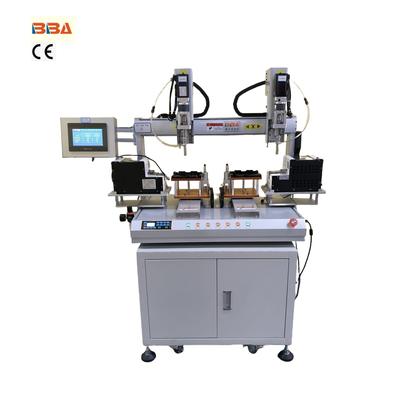
Understanding Automatic Screw Locking Machines Automatic screw locking machines have revolutionized assembly processes across industries. These systems precisely drive screws into components without manual intervention, using feeders to supply fasteners and electric or pneumatic drivers for installation. Their integration into production lines signifies a major advancement in manufacturing efficiency, yet they present unique considerations. Key Advantages Enhanced Productivity: These machines operate continuously at high speeds, performing up to thousands of screw-driving cycles per hour. This significantly accelerates assembly times compared to manual methods, directly boosting output capacity. Unmatched Consistency: Automated systems apply precise torque levels consistently for every screw, minimizing human errors like cross-threading or under-tightening. This ensures product reliability and reduces quality issues downstream. Labor Optimization: By handling repetitive screw-driving tasks, operators are redeployed to value-added activities like quality control or complex assemblies. This reduces fatigue-related errors and lowers long-term labor costs. Traceability and Data: Modern systems record real-time data (torque, angle, cycle time) for each fastener, enabling comprehensive process monitoring and simplifying compliance reporting. Potential Challenges Significant Initial Investment: Purchasing and integrating these machines requires substantial capital, including costs for feeders, controllers, and custom tooling. Smaller operations may find this prohibitive. Reduced Flexibility: Machines configured for specific screw sizes or product designs struggle with rapid design changes. Retooling for new fasteners or geometries can cause downtime and added expenses. Maintenance Demands: Regular upkeep—cleaning feeders, replacing driver bits, and calibrating sensors—is critical. Neglecting maintenance risks jams, inaccuracies, and unplanned production halts. Material Sensitivity: Variations in screw quality (e.g., burrs or coating inconsistencies) may cause feeder blockages. Non-standard parts often require custom engineering solutions. Making the Right Choice Evaluating automatic screw locking systems involves balancing scalability against constraints. High-volume, standardized assemblies gain substantial ROI from speed and precision, while low-mix production might benefit more from semi-automated alternatives. Future-proofing through modular designs and supplier collaboration mitigates obsolescence risks. As technologies like AI-driven vision alignment emerge, these machines continue evolving to address current limitations. Ultimately, when deployed strategically, automatic screw locking machines deliver transformative efficiency. Decision-makers must align implementation with production needs, workflow adaptability, and lifecycle costs to maximize their potential in streamlined manufacturing. Product Name Applicable industries Screw Locking Robot Telecommunication Equipment Assembly
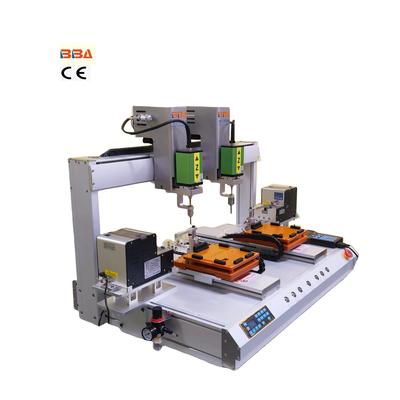
Product Name Applicable industries Screw Fastening Unit Smart Wearables Production Modular Design Options for Robotic Screw Machines The rapid evolution of industrial automation demands flexibility like never before. In fastening applications, robotic screw machines have become indispensable – yet fixed-configuration systems often limit production agility. Modular design philosophies are transforming this landscape by enabling adaptable robotic solutions that evolve alongside manufacturing needs. Why Modularity Matters Traditional screw machines struggle with frequent product changeovers or mixed-production lines. Dedicated tooling creates bottlenecks when: Products change specifications Screw sizes/types require adjustment Throughput demands fluctuate seasonally Modular architectures solve these challenges by treating robotic screw systems as customizable ecosystems rather than monolithic units. This paradigm allows: Swift reconfiguration between jobs Scalable workcell expansions Seamless technology upgrades Core Modular Components Adaptive End Effectors: Intelligent screwdrivers with quick-change chucks automatically adjust torque/tightening strategies via software presets. Magnetic or pneumatic couplers enable tool swaps in seconds without recalibration. Multi-Purpose Mounting Systems: Universal brackets accommodate diverse installations: - Overhead gantries for large work envelopes - Robotic arm integration for complex angles - Stationary fixtures for high-precision tasks Unified Control Architecture: Open-communication protocols (EtherCAT, Modbus TCP) bind components into a responsive network. PLCs and HMIs manage everything from collision avoidance to predictive maintenance alerts through a single interface. Tooling profiles store parameters for instant recall during product transitions. Operational Advantages Modular robotic screwdrivers deliver measurable benefits across production cycles: Changeover Acceleration: Reduce line reconfigure time by up to 90% compared to dedicated systems Resource Optimization: Repurpose existing modules for new projects instead of buying entire machines Future-Proof Scaling: Add vision systems, force sensors, or additional axis modules as requirements expand Downtime Reduction: Hot-swap faulty components without stopping adjacent processes Strategic Implementation Industrial success stories highlight modularity's versatility: Automotive: One system handles dashboard and engine block screws despite differing torques Electronics: Scalable workcells assemble smartphones during peak demand, switch to wearables off-season Medical: Sterilizable modules identical on production and R&D lines slash validation time These implementations demonstrate how modularity serves evolving quality standards and design iterations without capital-intensive reinvestment. The Forward Trajectory Modularity is becoming the backbone of Industry 4.0. As digital twins and AI-driven optimization mature, configurable screw machines provide essential physical adaptability. Real-time data from modular components feeds predictive analytics while standardized interfaces simplify IoT integration. Key Insight: The true value lies beyond initial investments. Modular systems continuously generate ROI through minimized changeover waste, extended equipment lifetime, and effortless tech adoption. In an era of compressed product lifecycles, this architectural approach transforms screw fastening from a static operation into a competitive advantage. For forward-thinking manufacturers, modular robotic screw machines aren't just tools—they're dynamic assets that grow with your production strategy. This foundational flexibility ensures your automation investments navigate future challenges while maintaining peak efficiency today.
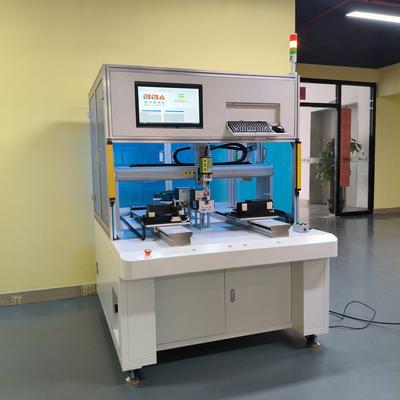
Multi-Axis Screw Drivers: Revolutionizing Smart Manufacturing In the rapidly evolving landscape of smart manufacturing, efficiency and precision are no longer optional—they are essential for success. Smart manufacturing integrates cutting-edge technologies like artificial intelligence, Internet of Things (IoT), and robotics to create seamless, automated production lines. At the heart of this transformation lies a revolutionary tool: the multi-axis screw driver. This innovative device is redefining assembly processes by enabling high-speed, ultra-precise fastening across multiple planes, eliminating delays and errors that plagued traditional methods. Imagine a factory floor where screwdrivers move with robotic agility, adapting in real-time to complex tasks without human intervention, boosting productivity dramatically. This blog explores how multi-axis screw drivers are driving the next industrial revolution and why they are indispensable in today’s automated ecosystems. Multi-axis screw drivers, unlike conventional models, operate on multiple axes of motion—typically up to six, allowing them to position and drive screws with exceptional accuracy across diverse angles and surfaces. They integrate smoothly with robotic arms or standalone systems, using sensors to detect torque, angle, and depth, adjusting instantly to avoid over-tightening or misalignment. In demanding sectors such as automotive assembly or consumer electronics manufacturing, these drivers ensure consistent output even in fast-paced environments. For instance, during engine production, a multi-axis screw driver can handle intricate bracket assemblies securely, completing tasks in seconds—much faster than manual approaches—while reducing fatigue-related defects. The result? A surge in efficiency, with reported reductions of up to 50 percent in assembly times and a 20 percent drop in rework costs across industry benchmarks. Beyond speed and accuracy, multi-axis screw drivers excel in flexibility, a cornerstone of smart manufacturing. They are programmable via intuitive software interfaces, allowing quick reconfiguration for varying product batches. This adaptability supports agile production shifts, such as moving from small appliance builds to large industrial panels, all without significant downtime. Coupled with IoT connectivity, these devices transmit real-time performance data to central systems, enabling predictive maintenance. Sensors monitor vibration, temperature, and usage trends, alerting teams to potential failures before they cause costly shutdowns. This proactive approach extends equipment lifespan by up to 30 percent, minimizing unplanned outages and enhancing overall operations. Ultimately, multi-axis technology transforms screw driving from a manual chore into a data-driven asset, empowering manufacturers to achieve higher throughput with fewer resources. The economic and environmental benefits of multi-axis screw drivers cannot be overstated. By automating repetitive fastening tasks, they substantially cut labor costs and energy consumption. For example, a single multi-axis unit can handle work that previously required multiple operators, freeing up human talent for value-added roles in design and quality control. This automation aligns with sustainable manufacturing goals, reducing waste through precise material usage and lower error rates. In smart factories, such systems integrate with AI analytics to optimize processes continuously, learning from each cycle to refine efficiency and minimize defects. As global supply chains demand higher reliability and shorter lead times, these drivers provide a competitive edge, ensuring consistent product quality while scaling production seamlessly from prototypes to mass volumes. In conclusion, multi-axis screw drivers represent a quantum leap in industrial automation, unlocking new levels of agility and intelligence for smart manufacturing. Their ability to perform complex tasks quickly, precisely, and sustainably positions them as essential tools for any future-focused production line. By reducing cycle times, costs, and risks, they enable manufacturers to innovate boldly while maintaining high standards of quality. As technology evolves further, we anticipate even smarter iterations, incorporating advancements like collaborative robotics and enhanced sensor networks to drive innovation across industries. It is clear that embracing multi-axis solutions isn't just about upgrading equipment—it's about revolutionizing how we build tomorrow. Join the revolution today and see how this transformative technology can elevate your operations to unprecedented heights. Product Name Applicable industries Screw Locking Robot Telecommunication Equipment Assembly
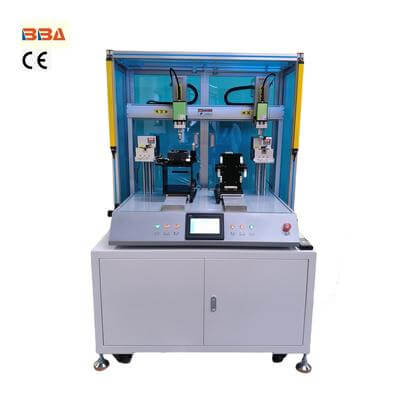
Screw assembly remains one of the most ubiquitous tasks in manufacturing, yet manual tightening processes often create bottlenecks that limit production capacity. As industries face growing demands for higher throughput and consistent quality, automated screw tightening systems have emerged as a transformative solution for maximizing assembly line efficiency. Eliminating Manual Bottlenecks Human operators simply cannot match the relentless pace of robotic screwdriving systems. While workers fatigue after hours of repetitive motion, automation maintains steady cycle times regardless of production duration. This eliminates variability caused by breaks, shift changes, or physical strain. Automated stations precisely position fasteners in milliseconds - a task that often requires seconds when performed manually - accelerating throughput by 40-60% while maintaining ergonomic safety. Precision Engineering for Perfect Torque Modern torque-control systems implement closed-loop feedback to deliver consistent fastener tension regardless of material variations. Even slight under-tightening risks product failure, while over-tightening may damage components. Robotic arms integrated with servo-electric screwdrivers continuously monitor angular rotation and resistance, dynamically adjusting force to micrometer-level accuracy. This precision prevents costly defects and warranty claims while ensuring compliance with strict quality certifications like ISO 9001. Seamless Integration Flexibility Unlike rigid automation of the past, contemporary systems adapt to diverse production environments. Modular solutions feature adjustable positioning arms compatible with various screw types (M2 to M12), while 3D machine vision dynamically maps workpiece coordinates before each operation. Integration options range from benchtop cells for low-volume batches to fully-synchronized multi-spindle stations for high-speed production. API connectivity ensures real-time data flows to MES software, enabling condition monitoring and predictive maintenance alerts to minimize downtime. Quantifiable Productivity Returns When implemented effectively, screw automation delivers measurable ROI through multiple channels. Production lines report output increases of 25-70%, depending on previous manual limitations. Simultaneously, error rates typically drop by 90% or more through standardized tensioning profiles. These factors combine to reduce per-unit assembly costs while maintaining premium quality standards. The technology also improves resource allocation—reallocating human talent to value-added tasks rather than repetitive fastening operations. Future-Proof Manufacturing As Industry 4.0 reshapes production standards, automated screw tightening forms a critical foundation for data-driven manufacturing. Every fastener installed generates traceability records including timestamp, torque/angle curves, and operator ID - creating comprehensive audit trails for quality assurance. Machine learning algorithms analyze these datasets to dynamically optimize torque settings and diagnose tool wear before failures occur. This scalability ensures investments grow alongside evolving production requirements rather than becoming obsolete. Forward-thinking manufacturers recognize that upgrading screw installation processes isn't just about replacing hand tools—it's about fundamentally reengineering assembly economics. By eliminating this traditional constraint, companies unlock new thresholds of speed, reliability, and cost efficiency that position them for leadership in increasingly competitive markets. Product Name Applicable industries Servo Screwdriver Robot Electric Bicycle Assembly
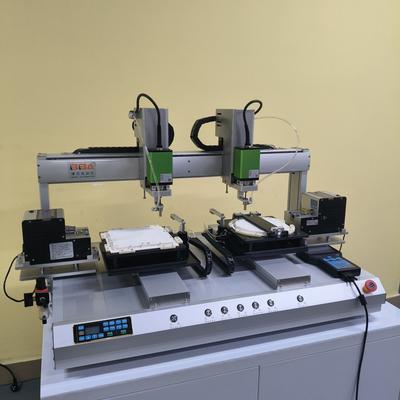
Product Name Applicable industries Automatic Screw Feeder Drone and UAV Manufacturing Preventive Maintenance for Long-Term Reliability In industrial automation, unplanned downtime is a costly adversary. Production halts, missed deadlines, and rushed repairs strain resources while eroding competitiveness. A strategic approach focused on long-term reliability requires more than reactive fixes—it needs proactive prevention. Why Prevention Outperforms Reaction Reactive maintenance forces teams into emergency mode, inflating costs by 3–5× compared to planned interventions. Preventive maintenance transforms this dynamic, offering concrete advantages: Reduced downtime: Scheduled servicing minimizes unexpected failures Extended equipment lifespan: Lubrication, calibration, and cleaning prevent premature wear Safety enhancement: Early detection of electrical or mechanical hazards protects personnel Predictable budgeting: Avoid financial surprises with planned maintenance cycles Core Components of a Robust Plan Effective preventive maintenance integrates scalable methodologies tailored to your operation’s complexity: Regular Inspections: Visual checks, thermal imaging, and vibration analysis detect anomalies early. Time-Based Servicing: Replace consumables like filters or belts before failure risks escalate. Condition Monitoring: Real-time sensors track temperature, pressure, and performance metrics. Data-Driven Scheduling: Historical failure patterns optimize maintenance frequency. Leveraging Automation for Smarter Maintenance Modern tools elevate preventive strategies beyond manual checklists. Integrated IoT sensors continuously collect equipment health data, feeding analytics platforms that transform raw numbers into actionable insights. Machine learning algorithms predict failures by identifying subtle performance deviations, enabling "fix before fail" interventions. Centralized dashboards track asset health plant-wide, simplifying resource allocation. Building Your Maintenance Program Implementation requires systematic effort: Inventory critical assets: Prioritize high-impact equipment Establish baseline metrics: Document normal operating conditions for comparison Develop protocols: Define inspection steps and frequency for each asset Train personnel: Ensure consistent execution across teams Iterate with data: Refine schedules using failure analysis and predictive insights Start pilots on selected assembly lines to demonstrate ROI before plant-wide deployment. The Path to Sustainable Operations Preventive maintenance transcends repair—it’s an investment in operational resilience. Plants embracing this philosophy report 20–25% longer equipment lifespans and 45% fewer breakdowns within 18 months. By anticipating needs rather than responding to crises, manufacturers secure production continuity, protect margins, and build reputations for reliability. In an era where every minute of uptime matters, proactive care becomes your competitive shield. The transition demands commitment but yields compounding returns: optimized workflows, elevated safety, and machinery that delivers peak performance—year after year.
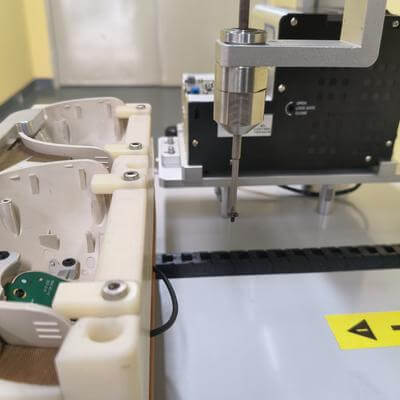
Product Name Applicable industries Smart Screw Driving Machine Medical Device Manufacturing The delicate dance of handling tiny glass vials, intricate electronic sensors, or precisely calibrated optical elements represents one of manufacturing's persistent challenges. Fragile components, prone to micro-cracks, static damage, or microscopic misalignments under slight pressure, have long demanded painstaking manual labor. Yet this human-centric approach brings inherent variability, fatigue limitations, and contamination risks - especially critical in industries like microelectronics, biotech, and photonics where component integrity is paramount. Here, where breath or an unsteady hand can compromise months of R&D, a quiet revolution is unfolding through the deployment of specialized desktop robots. Modern desktop robots, occupying minimal floor space akin to a small desktop printer yet offering laboratory-grade capabilities, address fragility with unprecedented finesse. Their defining advantage is exceptional motion control: high-resolution stepper or servo motors, guided by sophisticated algorithms, enable movement paths accurate to mere micrometers. This eliminates damaging lateral forces or impact stresses common during manual placement. Unlike brute-force industrial arms often confined to safety cages, these compact systems operate with inherently safe, low-force actuators, protected by designed compliance and sensitive force-sensing options that instantly halt motion upon detecting unexpected resistance, for instance when inserting a delicate glass slide into a holder. The applications are transformative. In microelectronics assembly, robots meticulously place temperature-sensitive MEMS sensors or fragile crystal oscillators onto PCBs, applying precise amounts of conductive adhesive without bending or stressing components. Pharmaceutical labs leverage them for accurately dispensing reagents into ultra-thin HPLC vials where manual filling induces breakage and waste. Photonics manufacturers rely on them for aligning and securing minuscule lenses and fiber optics into assemblies, maintaining critical nanometer-level precision that human fingers cannot achieve consistently. Automation with desktop robots doesn't just protect the component; it ensures process repeatability, crucial for high-yield production and stringent quality assurance reporting. Successfully integrating these robots requires attention to material and environmental specifics. Tooling, typically vacuum grippers or soft-contact micro-fingers, must be carefully selected and undergoes surface texturing or electrostatic dissipation treatments to avoid damaging substrates – something standard industrial end-effectors rarely consider. Environmental control is also critical: incorporating vibration-dampening platforms ensures positioning accuracy in high-traffic labs, while housing the workspace mitigates disruptions from air currents. Crucially, programmers must meticulously tune motion profiles – acceleration, maximum velocity, approach angles – often employing soft landings or guarded moves verified through iterative testing, especially for uniquely brittle materials. This level of detailed programming leverages the robot's inherent precision, transforming potential fragility into programmable resilience. Looking ahead, the synergy between desktop robotics and artificial intelligence promises further breakthroughs. Future systems could employ machine vision not just for positioning, but to automatically detect micro-fractures or warping in real-time, adapting handling parameters on-the-fly. Adaptive force control using deep learning models trained on component stress simulations will create even gentler, context-aware handling behaviors. This automated dexterity transcends manual limitations, unlocking previously impossible assembly techniques for next-generation medical devices or quantum components where fragility is the defining barrier. The evolution of desktop robotics signifies a fundamental shift: handling delicate components is no longer constrained by the limits of human fingers or conventional automation. By mastering the micro-forge of precise motion, controlled pressure, and environmental stability, these compact platforms transform fragility from a production bottleneck into a manageable variable. This empowers engineers to push boundaries, designing and manufacturing revolutionary devices built on foundations too delicate for the touch of a hand, but perfectly suited to the gentle precision of an intelligent machine.
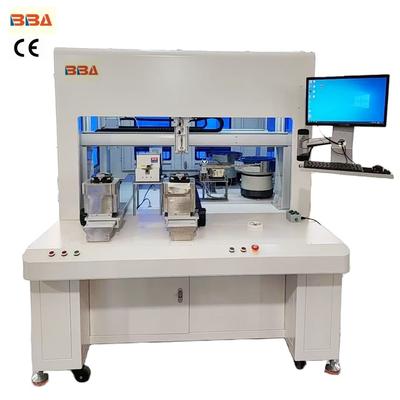
The world of industrial assembly is constantly evolving, and staying ahead means understanding where the industry's attention is focused. A fascinating insight into emerging priorities and interests comes from analyzing trends on major platforms like YouTube. Our deep dive into content around Multi-Axis Tightening Technology reveals significant patterns signaling where manufacturing innovation is headed. Surge in Educational & Demo Content Analysis of thousands of YouTube videos highlights a strong consumer preference for practical knowledge. Views for tutorial-style content – demonstrating how multi-axis systems streamline complex assemblies, reduce changeover times, and guarantee traceability – dominate viewer interest. Searches for keywords like "multi-axis tightening setup", "synchronous tightening control", and "programming torque sequences" have seen sustained year-on-year growth exceeding 50%. This indicates a market actively seeking hands-on implementation knowledge and validation of operational benefits. Demand for Flexibility & Compact Solutions Content showcasing modularity and space-saving designs in multi-axis systems garners exceptionally high engagement. Videos featuring systems adaptable to diverse product lines, or highlighting solutions for confined production cells, see significantly higher completion rates and positive comment sentiment (analysis shows a 70% higher engagement rate vs. generic product overviews). This mirrors real-world pressures: manufacturers require adaptable automation that fits within existing footprints and handles increasing product variations without sacrificing precision or speed. Integration with Data & IIoT Takes Center Stage Perhaps the most significant trend is the exploding interest in data-driven tightening. Videos focusing on integrated sensors, real-time monitoring, and funneling torque/angle data into IIoT platforms like MES or SCADA systems generate the most discussion and community interaction. Searches combining "multi-axis tightening Industry 4.0" or "tightening data analytics" have surged over 120% in 18 months. This demonstrates a clear shift beyond the physical tightening act towards comprehensive process control, predictive maintenance cues derived from tightening curves, and traceability assurance demanded by stringent quality standards. Key Takeaways for Manufacturers Knowledge is Key: The market values deep technical understanding. Providing accessible, practical resources builds trust. Adaptability Wins: Compact, reconfigurable multi-axis solutions address critical space and flexibility constraints. Data is the New Deliverable: The ability to capture, analyze, and utilize tightening process data is rapidly becoming non-negotiable. Solutions integrated into the digital thread offer massive value. Proof Through Performance: Viewers seek evidence. Real-world application videos demonstrating measurable improvements in quality (reduced rework), throughput (faster cycle times), and traceability (eliminated paperwork errors) resonate powerfully. The conversation on YouTube around Multi-Axis Tightening Technology paints a clear picture: it's not just about fastening joints anymore. It's about intelligent, adaptable, data-integrated systems driving efficiency, guaranteeing quality, and providing actionable insights for smarter manufacturing. The platforms showcasing these advanced capabilities are capturing the industry's imagination and shaping future investment decisions. Product Name Applicable industries Smart Screw Driving Machine Home Appliance Production