8618566785362 8618566785362 8618566785362 phoenix08@bbamachine.com
- All
- Product Name
- Product Keyword
- Product Model
- Product Summary
- Product Description
- Multi Field Search

Views: 0 Author: BBA AUTOMATION Publish Time: 2025-06-19 Origin: BBA AUTOMATION


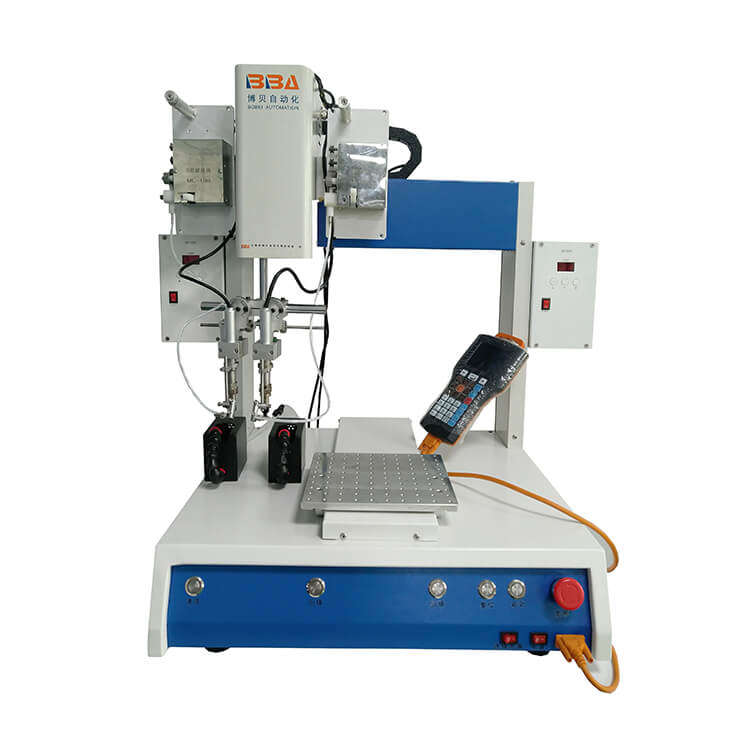
| Product Name | Applicable industries |
| Servo Screwdriver Robot | Medical Device Manufacturing |
Industrial automation has revolutionized manufacturing processes, with automatic screw assembly equipment serving as a fundamental component in production lines worldwide. These systems accelerate assembly tasks while ensuring consistent quality and reducing labor intensity. Understanding their core mechanics provides valuable insight for engineering teams optimizing production efficiency.
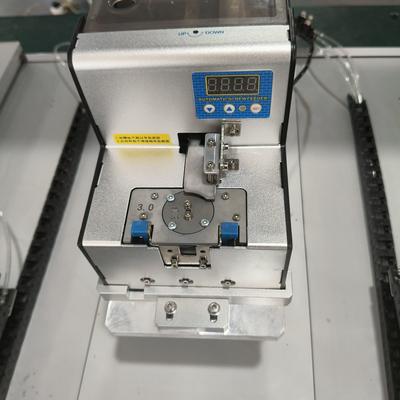
The process initiates with a vibratory bowl feeder or step feeder that orients screws correctly. These systems utilize tuned vibrations to align screws based on weight distribution or geometric features. Optical sensors verify orientation accuracy before screws progress to the shuttle mechanism—typically a pneumatic tube or conveyor belt—that transports them to the tool head. Feeders maintain screw supply continuity, enabling uninterrupted operation even at high cycle speeds.
At the assembly point, an electric or pneumatic spindle descends to engage the screw. Electric systems employ servomotors with real-time torque monitoring for intelligent tightening control, while pneumatic versions use pressure regulation. Critical functions include:
A central PLC coordinates operations through integrated sensors. Vision systems and position transmitters validate component placement prior to screw driving. During operation, sensors continuously monitor critical metrics like screw depth, insertion force, and angular rotation using tension-compression load cells or rotary encoders. This sensory network facilitates immediate fault detection—terminating cycles upon identifying errors such as stripped threads or missing components.
Compared to manual assembly, automated systems demonstrate significant reliability in electronics, automotive, and aerospace manufacturing. They execute operations with micrometer-level accuracy at sustained speeds of 40-60 assemblies per minute, substantially reducing error rates. Configurations span collaborative robotic arms for variable-path assembly to dedicated machines performing repetitive tasks in confined spaces unsuitable for human workers.
These systems integrate advanced technologies including multi-axis coordination, error-proofing algorithms, and IoT-enabled predictive maintenance analytics. Their evolution continues toward modular architectures allowing flexible reconfiguration for changing production demands and mixed-product assembly lines.
Automatic screw assembly technology transforms manufacturing through sophisticated synchronization of sensor-guided positioning, force-optimized driving, and intelligent control systems. As component miniaturization increases and quality requirements tighten, this equipment evolves with enhanced data analytics capabilities. For lean manufacturing environments aiming for precision, speed, and adaptability, automated screw assembly remains an indispensable engineering solution.