8618566785362 8618566785362 8618566785362 phoenix08@bbamachine.com
- All
- Product Name
- Product Keyword
- Product Model
- Product Summary
- Product Description
- Multi Field Search

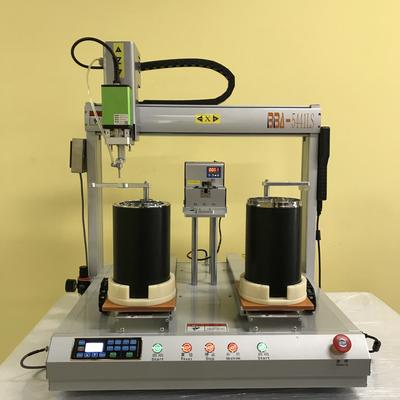
Product Name Applicable industries Dual Head Screwdriver Drone and UAV Manufacturing Desktop Screw Robots for Optical Equipment Assembly Precision engineering defines the optical equipment sector, where microscopic components demand micron-level accuracy during assembly. Traditional manual screw fastening introduces significant challenges: human fatigue causes inconsistent torque application, minute particles from skin contact risk contaminating optical surfaces, and repetitive strain injuries impact workforce sustainability. As optical devices shrink while complexity increases—think miniature lenses, laser modules, and sensor arrays—the margin for error approaches zero. Desktop screw robots address these challenges head-on. These compact automation units integrate directly into existing workstations, combining vision systems, torque-controlled actuators, and proprietary alignment algorithms. Unlike bulky industrial robots, their footprint resembles a standard desktop printer, enabling deployment in cleanrooms, R&D labs, or high-mix production cells without facility modifications. Key advantages transform optical assembly workflows. Automated precision ensures torque accuracy within ±0.01 N·m across thousands of cycles, eliminating cracked lenses or loose mounts. Integrated optical sensors detect microscopic defects—like thread cross-threading or micro-cracks—before components are joined. The robots' self-learning path correction adapts to component variances in real-time, crucial for handling delicate materials like fused silica or precision-molded polymers. Cycle times shrink by 50-70% compared to manual methods while maintaining 99.98% process repeatability. Operational intelligence extends beyond mechanics. These systems generate digital traceability logs documenting torque curves, screw angles, and inspection imagery for every joint—critical for medical gear certifications or aerospace validations. Engineers receive instant alerts if parameters drift, enabling predictive maintenance. The intuitive interface allows swift changeovers; switching between lens-housing types takes minutes through graphical templates rather than reprogramming. Quality uplifts are measurable. Particulate contamination drops by 98% since robotic tools eliminate direct human contact. Scrap rates for high-value optical subassemblies plummet as stress fractures from uneven fastening disappear. This reliability enhances product longevity—critical for equipment like endoscopic imagers or laser cutters where screw failure could cause catastrophic misalignment. Production scalability also improves; operators manage multiple units simultaneously, freeing skilled technicians for complex calibration tasks. Adoption accelerates as optical components shrink below millimeter scales. Emerging applications include assembling VR headset optics, nanoliter fluidic sensors, and quantum computing photonics—all requiring screw placements impossible with handheld drivers. Future iterations will integrate AI-driven anomaly detection, analyzing torque patterns to predict component degradation before visible flaws emerge. Desktop screw robotics represents more than automation—it safeguards precision in next-generation optical systems where perfection transcends luxury. By merging industrial-grade robustness with surgical accuracy, these solutions transform microscopic assembly from bottleneck to benchmark.

The History of Robotic Screw Drivers The humble screwdriver, one of humanity's oldest mechanical tools, has undergone a revolution since the mid-20th century. While manual versions date back to the 1500s, the advent of automation propelled screw fastening into a new era. Early industrial robots in the 1960s handled basic tasks, but dedicated robotic screw driving systems only emerged as manufacturing precision demands increased. By the 1980s, first-generation robotic screwdrivers entered assembly lines. These pneumatic or electric systems were rudimentary—fixed to workstations with minimal programmability. Engineers faced challenges with alignment and torque consistency, requiring precise part positioning. Vision systems were primitive, limiting adaptability to variable production environments. The 1990s transformed capabilities through integrated sensing technology. Force-torque sensors enabled real-time feedback, allowing robots to detect cross-threading or stripped screws. Optical guidance systems improved positioning accuracy, while programmable logic controllers (PLCs) allowed rapid task switching. These strides expanded applications from automotive manufacturing to delicate electronics assembly. Modern robotic screwdrivers boast unprecedented sophistication. AI-driven error prediction analyzes torque curves to preempt failures. Collaborative robots (cobots) with safety sensors now work alongside humans on intricate tasks. Self-calibrating systems adjust to tool wear, and IoT connectivity enables real-time production analytics—monitoring each screw's insertion force cycle time. Today’s solutions offer flexibility through modular designs. Interchangeable bits handle diverse screw types, while mobile robotic arms navigate between stations. Precision now reaches micrometer levels—critical for aerospace or medical device production where a single loose screw risks catastrophic failure. The future points toward greater autonomy. Research focuses on robots learning optimal torque settings through machine learning rather than manual programming. Predictive maintenance algorithms will minimize downtime, while swarm robotics could enable multi-arm coordinated assembly. As miniaturization advances, microscopic screwdrivers may someday assemble nanotechnology invisible to the human eye. From clunky pneumatic arms to AI-enhanced cobots, robotic screwdrivers exemplify how foundational tools evolve through innovation. They remain indispensable—transforming a simple act of rotation into a symphony of precision engineering driving modern manufacturing forward. Product Name Applicable industries Screw Locking Robot Home Appliance Production
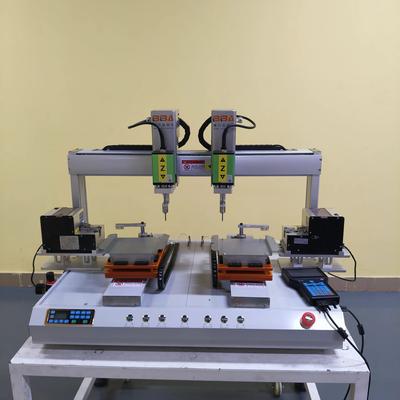
Firmware Updates and Software Maintenance: Ensuring Peak Performance in Industrial Automation In the dynamic landscape of industrial automation, maintaining optimal system performance is non-negotiable. As equipment operates around the clock in demanding environments, firmware updates and software maintenance emerge as critical pillars for reliability, security, and efficiency. Neglecting these elements risks production disruptions, security breaches, and premature obsolescence of capital investments. Strategic Benefits of Proactive Updates Timely firmware updates unlock substantial operational advantages: Enhanced Security: Patches vulnerabilities exposed by evolving cyber threats targeting industrial control systems. Performance Optimization: Resolves software bugs, reduces latency, and improves communication between devices. Extended Equipment Lifespan: Compatibility updates ensure older hardware accommodates new manufacturing protocols. Regulatory Compliance: Maintains adherence to industry standards like IEC 62443 and ISO 27001. Minimizing Operational Risks Through Maintenance Beyond updates, systematic software maintenance safeguards production continuity: Regular diagnostics identify memory leaks, database corruption, or configuration drifts before they trigger failures. Proactive calibration maintains measurement accuracy in sensors and controllers, while comprehensive version control prevents conflicts when integrating subsystems. This vigilance reduces unscheduled downtime by over 40% in connected facilities, according to operational data from automated plants. Best Practices for Implementation Effective deployment of updates requires disciplined protocols: Schedule updates during planned maintenance windows using digital twins to simulate impact Maintain encrypted backups and system images for rapid rollback if needed Document all changes meticulously for audit trails and troubleshooting Validate updates on isolated test beds replicating production environments Implement phased rollouts to monitor stability incrementally A robust maintenance strategy also includes continuous monitoring of system logs, automated alerts for anomalies, and trained personnel for swift incident response. Remember: A single unpatched PLC vulnerability can compromise an entire production cell. Future-Proofing Your Investment As Industry 4.0 accelerates, integrating OTA (Over-The-Air) update capabilities becomes essential for scalable operations. Modular software architecture allows individual component updates without full system reboots, while predictive maintenance algorithms can schedule updates based on usage patterns and risk assessments. Manufacturers prioritizing comprehensive firmware and software protocols report 30% fewer emergency maintenance calls and 25% longer mean time between failures. As production environments grow more interconnected and intelligent, disciplined update management evolves from a technical task to a strategic advantage. Final Thought: In industrial automation, the cost of inaction far exceeds the investment in systematic updates. Staying current isn't just about technology—it's about sustaining competitive resilience in an era where operational excellence defines market leadership. Product Name Applicable industries Desktop Screwdriver Robot Consumer Electronics Assembly
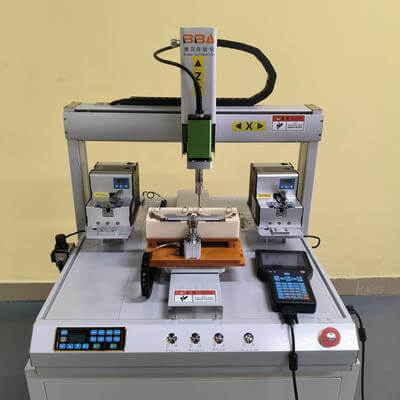
High-Precision Screw Driving in Smart Factory Environments As smart factories redefine modern manufacturing, the demand for microscopic precision in assembly processes has never been higher. High-precision screw driving, once a routine task, now sits at the heart of quality assurance in electronics, automotive, medical devices, and aerospace industries. Minute variations in torque or angular displacement can determine product durability, safety, and compliance with stringent international standards. The Precision Imperative In environments where IoT sensors constantly feed data to centralized control systems, traditional screw driving methods fall short. Modern assembly lines require solutions that deliver torque accuracy within ±1%, real-time error detection, and seamless traceability. These capabilities prevent critical failures in sensitive applications – from ensuring semiconductor integrity to maintaining hermetic seals in implantable medical devices. Intelligent Control Architecture Advanced screw driving systems now incorporate multi-axis force feedback loops powered by embedded MEMS sensors, detecting micro-deformations and material inconsistencies previously invisible to operators. Machine learning algorithms analyze torque-angle signatures during every fastening cycle, instantly flagging anomalies like cross-threading or stripped screws. This predictive capability reduces scrap rates by up to 32% compared to conventional systems. Cloud-connected architectures enable holistic oversight. Operators remotely monitor efficiency metrics across global production lines through encrypted dashboards, while adaptive control protocols automatically compensate for variables like temperature-induced material expansion or tool wear, maintaining consistent quality regardless of environmental fluctuations. Hyper-Precision Mechanics The mechanical evolution is equally transformative. Brushless DC servo motors with harmonic drive reducers achieve positioning resolutions under 0.1 degrees. Anti-backlash mechanisms eliminate mechanical slack, while self-calibrating chuck systems adapt to fastener tolerances as narrow as ±0.01mm. For micro-assembly applications, specialized vacuum collets handle M0.4 screws – smaller than a grain of rice – preventing static discharge damage through ionized air streams. Seamless Integration Platforms Modern precision drivers transcend standalone operation. They integrate directly with collaborative robots via ROS frameworks and synchronize with CNC workflows through EtherCAT interfaces. Digital twin connectivity allows virtual simulation of fastening sequences before physical implementation, optimizing path trajectories and cycle times. This plug-and-play compatibility accelerates deployment while reducing integration costs by up to 40%. The Future of Smart Fastening Emerging technologies will push boundaries further. Computer-vision guided systems employing spectral imaging detect subsurface defects in composite materials during fastening. AI-driven predictive maintenance forecasts bearing failures weeks in advance by analyzing acoustic emissions. Additive manufacturing also enables custom quick-change toolheads optimized for unprecedented fastener geometries. As Industry 4.0 matures, high-precision screw driving evolves from a discrete task to an intelligent, self-optimizing system. This shift transforms quality control from reactive inspection to proactive assurance – building resilience into the very foundation of manufactured products. The assembly line of tomorrow won't just tighten screws; it will guarantee perfection with every rotation. Product Name Applicable industries Automatic Screw Feeder Toy and Game Console Production
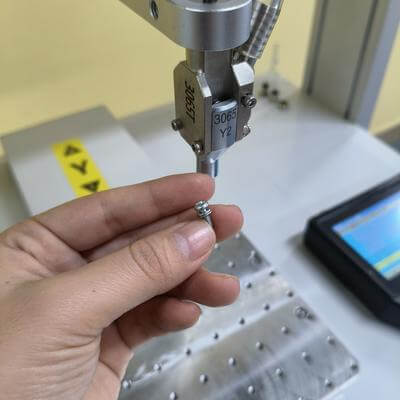
The relentless pursuit of manufacturing excellence has propelled screw tightening automation into a transformative phase globally. Once considered a simple manual task, screw fastening has evolved into a sophisticated automated process driven by demands for unparalleled precision, flawless consistency, and optimized throughput. This shift isn't confined to specific sectors; it's rippling across manufacturing landscapes worldwide, fundamentally altering assembly line dynamics. Several powerful forces are accelerating this adoption. Rising labor costs and persistent shortages of skilled assembly workers make automation an increasingly economical necessity. Simultaneously, industries face ever-stricter quality regulations and zero-tolerance policies for defects – objectives practically unattainable with manual efforts over prolonged periods. The quest for leaner manufacturing and shorter cycle times also pushes production managers towards robotic solutions that operate continuously without fatigue. Furthermore, the critical need for precise torque control in microelectronics and applications requiring exact clamping force underscores the limitations of manual alternatives. Modern automated screw tightening transcends basic mechanization. Robotic arms, equipped with specialized servo-driven tightening spindles, now perform complex sequences with path accuracy down to fractions of a millimeter. Technological integration is key. Internet of Things (IoT) connectivity embeds intelligence directly into tightening stations. Sensors continuously monitor torque, angle, and speed in real-time, feeding vital process data into centralized control systems. Artificial Intelligence (AI) algorithms analyze this data stream, enabling predictive maintenance to preempt spindle failures and improving quality control by instantly detecting deviations from the tightening signature and autonomously rejecting faulty connections. This generates invaluable traceability, linking each fastener to a digital record of its installation. The tangible benefits driving implementation include: Enhanced Quality & Consistency: Automation guarantees every fastener is tightened to the exact specified parameters, eliminating human inconsistency and variability. Defect rates for stripped threads, undertorqued, or overtorqued components plummet dramatically. Increased Throughput & Reduced Costs: Automation stations operate significantly faster than humans and tirelessly across shifts, slashing assembly times and improving overall equipment effectiveness. This lowers per-unit production costs and boosts output capacity. Ergonomic Improvements & Resource Optimization: Removing workers from repetitive, physically taxing tightening tasks reduces musculoskeletal injury risks and frees skilled personnel to focus on more complex, value-added activities. Uncompromising Traceability: Comprehensive digital records for every fastener provide robust quality assurance documentation essential for compliance in regulated industries and simplify root-cause analysis for any potential issues. Applications span sectors demanding critical fastening reliability: The automotive industry leverages high-torque automation on engine blocks and lightweight, high-precision systems for electronics integration in electric vehicles. Consumer electronics manufacturers rely on automated micro-fastening for intricate circuit boards and delicate housings. Aerospace demands exceptional precision and traceability for critical components. Medical device assembly requires absolute sterility and consistent torque for patient safety. General industrial manufacturing increasingly adopts automated stations for appliances, power tools, and varied assemblies to maintain competitiveness. The trajectory points firmly towards deeper intelligence and collaboration. Collaborative robot arms, or cobots, are lowering the barrier to entry, offering flexible installation and safe operation alongside human workers. Further advancements in vision guidance promise effortless adaptation to mixed parts and fixtures. Seamless integration with broader smart factory frameworks and Manufacturing Execution Systems (MES) within Industry 4.0 ecosystems will be vital, ensuring screw tightening data informs real-time production optimization decisions. Edge computing and advanced AI promise near-instantaneous data analysis for closed-loop process control. The future envisions self-optimizing tightening systems capable of self-diagnosis, adaptive process adjustments, and fully autonomous reporting. Automation in screw tightening signifies a fundamental shift towards more precise, efficient, and intelligent manufacturing environments. As technologies mature and integration deepens, automated solutions become indispensable tools for industries aiming for unparalleled quality standards, optimized resource utilization, and sustainable peak performance in global competitive landscapes. Product Name Applicable industries Screw Fastening Unit Smart Wearables Production
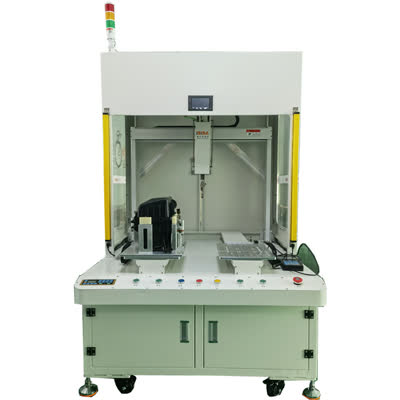
Product Name Applicable industries Automatic Screw Feeder Power Tool Assembly Lines The precision of screw fastening operations is a cornerstone of manufacturing integrity. From automotive assembly to electronics production, the quality of threaded connections directly impacts product safety, functionality, and longevity. As industrial processes expand across multiple facilities and global supply chains, traditional manual oversight becomes inadequate. Remote monitoring technology now provides an advanced solution for managing screw fastening systems with unprecedented efficiency. Remote monitoring transforms screw fastening systems into intelligent, connected assets. Through integrated sensors and secure communication protocols, every fastener's torque, angle, and sequence data is captured in real-time. This information streams to centralized dashboards accessible from any location with internet connectivity. The shift from periodic manual checks to continuous digital surveillance represents a quantum leap in process control. Instantaneous anomaly detection stands as a primary benefit. The moment a fastening parameter deviates from programmed specifications—whether due to tool wear, material variances, or operator error—the system triggers customizable alerts via SMS, email, or visual dashboard warnings. This enables corrective action within seconds rather than hours, dramatically reducing scrap rates. For instance, a cross-threaded fastener that could compromise an entire assembly is flagged immediately, preventing downstream quality failures. Beyond real-time intervention, the technology delivers comprehensive data traceability. Every fastening operation is logged with timestamps, operator IDs, and equipment identifiers. This creates an immutable digital record for compliance audits and quality assurance. Should a field failure occur, manufacturers can rapidly trace the fastener's entire history—down to the exact torque curve applied during installation. Such granular data also supports continuous improvement initiatives by identifying recurring issues across production lines. Predictive maintenance capabilities transform equipment management. By analyzing patterns in motor current, vibration signatures, and performance metrics, the system forecasts tool degradation before failure occurs. Maintenance teams receive alerts to replace worn components during scheduled downtime, avoiding catastrophic line stoppages. This proactive approach typically reduces unplanned downtime by over 40% while extending tool lifespan through optimized service intervals. Centralized management features enable global oversight. Production engineers can simultaneously monitor fastening systems across multiple factories from a single interface, comparing performance metrics and standardizing processes enterprise-wide. The system allows remote parameter adjustments—calibration settings or tightening strategies can be updated digitally across all connected devices without physical access. This eliminates costly onsite deployments for minor programming changes and ensures absolute consistency in fastening quality across global operations. Modern screw fastening systems leverage encrypted IoT architectures with end-to-end data security. Edge computing devices preprocess critical data at the source, reducing bandwidth requirements while ensuring real-time responsiveness. Integration with Manufacturing Execution Systems (MES) creates a closed-loop quality ecosystem where fastening data automatically populates digital work orders and quality management databases. Emerging technologies like machine learning are pushing capabilities further. Advanced platforms analyze historical data to identify subtle correlations invisible to human operators—perhaps detecting that specific environmental conditions affect fastener friction coefficients or that certain operator shift patterns correlate with higher error rates. These insights empower truly adaptive manufacturing processes where systems automatically compensate for variables like temperature fluctuations or material batch differences. In essence, remote monitoring transforms screw fastening from a standalone task into a strategic quality assurance process. The convergence of real-time visibility, predictive analytics, and centralized control delivers measurable benefits: nearly eliminating assembly defects, reducing quality-related costs by up to 30%, and compressing release-to-production timelines. Manufacturers embracing this technology secure not only process reliability but also gain unprecedented agility in adapting to evolving quality standards and emerging industrial challenges.
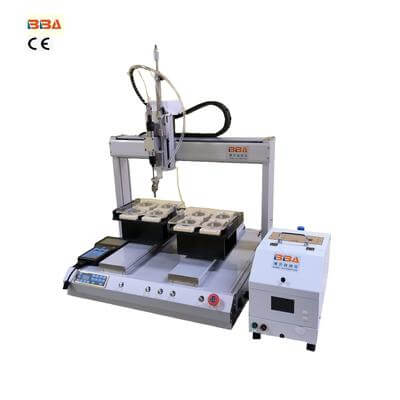
Product Name Applicable industries Screw Locking Robot LED Lighting Industry Inside the Technology: How an Automatic Screw Locking Machine Works In today's high-speed manufacturing landscape, precision and efficiency are non-negotiable. Enter the automatic screw locking machine—a sophisticated solution revolutionizing assembly lines across electronics, automotive, and consumer goods industries. By automating one of manufacturing's most repetitive tasks, these systems eliminate human error while slashing production time. Let's dissect the engineering marvel behind this technology. Core Components: The Anatomy of Precision Feeding System: Screws are bulk-loaded into a vibratory bowl feeder that orients each fastener correctly using centrifugal force and gravity-fed tracks. Optical sensors verify positioning before dispensing. Electric or Pneumatic Driver: Equipped with precise torque control (typically 0.02–5 Nm), the driver adjusts rotation speed dynamically based on material hardness and screw size. XYZ-Axis Robotics: A servo-controlled gantry moves the driver head with micron-level accuracy, guided by programmed coordinates matching the product's CAD design. Vision System (Optional): High-resolution cameras perform real-time alignment checks, correcting deviations as small as 0.1mm for critical applications. The Workflow: From Chaos to Perfect Fastening Preparation: Screws are fed into the vibratory bowl, where misoriented pieces are rejected into a recycle channel. Pick & Place: A pneumatic nozzle retrieves a screw using vacuum suction, while sensors confirm presence and orientation. Positioning: The robotic arm navigates to the target hole location at speeds up to 1.5m/s. Vision systems override coordinates if substrate placement drifts. Fastening: The driver descends, applying programmable torque in three phases—rapid spin for insertion, slowdown at contact, and calibrated final torque. Torque accuracy: ±3%. Quality Assurance: Sensors monitor current draw and rotation angle. Deviations trigger alarms to prevent cross-threading or under-tightening. Why Automation Wins: Data-Driven Advantages ▶ 300–800% Efficiency Boost: Machines install screws in 0.8–2 seconds each—far outpacing manual efforts. One system replaces 4–8 operators. ▶ Zero Defect Assembly: Force feedback sensors detect stripped threads or misalignments with 99.98% accuracy, autonomously pausing production if tolerances are breached. ▶ Fatigue-Free Operation: Continuous 24/7 runtime eliminates RSI risks and inconsistencies from human variability. ▶ Traceability: Each screw's torque and angle data logs to cloud systems for full production audit trails—critical for aerospace or medical device compliance. The Future: AI-Enhanced Evolution Next-gen models integrate machine learning to predict screw jams by analyzing vibration patterns and adapt torque settings based on material wear. Collaborative robots (cobots) with force-limiting tech now safely work alongside humans in hybrid assembly cells. As IIoT connectivity expands, real-time diagnostics will preempt maintenance needs by correlating motor temperature data with historical failure points. In essence, automatic screw locking machines transform a mundane task into a symphony of precision mechanics, smart sensing, and data intelligence. They embody manufacturing’s shift toward adaptive automation—where speed, quality, and analytics converge to redefine what’s possible on the factory floor.
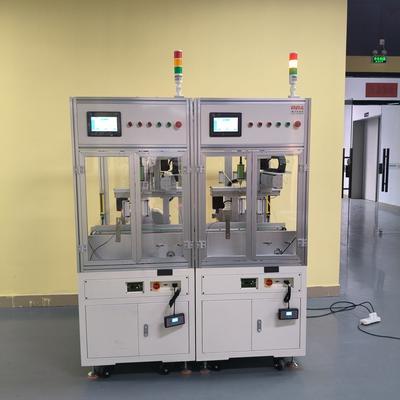
Product Name Applicable industries Servo Screwdriver Robot Laptop and Tablet Assembly Anti-Cross Threading Technology: Revolutionizing Screw Automation In industrial automation, screw fastening remains a critical yet error-prone process. One persistent challenge is cross-threading—a misalignment between a screw and threaded hole that causes diagonal entry, damaging threads, compromising joint integrity, and halting production. Traditional automation systems struggle to detect or prevent this, leading to costly rework, scrap, and unplanned downtime. Enter Anti-Cross Threading (ACT) technology: an intelligent solution transforming precision and reliability in automated screw driving. How ACT Technology Works ACT systems deploy advanced sensors and adaptive algorithms to eliminate cross-threading at the source. As the screwdriver approaches the target, high-resolution torque and angular displacement sensors monitor rotational behavior in real-time. The system analyzes micro-variations during the initial engagement phase—detecting resistance anomalies indicative of misalignment. If potential cross-threading is identified, the screwdriver automatically halts, retracts slightly, and repositions the screw orthogonally. This closed-loop correction occurs within milliseconds, often without stopping the production flow. Beyond correction, ACT leverages predictive analytics. By comparing real-time data against ideal torque-angle profiles, it learns from successful fastenings and refines alignment protocols for future cycles. Modern systems even integrate vision-assisted positioning using AI to preemptively adjust screw entry angles before contact occurs. Tangible Benefits for Modern Manufacturing The impact of ACT extends across efficiency, quality, and cost metrics: Zero Defect Production: Near-elimination of threaded part damage reduces scrap rates by up to 95% in precision assemblies like electronics or automotive components. Uninterrupted Uptime: ACT prevents jams and breakdowns caused by cross-threaded screws, minimizing line stoppages and maintenance interventions. Labor & Resource Savings: Automated correction slashes manual inspection and rework labor while conserving replacement parts. Enhanced Joint Integrity: Consistent, aligned fastening ensures optimal clamping force, critical for safety-critical applications like aerospace or medical devices. Applications Across Industries ACT technology excels where precision is non-negotiable. In consumer electronics, it safeguards delicate threads in smartphones and laptops. Automotive lines use ACT for engine assemblies and interior fittings to prevent recalls. Medical device manufacturers rely on it for sterile, error-free surgical tool production. Robotics and EV battery pack assembly also benefit—ACT accommodates variances in soft materials like aluminum or composites prone to thread deformation. Future Outlook As Industry 4.0 advances, ACT will evolve through deeper AI integration. Predictive maintenance algorithms will correlate threading data with equipment wear, while IoT connectivity enables real-time quality reporting across global fleets. Collaborative robots with ACT capabilities will handle small-batch, high-mix production with human-like dexterity. Additionally, rising demand for miniaturized screws in microelectronics will drive nano-precision adaptations of this technology. Anti-Cross Threading isn’t merely a troubleshooting tool—it’s a proactive enabler of leaner, smarter, and more resilient manufacturing. By transforming a centuries-old problem into a data-driven success, ACT sets a new standard for automated fastening in the digital age.