8618566785362 8618566785362 8618566785362 phoenix08@bbamachine.com
- All
- Product Name
- Product Keyword
- Product Model
- Product Summary
- Product Description
- Multi Field Search

Views: 0 Author: BBA AUTOMATION Publish Time: 2025-06-18 Origin: BBA AUTOMATION


| Product Name | Applicable industries |
| Dual Head Screwdriver | Drone and UAV Manufacturing |
Precision engineering defines the optical equipment sector, where microscopic components demand micron-level accuracy during assembly. Traditional manual screw fastening introduces significant challenges: human fatigue causes inconsistent torque application, minute particles from skin contact risk contaminating optical surfaces, and repetitive strain injuries impact workforce sustainability. As optical devices shrink while complexity increases—think miniature lenses, laser modules, and sensor arrays—the margin for error approaches zero.
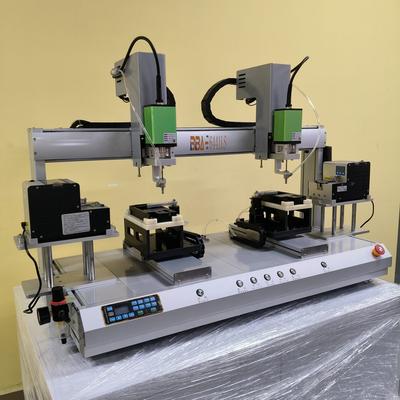
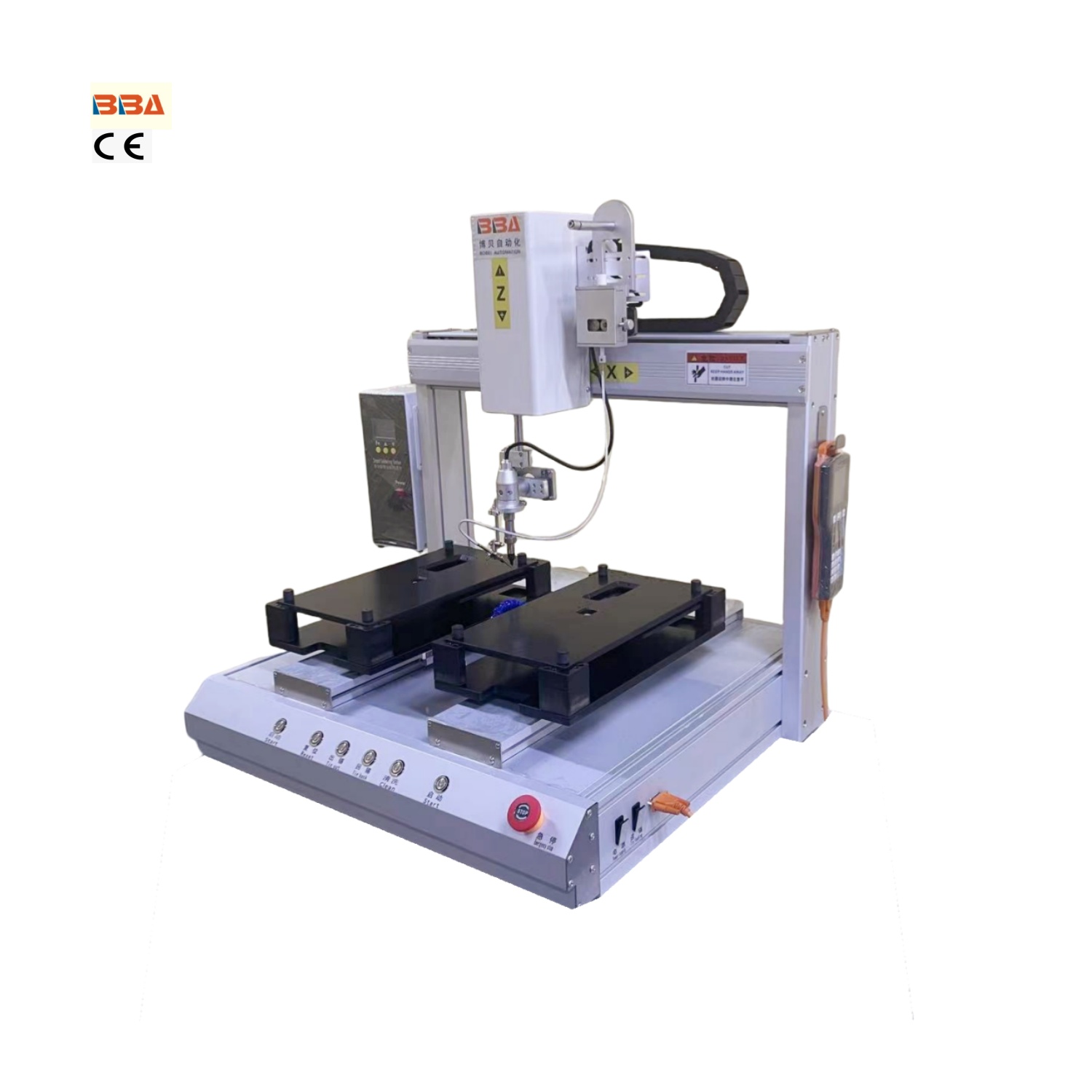
Desktop screw robots address these challenges head-on. These compact automation units integrate directly into existing workstations, combining vision systems, torque-controlled actuators, and proprietary alignment algorithms. Unlike bulky industrial robots, their footprint resembles a standard desktop printer, enabling deployment in cleanrooms, R&D labs, or high-mix production cells without facility modifications.
Key advantages transform optical assembly workflows. Automated precision ensures torque accuracy within ±0.01 N·m across thousands of cycles, eliminating cracked lenses or loose mounts. Integrated optical sensors detect microscopic defects—like thread cross-threading or micro-cracks—before components are joined. The robots' self-learning path correction adapts to component variances in real-time, crucial for handling delicate materials like fused silica or precision-molded polymers. Cycle times shrink by 50-70% compared to manual methods while maintaining 99.98% process repeatability.
Operational intelligence extends beyond mechanics. These systems generate digital traceability logs documenting torque curves, screw angles, and inspection imagery for every joint—critical for medical gear certifications or aerospace validations. Engineers receive instant alerts if parameters drift, enabling predictive maintenance. The intuitive interface allows swift changeovers; switching between lens-housing types takes minutes through graphical templates rather than reprogramming.
Quality uplifts are measurable. Particulate contamination drops by 98% since robotic tools eliminate direct human contact. Scrap rates for high-value optical subassemblies plummet as stress fractures from uneven fastening disappear. This reliability enhances product longevity—critical for equipment like endoscopic imagers or laser cutters where screw failure could cause catastrophic misalignment. Production scalability also improves; operators manage multiple units simultaneously, freeing skilled technicians for complex calibration tasks.
Adoption accelerates as optical components shrink below millimeter scales. Emerging applications include assembling VR headset optics, nanoliter fluidic sensors, and quantum computing photonics—all requiring screw placements impossible with handheld drivers. Future iterations will integrate AI-driven anomaly detection, analyzing torque patterns to predict component degradation before visible flaws emerge.
Desktop screw robotics represents more than automation—it safeguards precision in next-generation optical systems where perfection transcends luxury. By merging industrial-grade robustness with surgical accuracy, these solutions transform microscopic assembly from bottleneck to benchmark.