8618566785362 8618566785362 8618566785362 phoenix08@bbamachine.com
- All
- Product Name
- Product Keyword
- Product Model
- Product Summary
- Product Description
- Multi Field Search

Views: 0 Author: BBA AUTOMATION Publish Time: 2025-06-18 Origin: BBA AUTOMATION


The relentless pursuit of manufacturing excellence has propelled screw tightening automation into a transformative phase globally. Once considered a simple manual task, screw fastening has evolved into a sophisticated automated process driven by demands for unparalleled precision, flawless consistency, and optimized throughput. This shift isn't confined to specific sectors; it's rippling across manufacturing landscapes worldwide, fundamentally altering assembly line dynamics.
Several powerful forces are accelerating this adoption. Rising labor costs and persistent shortages of skilled assembly workers make automation an increasingly economical necessity. Simultaneously, industries face ever-stricter quality regulations and zero-tolerance policies for defects – objectives practically unattainable with manual efforts over prolonged periods. The quest for leaner manufacturing and shorter cycle times also pushes production managers towards robotic solutions that operate continuously without fatigue. Furthermore, the critical need for precise torque control in microelectronics and applications requiring exact clamping force underscores the limitations of manual alternatives.
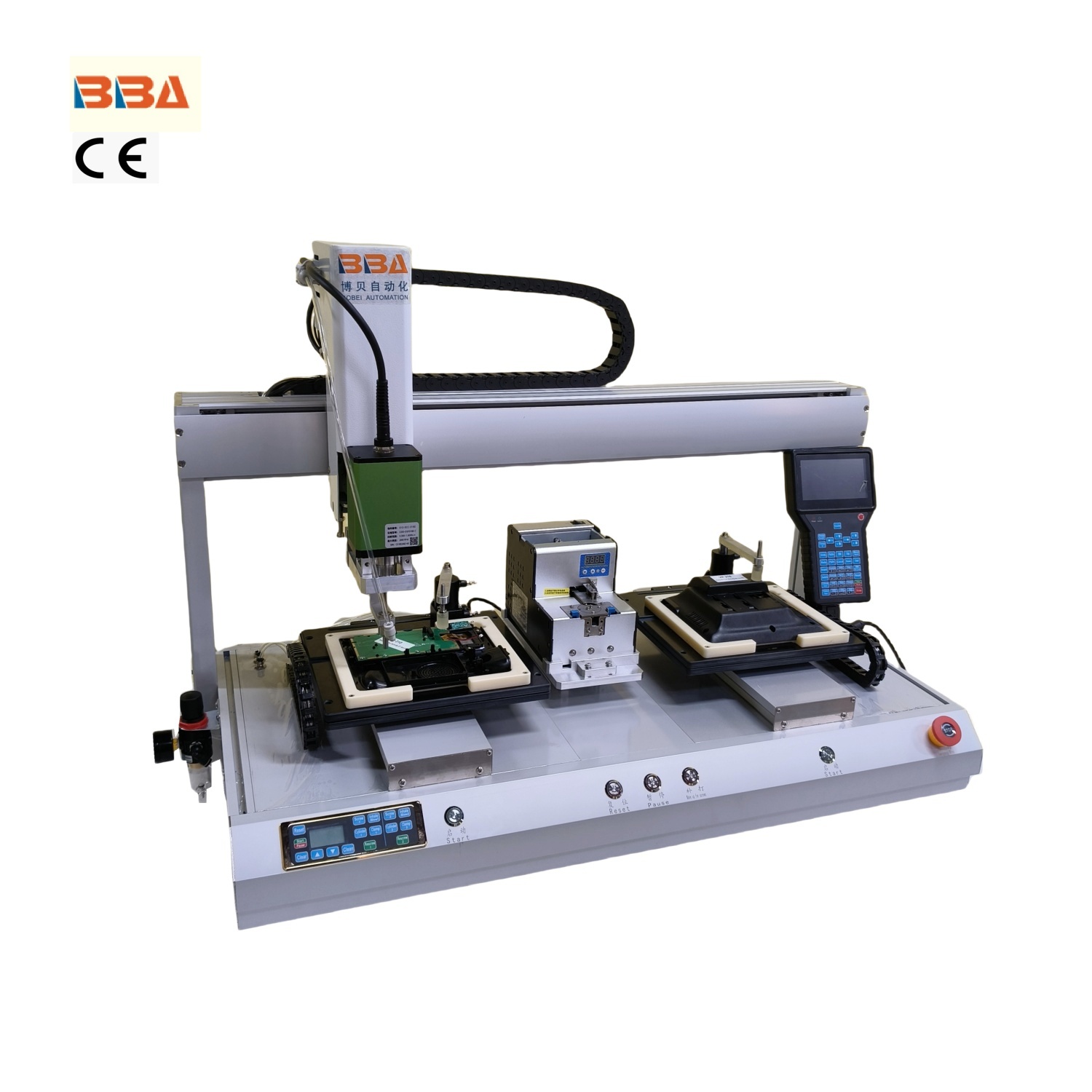
Modern automated screw tightening transcends basic mechanization. Robotic arms, equipped with specialized servo-driven tightening spindles, now perform complex sequences with path accuracy down to fractions of a millimeter. Technological integration is key. Internet of Things (IoT) connectivity embeds intelligence directly into tightening stations. Sensors continuously monitor torque, angle, and speed in real-time, feeding vital process data into centralized control systems. Artificial Intelligence (AI) algorithms analyze this data stream, enabling predictive maintenance to preempt spindle failures and improving quality control by instantly detecting deviations from the tightening signature and autonomously rejecting faulty connections. This generates invaluable traceability, linking each fastener to a digital record of its installation.
The tangible benefits driving implementation include:
Enhanced Quality & Consistency: Automation guarantees every fastener is tightened to the exact specified parameters, eliminating human inconsistency and variability. Defect rates for stripped threads, undertorqued, or overtorqued components plummet dramatically.
Increased Throughput & Reduced Costs: Automation stations operate significantly faster than humans and tirelessly across shifts, slashing assembly times and improving overall equipment effectiveness. This lowers per-unit production costs and boosts output capacity.
Ergonomic Improvements & Resource Optimization: Removing workers from repetitive, physically taxing tightening tasks reduces musculoskeletal injury risks and frees skilled personnel to focus on more complex, value-added activities.
Uncompromising Traceability: Comprehensive digital records for every fastener provide robust quality assurance documentation essential for compliance in regulated industries and simplify root-cause analysis for any potential issues.
Applications span sectors demanding critical fastening reliability: The automotive industry leverages high-torque automation on engine blocks and lightweight, high-precision systems for electronics integration in electric vehicles. Consumer electronics manufacturers rely on automated micro-fastening for intricate circuit boards and delicate housings. Aerospace demands exceptional precision and traceability for critical components. Medical device assembly requires absolute sterility and consistent torque for patient safety. General industrial manufacturing increasingly adopts automated stations for appliances, power tools, and varied assemblies to maintain competitiveness.
The trajectory points firmly towards deeper intelligence and collaboration. Collaborative robot arms, or cobots, are lowering the barrier to entry, offering flexible installation and safe operation alongside human workers. Further advancements in vision guidance promise effortless adaptation to mixed parts and fixtures. Seamless integration with broader smart factory frameworks and Manufacturing Execution Systems (MES) within Industry 4.0 ecosystems will be vital, ensuring screw tightening data informs real-time production optimization decisions. Edge computing and advanced AI promise near-instantaneous data analysis for closed-loop process control. The future envisions self-optimizing tightening systems capable of self-diagnosis, adaptive process adjustments, and fully autonomous reporting.
Automation in screw tightening signifies a fundamental shift towards more precise, efficient, and intelligent manufacturing environments. As technologies mature and integration deepens, automated solutions become indispensable tools for industries aiming for unparalleled quality standards, optimized resource utilization, and sustainable peak performance in global competitive landscapes.
| Product Name | Applicable industries |
| Screw Fastening Unit | Smart Wearables Production |