8618566785362 8618566785362 8618566785362 phoenix08@bbamachine.com
- All
- Product Name
- Product Keyword
- Product Model
- Product Summary
- Product Description
- Multi Field Search

Views: 0 Author: BBA AUTOMATION Publish Time: 2025-06-22 Origin: BBA AUTOMATION


| Product Name | Applicable industries |
| Smart Screw Driving Machine | Medical Device Manufacturing |
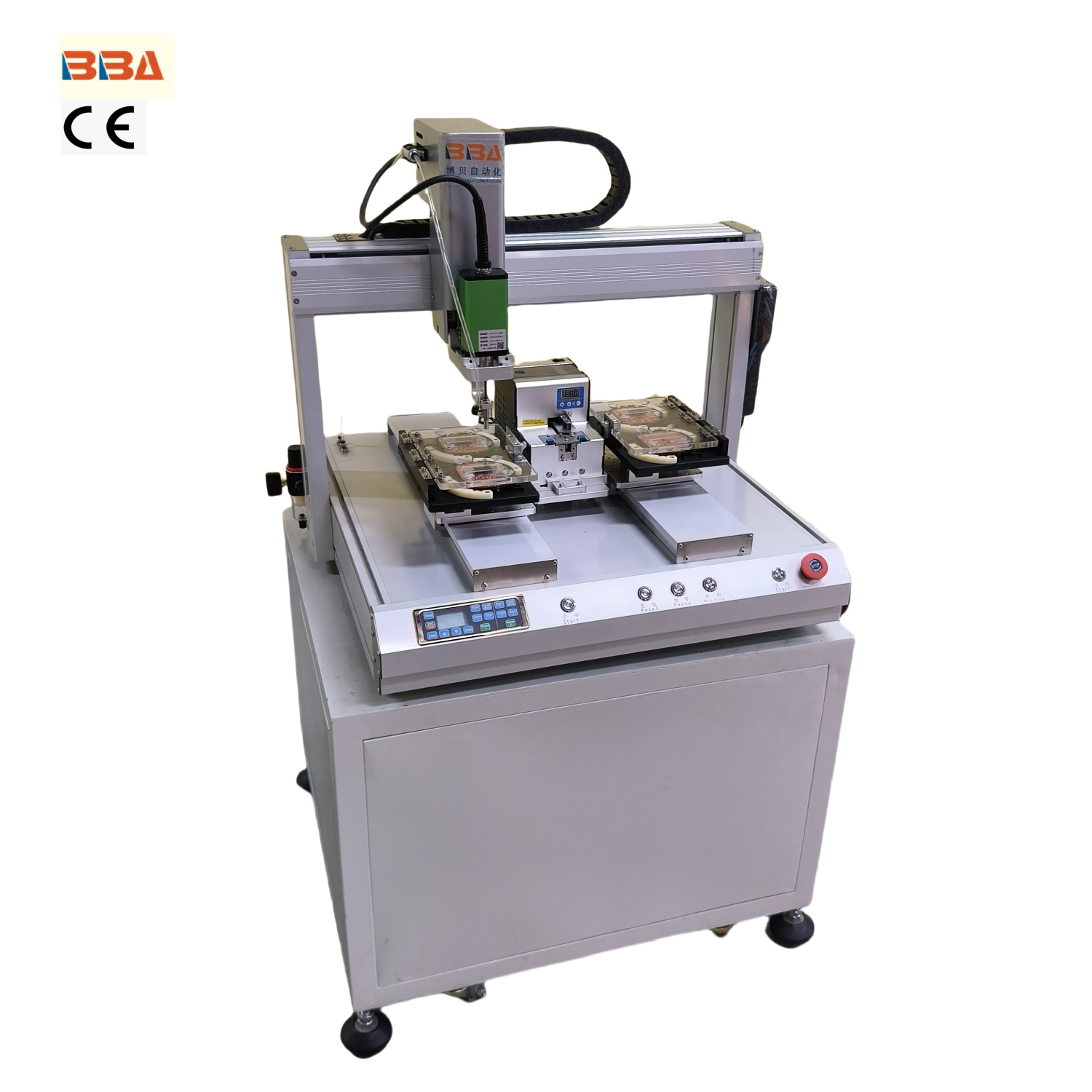
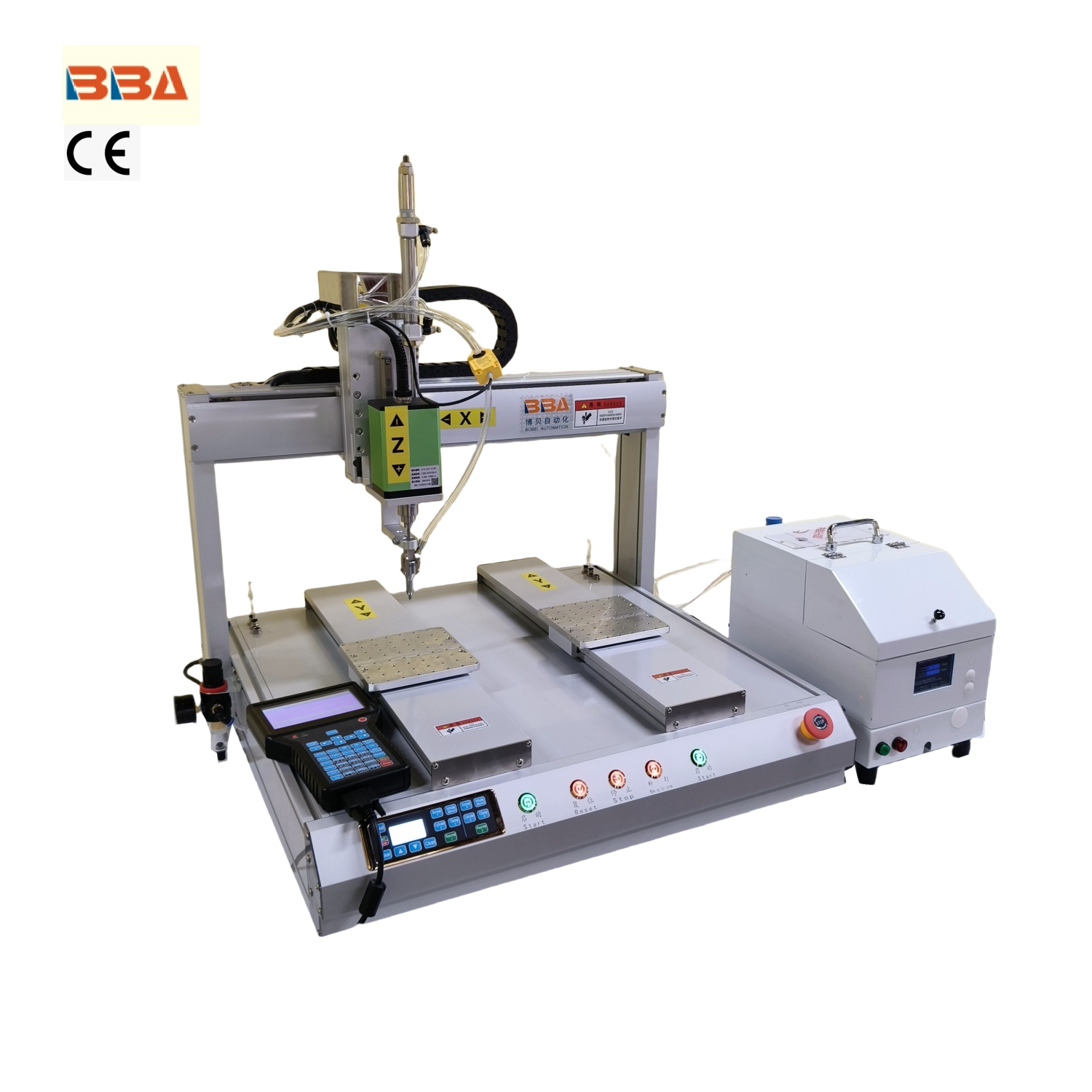
The delicate dance of handling tiny glass vials, intricate electronic sensors, or precisely calibrated optical elements represents one of manufacturing's persistent challenges. Fragile components, prone to micro-cracks, static damage, or microscopic misalignments under slight pressure, have long demanded painstaking manual labor. Yet this human-centric approach brings inherent variability, fatigue limitations, and contamination risks - especially critical in industries like microelectronics, biotech, and photonics where component integrity is paramount. Here, where breath or an unsteady hand can compromise months of R&D, a quiet revolution is unfolding through the deployment of specialized desktop robots.
Modern desktop robots, occupying minimal floor space akin to a small desktop printer yet offering laboratory-grade capabilities, address fragility with unprecedented finesse. Their defining advantage is exceptional motion control: high-resolution stepper or servo motors, guided by sophisticated algorithms, enable movement paths accurate to mere micrometers. This eliminates damaging lateral forces or impact stresses common during manual placement. Unlike brute-force industrial arms often confined to safety cages, these compact systems operate with inherently safe, low-force actuators, protected by designed compliance and sensitive force-sensing options that instantly halt motion upon detecting unexpected resistance, for instance when inserting a delicate glass slide into a holder.
The applications are transformative. In microelectronics assembly, robots meticulously place temperature-sensitive MEMS sensors or fragile crystal oscillators onto PCBs, applying precise amounts of conductive adhesive without bending or stressing components. Pharmaceutical labs leverage them for accurately dispensing reagents into ultra-thin HPLC vials where manual filling induces breakage and waste. Photonics manufacturers rely on them for aligning and securing minuscule lenses and fiber optics into assemblies, maintaining critical nanometer-level precision that human fingers cannot achieve consistently. Automation with desktop robots doesn't just protect the component; it ensures process repeatability, crucial for high-yield production and stringent quality assurance reporting.
Successfully integrating these robots requires attention to material and environmental specifics. Tooling, typically vacuum grippers or soft-contact micro-fingers, must be carefully selected and undergoes surface texturing or electrostatic dissipation treatments to avoid damaging substrates – something standard industrial end-effectors rarely consider. Environmental control is also critical: incorporating vibration-dampening platforms ensures positioning accuracy in high-traffic labs, while housing the workspace mitigates disruptions from air currents. Crucially, programmers must meticulously tune motion profiles – acceleration, maximum velocity, approach angles – often employing soft landings or guarded moves verified through iterative testing, especially for uniquely brittle materials. This level of detailed programming leverages the robot's inherent precision, transforming potential fragility into programmable resilience.
Looking ahead, the synergy between desktop robotics and artificial intelligence promises further breakthroughs. Future systems could employ machine vision not just for positioning, but to automatically detect micro-fractures or warping in real-time, adapting handling parameters on-the-fly. Adaptive force control using deep learning models trained on component stress simulations will create even gentler, context-aware handling behaviors. This automated dexterity transcends manual limitations, unlocking previously impossible assembly techniques for next-generation medical devices or quantum components where fragility is the defining barrier.
The evolution of desktop robotics signifies a fundamental shift: handling delicate components is no longer constrained by the limits of human fingers or conventional automation. By mastering the micro-forge of precise motion, controlled pressure, and environmental stability, these compact platforms transform fragility from a production bottleneck into a manageable variable. This empowers engineers to push boundaries, designing and manufacturing revolutionary devices built on foundations too delicate for the touch of a hand, but perfectly suited to the gentle precision of an intelligent machine.