8618566785362 8618566785362 8618566785362 phoenix08@bbamachine.com
- All
- Product Name
- Product Keyword
- Product Model
- Product Summary
- Product Description
- Multi Field Search

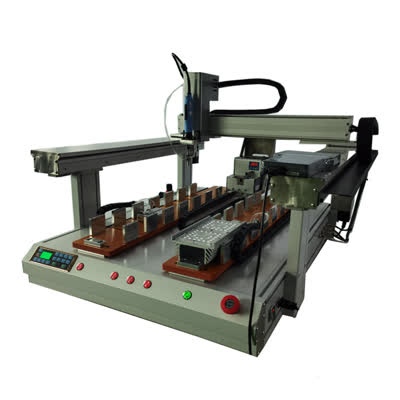
Product Name Applicable industries Screw Fastening Unit PCB and Circuit Board Assembly When it comes to industrial automation, screw locking equipment plays a critical role in ensuring precision, efficiency, and reliability in assembly processes. Investing in the right screw locking equipment can significantly impact your production quality and operational efficiency. Here are the key factors to consider when making this important investment. 1. Application Requirements Understanding your specific application requirements is the first step in selecting the right screw locking equipment. Consider factors such as the type of screws being used, the torque specifications, and the nature of the materials being assembled. Equipment designed for high-torque applications may not be suitable for delicate components, and vice versa. 2. Automation Level The level of automation in your production line will influence the type of screw locking equipment you need. Fully automated systems may require robotic screwdrivers with advanced integration capabilities, while semi-automated or manual stations may benefit from handheld or benchtop solutions. Evaluate whether your process requires continuous operation or batch processing. 3. Precision and Accuracy Screw locking equipment must deliver consistent precision to avoid under-tightening or over-tightening, which can lead to product defects or failures. Look for features such as torque control, angle monitoring, and real-time feedback to ensure repeatable accuracy. Some advanced systems also offer data logging for quality assurance. 4. Durability and Maintenance Industrial environments demand equipment that can withstand heavy use and harsh conditions. Choose screw locking tools made from high-quality materials with robust designs. Additionally, consider the ease of maintenance, including access to spare parts and the availability of technical support to minimize downtime. 5. Integration with Existing Systems Compatibility with your current production setup is crucial. Verify whether the screw locking equipment can seamlessly integrate with your existing machinery, software, and control systems. Some equipment may require additional adapters or programming to function efficiently within your workflow. 6. Cost-Effectiveness While initial cost is an important consideration, it’s essential to evaluate the long-term value of the equipment. Factor in energy efficiency, operational costs, durability, and potential productivity gains to determine the true return on investment. 7. Safety Features Worker safety should never be compromised. Ensure the equipment includes safety mechanisms such as emergency stop functions, protective guards, and ergonomic designs to reduce fatigue and injury risks. 8. Future Scalability As your production needs evolve, your screw locking equipment should be able to scale accordingly. Opt for modular or upgradeable systems that can adapt to higher volumes or new applications without requiring a complete overhaul. By carefully considering these factors, you can make an informed decision when investing in screw locking equipment, ensuring optimal performance and long-term benefits for your industrial automation processes.
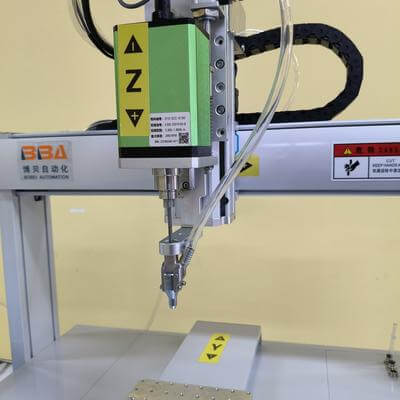
In modern manufacturing, screw locking is a fundamental yet critical assembly process. Ensuring the accuracy and reliability of this operation is vital to maintaining product quality and preventing downstream failures. Real-time error detection in screw locking processes has emerged as a game-changer, enabling manufacturers to identify and rectify issues immediately, reducing downtime, and optimizing production efficiency. Traditionally, errors in screw locking—such as cross-threading, insufficient torque, or missing screws—were often detected only during post-assembly inspections, leading to costly rework or even product recalls. However, with advanced sensor technologies and intelligent monitoring systems, manufacturers can now identify anomalies in real time, ensuring each screw is fastened correctly before moving to the next stage of production. One of the key technologies enabling real-time error detection is torque and angle monitoring. By analyzing the rotational force (torque) and the angular displacement (angle) during the screw locking process, automated systems can detect deviations from predefined parameters. If the torque is too low, it may indicate a loose screw; if it's too high, there could be cross-threading or material damage. Similarly, an abnormal angle deviation might suggest misalignment or stripped threads. Another critical component is machine vision, which can verify screw presence, positioning, and even thread engagement. High-resolution cameras combined with AI-powered image processing algorithms can quickly inspect each screw, flagging missing, misaligned, or improperly seated fasteners. This eliminates reliance on manual checks and significantly reduces human error. Additionally, real-time feedback loops allow for immediate corrective actions. For instance, if a screw fails to meet the required torque specification, the system can automatically retry the fastening process or halt the production line for operator intervention. This minimizes defective outputs and ensures consistent product quality. Integrating these technologies into Industry 4.0-enabled production lines further enhances their capabilities. Data from screw locking processes can be logged, analyzed, and used for predictive maintenance, process optimization, and reporting. Manufacturers gain insights into trends, such as tool wear or recurring errors, allowing for proactive adjustments before major issues arise. In conclusion, real-time error detection in screw locking processes represents a significant leap forward in manufacturing precision and efficiency. By leveraging torque monitoring, machine vision, and intelligent feedback systems, companies can drastically reduce defects, improve product reliability, and maintain competitive advantage in an increasingly automated industrial landscape. Product Name Applicable industries Screw Fastening Unit Laptop and Tablet Assembly
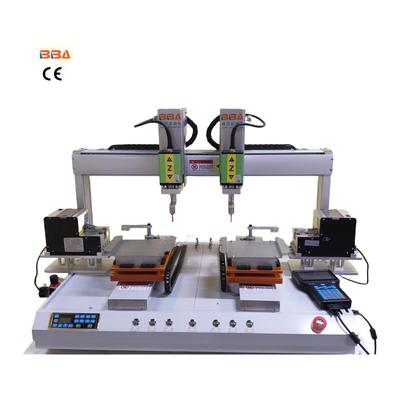
Product Name Applicable industries Smart Screw Driving Machine PCB and Circuit Board Assembly Screw locking machines are essential in manufacturing and assembly lines, ensuring fasteners are securely tightened to the required torque. Evaluating their performance is critical to maintaining product quality, operational efficiency, and workplace safety. This guide explores key factors to consider when assessing the performance of a screw locking machine. 1. Torque Accuracy and Consistency A screw locking machine's primary function is to apply precise torque to fasteners. To evaluate performance, measure the machine's torque accuracy against specified tolerances using a calibrated torque analyzer. Consistent torque application ensures uniformity in assembly and prevents issues like under-tightening or over-tightening, which can lead to product failures. 2. Speed and Efficiency The machine's cycle time per screw directly impacts production throughput. Measure the time taken to complete a locking operation and compare it with the manufacturer’s rated speed. High-performance machines balance speed with precision, minimizing downtime while maintaining reliability. 3. Durability and Maintenance Requirements Assess the machine's build quality and lifespan under operational conditions. Machines with robust construction and minimal wear-and-tear reduce maintenance costs and unexpected failures. Review maintenance logs to determine the frequency of part replacements or servicing. 4. Error Detection and Feedback Systems Advanced screw locking machines offer real-time monitoring and error detection, such as misaligned screws or insufficient torque. Evaluate whether the machine provides actionable feedback, such as alerts or automatic shutdowns, to prevent defective assemblies from progressing down the line. 5. Adaptability to Different Fasteners A versatile machine should handle various screw sizes and materials without frequent adjustments. Test its performance with different fastener types to ensure consistent locking quality. Machines with quick-change tooling or programmable settings improve flexibility. 6. Energy Consumption and Noise Levels Energy-efficient machines reduce operational costs, while low-noise models contribute to a safer work environment. Compare power usage data and conduct noise level measurements to ensure compliance with workplace regulations. 7. User-Friendliness and Training Requirements A well-designed interface and intuitive controls minimize training time and operator errors. Assess the ease of setup, programming, and troubleshooting. Machines with clear documentation and responsive support services enhance productivity. By systematically evaluating these factors, manufacturers can ensure their screw locking machines deliver optimal performance, reliability, and cost-efficiency. Regular performance reviews and preventive maintenance further extend the machine's lifespan and maintain high-quality production standards.
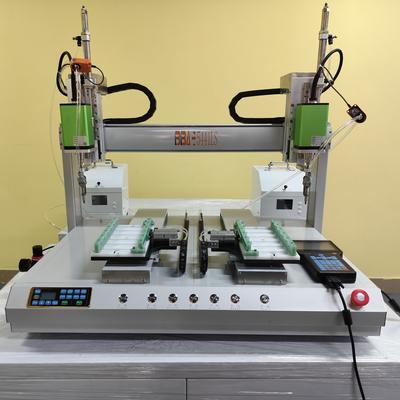
Product Name Applicable industries Smart Screw Driving Machine Electric Bicycle Assembly body { font-family: Arial, sans-serif; line-height: 1.6; color: #333; margin: 0; padding: 20px; } h1 { color: #2c3e50; font-size: 24px; margin-bottom: 20px; } h2 { color: #34495e; font-size: 20px; margin-top: 25px; margin-bottom: 15px; } p { margin-bottom: 15px; } strong { font-weight: bold; } ul { margin-bottom: 15px; padding-left: 20px; } Machine Learning in Torque Adjustment In the rapidly evolving field of industrial automation, precision and efficiency are paramount. One of the most critical aspects of manufacturing and machinery operation is torque adjustment, which ensures optimal performance and longevity of equipment. With the advent of machine learning (ML), this process has become more sophisticated, accurate, and adaptive than ever before. The Role of Torque Adjustment in Industrial Automation Torque adjustment refers to the controlled application of rotational force to fasteners, motors, and other mechanical components. Proper torque is essential for: Ensuring structural integrity of assembled parts Preventing over-tightening or under-tightening Reducing wear and tear on machinery Maintaining consistent product quality How Machine Learning Enhances Torque Adjustment Traditional torque adjustment methods rely on fixed parameters and human expertise. However, ML introduces dynamic optimization by analyzing vast amounts of operational data in real time. Key benefits include: Predictive Adjustments: ML algorithms can predict the optimal torque settings based on historical performance data, material properties, and environmental conditions. Adaptive Control: Systems can automatically adjust torque in response to changing variables such as temperature, humidity, or material variations. Fault Detection: Machine learning models can identify anomalies in torque application, preventing potential failures before they occur. Optimized Energy Consumption: By calculating the precise torque required, ML reduces unnecessary energy use, lowering operational costs. Applications in Industrial Automation Machine learning-driven torque adjustment is transforming various industrial processes, including: Automotive manufacturing, where consistent bolt tightening is critical for safety. Consumer electronics assembly, requiring precision in miniature components. Robotic systems, ensuring accurate force application in repetitive tasks. Energy sector equipment, where high-torque applications demand reliability. The Future of ML in Torque Adjustment As machine learning technology continues to advance, we can expect even greater capabilities in torque adjustment systems. Future developments may include: Integration with IoT for seamless connectivity across manufacturing ecosystems. More sophisticated neural networks capable of handling complex, multi-variable scenarios. Self-learning systems that continuously improve their algorithms based on operational feedback. The adoption of machine learning in torque adjustment represents a significant leap forward for industrial automation, offering unprecedented levels of precision, efficiency, and reliability. As industries continue to embrace smart manufacturing, these technologies will become increasingly indispensable for maintaining competitive advantage in the global market.
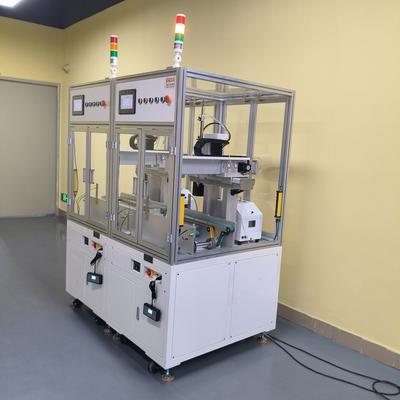
Multi-Axis Screw Robot Search Trends: Revolutionizing Industrial Automation The industrial automation landscape is continuously evolving, with multi-axis screw robots emerging as a game-changer in manufacturing and assembly processes. As search trends indicate growing interest in this technology, it's clear that businesses are recognizing the transformative potential of these advanced robotic systems. This article explores the key trends, applications, and benefits driving the popularity of multi-axis screw robots. Understanding Multi-Axis Screw Robots Multi-axis screw robots represent a significant advancement in automated fastening technology. Unlike traditional single-axis systems, these robots offer greater flexibility and precision through their ability to move and adjust along multiple planes. The increased degrees of freedom allow for complex screwdriving operations in confined spaces and at challenging angles that would be difficult or impossible for human workers or simpler machines. Key Factors Driving Search Trends Several factors contribute to the rising search volume for multi-axis screw robot technology. First, manufacturers are under increasing pressure to improve production efficiency while maintaining high-quality standards. These robots enable faster cycle times with consistent results. Second, labor shortages in many industrial sectors have accelerated the adoption of automation solutions. Third, advancements in robotic vision systems and AI have made multi-axis robots more adaptable to variable production environments. Applications Showing Highest Demand Analysis of search patterns reveals particular interest in applications involving electronic device assembly, automotive component manufacturing, and medical device production. The electronics sector especially values these robots for their ability to handle small, delicate components with micron-level precision. In automotive applications, multi-axis screw robots are increasingly used for interior panel assembly and engine component fastening. Technological Advancements Fueling Growth Recent innovations in multi-axis screw robot technology include integrated torque monitoring systems, self-learning capabilities for adaptive fastening, and collision detection features for enhanced safety. These improvements address common concerns in automated screwdriving, such as thread stripping or cross-threading, making the technology more reliable for critical applications. The development of compact models with higher payload capacities has also expanded their use in space-constrained production lines. Future Outlook and Market Potential Search trend analysis suggests sustained growth in interest for multi-axis screw robots as industries continue to embrace Industry 4.0 principles. The integration of IoT capabilities for real-time monitoring and predictive maintenance is expected to drive further adoption. Additionally, as manufacturers seek more flexible production systems, the reprogrammability and quick changeover features of modern multi-axis robots will likely make them an increasingly attractive investment for businesses of all sizes. The rising search volume for multi-axis screw robot solutions reflects broader shifts in industrial automation priorities. As technology continues to advance and production demands evolve, these sophisticated robotic systems will play an increasingly vital role in maintaining competitive manufacturing operations worldwide. Product Name Applicable industries Inline Screw Locking System Security Equipment Manufacturing
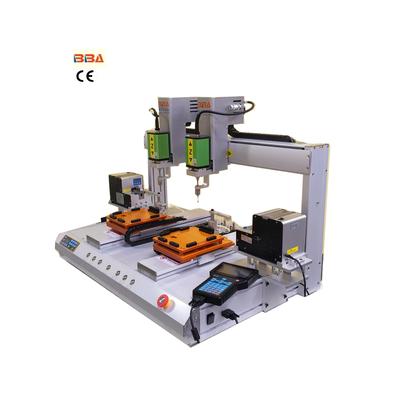
Product Name Applicable industries Auto Screwdriver Machine Smart Wearables Production In today's fast-paced manufacturing landscape, efficiency and precision are paramount. Industrial automation has become a cornerstone of modern production lines, and screw locking robots are emerging as a game-changing solution to enhance production speed while maintaining impeccable quality standards. Screw locking robots represent a significant leap forward in assembly automation. These sophisticated machines are designed to streamline the fastening process, eliminating bottlenecks caused by manual screwdriving operations. With their advanced vision systems and precise torque control, these robots can consistently apply screws with unmatched accuracy at speeds far beyond human capability. One of the most compelling advantages of screw locking robots is their ability to maintain continuous operation without fatigue. Unlike human workers who require breaks and are susceptible to variability in performance, robotic systems deliver consistent output 24/7. This reliability translates directly to increased throughput and reduced cycle times, allowing manufacturers to meet tight production schedules and respond swiftly to market demands. The precision of screw locking robots offers additional benefits beyond speed. By applying exactly the right torque every time, these systems prevent product damage caused by over-tightening or under-tightening screws. This level of consistency significantly reduces defect rates and improves overall product quality while eliminating the costs associated with rework and warranty claims. Modern screw locking robots are remarkably adaptable, capable of handling multiple screw types and sizes within the same production line. Advanced models feature quick-change tooling systems that allow for rapid conversion between different fastening requirements, minimizing downtime during product changeovers. Some systems even incorporate artificial intelligence to automatically adjust torque parameters based on material properties and other variables. Integration with existing production systems is seamless, thanks to standardized communication protocols. Screw locking robots can be easily incorporated into both new and established assembly lines, communicating with other machinery to create a synchronized, highly efficient manufacturing process. Many systems also feature comprehensive data tracking capabilities, providing valuable insights into production metrics for continuous improvement initiatives. For manufacturers looking to stay competitive in an increasingly automated world, the implementation of screw locking robots offers a clear path to enhanced productivity. The combination of speed, precision, and reliability these systems provide makes them an essential component of any modern production facility aiming to maximize output while maintaining strict quality standards. As technology continues to advance, we can expect screw locking robots to become even more capable, with improved machine learning algorithms and enhanced sensory capabilities that will further push the boundaries of what's possible in industrial automation. For forward-thinking manufacturers, the time to embrace this transformative technology is now.
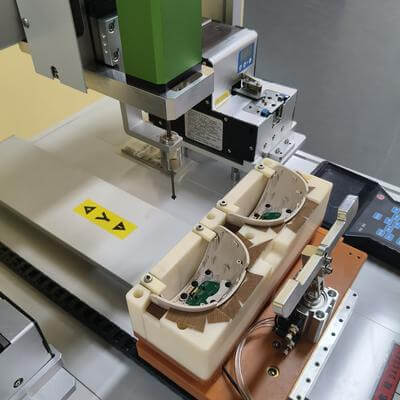
Comparing Torque Ranges in Servo Screw Machines Servo screw machines have become a cornerstone in modern industrial automation, offering precision, efficiency, and versatility in fastening applications. One of the most critical factors to consider when selecting a servo screw machine is its torque range. Understanding and comparing torque ranges can help manufacturers optimize their production processes and ensure reliable performance across different applications. Why Torque Range Matters Torque is a measure of rotational force, and in screw driving applications, it determines how tightly a fastener is secured. A servo screw machine's torque range defines the minimum and maximum torque values it can deliver. Selecting a machine with an appropriate torque range is essential for: Ensuring consistent fastener tightening without under- or over-torquing Accommodating different screw sizes and materials Preventing damage to delicate components or workpieces Maintaining production quality and reducing rework Low-Torque vs. High-Torque Applications Servo screw machines can be broadly categorized based on their torque capabilities: Low-Torque Machines (0.01 Nm to 1 Nm): Ideal for precision applications such as electronics assembly, medical device manufacturing, and miniature components. These machines provide exceptional control for delicate fastening operations where over-torqueing could cause damage. Medium-Torque Machines (1 Nm to 10 Nm): Suited for general industrial assembly tasks, automotive components, and consumer goods manufacturing. This range offers a balance between precision and power for most standard fastening applications. High-Torque Machines (10 Nm and above): Designed for heavy-duty applications in industries like aerospace, construction equipment, and large machinery assembly. These machines can handle larger fasteners and more demanding materials. Key Considerations When Comparing Torque Ranges Application Requirements: Analyze the torque specifications of your most common fastening tasks. Torque Accuracy: Look for machines with high torque accuracy (±2-3% is typical for quality servo systems). Adjustability: Machines with wide, programmable torque ranges offer greater flexibility. Speed-Torque Relationship: Consider how torque output varies with rotational speed (rpm). Tooling Compatibility: Ensure the machine can accommodate the necessary screwdriver bits and accessories. Benefits of Optimal Torque Selection Choosing a servo screw machine with the right torque range for your applications delivers significant advantages: Improved product quality through consistent fastening Reduced scrap and rework costs Extended tool life due to proper torque application Increased production efficiency with faster cycle times Better process control and traceability When evaluating servo screw machines, always consider both your current torque requirements and potential future needs. Many modern servo systems offer adjustable torque ranges that can be reprogrammed as requirements change, providing long-term value and flexibility for your automation processes. Product Name Applicable industries Inline Screw Locking System PCB and Circuit Board Assembly
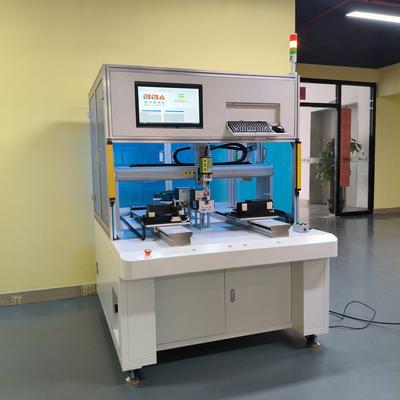
Daily Maintenance Checklist for Screw Fastening Equipment Proper maintenance of screw fastening equipment is critical to ensuring efficiency, accuracy, and longevity in industrial automation operations. A well-structured daily maintenance checklist helps minimize downtime, reduce wear and tear, and prevent costly repairs. Below is a comprehensive guide to maintaining your screw fastening equipment on a daily basis. 1. Visual Inspection Before starting operations, conduct a thorough visual inspection of the equipment. Check for any visible signs of damage, such as cracks, loose components, or frayed cables. Ensure that all fastening tools, screws, and accessories are properly aligned and securely attached. 2. Lubrication Lubricate moving parts as recommended by the manufacturer. Proper lubrication reduces friction and prevents overheating, ensuring smooth operation. Pay special attention to the screwdriver bit, spindle, and guide mechanisms. 3. Check Air Pressure and Connections (for Pneumatic Tools) If your screw fastening equipment is pneumatic, verify that the air pressure is within the specified range. Inspect air hoses for leaks or cracks and ensure all connections are tight. Contaminants in the air supply can affect performance, so check for moisture or debris in the system. 4. Torque Calibration Regularly calibrate the torque settings to ensure consistent fastening accuracy. Use a torque tester to verify that the equipment is applying the correct force. Improper torque can lead to under-tightened or over-tightened screws, compromising product quality. 5. Cleanliness Keep the equipment and work area clean. Dust, debris, and residual materials can accumulate and interfere with performance. Wipe down surfaces and use compressed air to clear out any particles from tight spaces. 6. Test Run Before full-scale production, perform a test run to ensure the equipment is functioning as expected. Listen for unusual noises or vibrations, which may indicate misalignment or mechanical issues. 7. Software and Settings Verification (for Automated Systems) If your system is automated, ensure that the software and control settings are up to date and correctly configured. Verify that error logs are reviewed and addressed promptly. 8. Record Keeping Maintain a log of daily inspections, maintenance actions, and any anomalies detected. This helps track equipment health over time and aids in troubleshooting recurring issues. By following this daily maintenance checklist, you can enhance the performance and reliability of your screw fastening equipment. Consistent upkeep not only extends the lifespan of your tools but also improves productivity and ensures high-quality output in industrial automation processes. Product Name Applicable industries Screw Fastening Unit Laptop and Tablet Assembly