8618566785362 8618566785362 8618566785362 phoenix08@bbamachine.com
- All
- Product Name
- Product Keyword
- Product Model
- Product Summary
- Product Description
- Multi Field Search

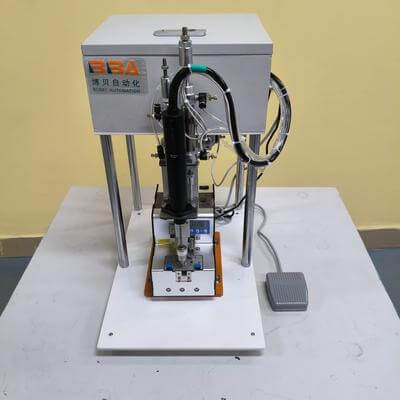
Product Name Applicable industries Inline Screw Locking System Smart Wearables Production In the rapidly evolving field of medical device manufacturing, precision and efficiency are paramount. The assembly of medical devices often involves intricate processes, with screw fastening being a critical step. Manual screwdriving can be time-consuming, error-prone, and inconsistent, leading to potential quality issues. This is where screw automation technology steps in, revolutionizing the way medical devices are assembled while ensuring unparalleled accuracy and repeatability. Screw automation systems are designed to handle the precise placement and tightening of screws in medical device assembly lines. These systems leverage advanced robotics, vision systems, and torque control mechanisms to deliver consistent results. By automating this process, manufacturers can significantly reduce human error, improve product quality, and increase throughput. The benefits are particularly pronounced in the medical industry, where even the slightest deviation can compromise device performance and patient safety. One of the key advantages of screw automation is its adaptability. Medical devices come in various shapes and sizes, and automated systems can be customized to accommodate different screw types, materials, and tightening specifications. Whether it’s miniature screws for delicate surgical instruments or larger fasteners for diagnostic equipment, automation ensures each screw is placed with the exact torque required for optimal performance. This level of precision is difficult to achieve manually, especially in high-volume production environments. Integration of screw automation into medical device assembly lines also enhances traceability. Modern systems are equipped with data logging capabilities, recording every step of the screwdriving process. This data can be used for quality control, compliance reporting, and process optimization. In an industry governed by strict regulatory standards, such as ISO 13485 and FDA requirements, having a verifiable record of each assembly step is invaluable. Automated systems ensure that every device meets the stringent criteria set by regulatory bodies. Another significant benefit is the reduction in production costs. While the initial investment in screw automation technology may seem substantial, the long-term savings are considerable. Automated systems minimize material waste, reduce labor costs, and decrease the likelihood of rework due to assembly errors. Additionally, faster cycle times mean higher productivity, allowing manufacturers to meet growing demand without compromising quality. For medical device companies, this translates to a stronger competitive edge in a market where reliability and efficiency are key differentiators. In conclusion, screw automation is transforming medical device assembly by delivering precision, efficiency, and compliance. As the industry continues to advance, adopting automated solutions will become increasingly essential for manufacturers aiming to stay ahead. By leveraging this technology, companies can ensure their products meet the highest standards of quality while optimizing their production processes for greater profitability and scalability.
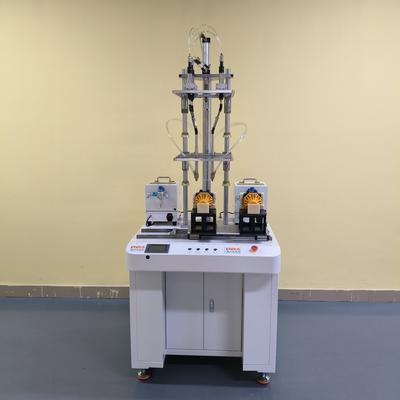
Product Name Applicable industries Desktop Screwdriver Robot Telecommunication Equipment Assembly Building a Fully Automated Screw Assembly Line In today's fast-paced industrial landscape, automation has become a cornerstone of efficiency and precision. One of the most transformative advancements in manufacturing is the development of fully automated screw assembly lines. These systems integrate cutting-edge robotics, smart sensors, and advanced software to streamline production, reduce errors, and enhance productivity. For companies aiming to stay competitive, investing in such technology is no longer optional—it's essential. A fully automated screw assembly line eliminates the need for manual labor in tasks like sorting, feeding, and tightening screws. Traditional assembly processes often suffer from inconsistencies due to human fatigue or oversight. By contrast, automation ensures uniform torque application, precise placement, and real-time quality checks. This results in higher product quality, reduced waste, and faster turnaround times. The core of this system lies in its modular design, which allows customization for various screw sizes, materials, and assembly requirements. Robots equipped with vision systems can identify and adjust to different parts, while servo-driven feeders ensure screws are delivered accurately to the assembly point. Additionally, data analytics tools monitor performance metrics, enabling predictive maintenance and continuous optimization. Safety is another critical benefit. Automated screw assembly lines minimize workplace injuries by handling repetitive or hazardous tasks. Advanced safety protocols, such as emergency stop mechanisms and collision detection, further protect operators and equipment. Compliance with industry standards is seamlessly integrated into the system's architecture. Scalability is equally important. Whether you're a small-scale manufacturer or a large industrial player, these systems can be tailored to meet growing demands. Retrofit options are also available for existing production lines, ensuring a smooth transition to automation without significant downtime. In conclusion, a fully automated screw assembly line represents the future of manufacturing. By embracing this technology, businesses can achieve unparalleled precision, efficiency, and safety. As industries evolve, automation will continue to play a pivotal role in shaping the factories of tomorrow. Now is the time to leverage these innovations and redefine what's possible in industrial assembly.
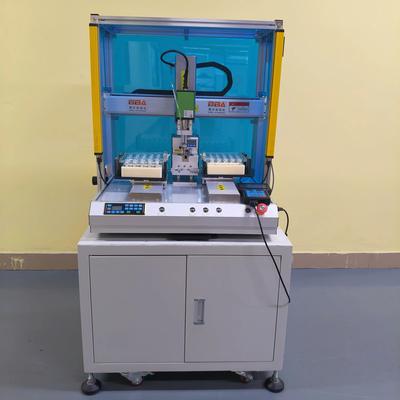
Product Name Applicable industries Desktop Screwdriver Robot Electric Bicycle Assembly Automotive Assembly Using Servo Motor Screw Systems The automotive industry is constantly evolving, with manufacturers striving to improve efficiency, precision, and reliability in their assembly processes. One of the key technologies driving this transformation is the use of servo motor screw systems. These advanced systems offer unparalleled control and flexibility, making them indispensable in modern automotive production lines. Servo motor screw systems combine the precision of servo motors with the robustness of screw driving mechanisms. Unlike traditional pneumatic or electric screwdrivers, servo-driven systems provide real-time feedback and programmable torque control. This ensures consistent fastening quality, reducing the risk of under- or over-tightening, which can lead to component failure or assembly defects. Key Advantages of Servo Motor Screw Systems in Automotive Assembly: Precision and Repeatability: Servo motors allow for exact control over speed, torque, and angle, ensuring each screw is fastened with the same high level of accuracy. Data Logging and Traceability: Modern systems can record and store torque and angle data for each fastening operation, enabling quality control and compliance with industry standards. Flexibility: These systems can be quickly reconfigured for different screw sizes and torque requirements, making them ideal for mixed-model production lines. Energy Efficiency: Servo motors consume power only when in operation, reducing energy costs compared to continuous-run systems. Reduced Maintenance: With fewer mechanical parts and no brushes, servo motors require less maintenance and have a longer lifespan. In automotive assembly, servo motor screw systems are commonly used in applications such as engine assembly, door panel installation, dashboard mounting, and battery pack fastening. Their ability to handle high-speed operations while maintaining precision makes them particularly valuable in electric vehicle (EV) production, where battery and motor assembly demands extreme accuracy. Another significant benefit is the integration of these systems with Industry 4.0 technologies. IoT-enabled servo screw systems can communicate with central monitoring platforms, providing real-time analytics and predictive maintenance alerts. This connectivity minimizes downtime and optimizes production efficiency. As automotive manufacturers continue to adopt automation and smart factory concepts, the demand for servo motor screw systems is expected to grow. Their ability to deliver consistent quality, reduce waste, and enhance productivity aligns perfectly with the industry’s goals of lean manufacturing and sustainability. In conclusion, servo motor screw systems represent a critical innovation in automotive assembly. By leveraging their precision, flexibility, and connectivity, manufacturers can achieve higher production standards while meeting the increasing demands of modern vehicle design and technology.
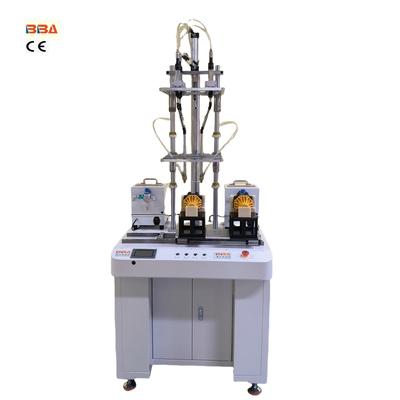
In today’s fast-paced industrial landscape, efficiency and precision are paramount for manufacturers. One critical component in assembly lines is the screw fastening system, which ensures the structural integrity and reliability of products. For businesses looking to streamline their operations, OEM customization for screw fastening systems offers a tailored solution to meet specific production needs. This blog explores the advantages, applications, and key considerations when opting for customized screw fastening solutions. Custom screw fastening systems are designed to align seamlessly with your production requirements. Whether you need high-speed automation for large-scale manufacturing or precision tightening for delicate components, OEM customization ensures the system integrates flawlessly with your workflow. By collaborating with experienced engineers, you can develop solutions that enhance productivity, reduce downtime, and minimize human error. One of the primary benefits of OEM customization is adaptability. Standard screw fastening systems may not always accommodate unique product designs or specialized materials. Custom solutions, however, can be engineered to handle varying torque requirements, thread types, and surface finishes. This flexibility is particularly valuable in industries such as automotive, electronics, and aerospace, where precision and repeatability are non-negotiable. Another advantage is improved efficiency. Customized systems can be equipped with advanced features like real-time monitoring, automatic error detection, and data logging. These capabilities enable manufacturers to maintain consistent quality while optimizing cycle times. Additionally, integrating IoT-enabled sensors can provide valuable insights into performance metrics, helping businesses make data-driven decisions for continuous improvement. Durability and longevity are also key considerations. Industrial environments often involve harsh conditions, including vibrations, temperature fluctuations, and exposure to contaminants. OEM customization allows for the selection of robust materials and coatings that enhance the system’s resistance to wear and tear. This ensures long-term reliability and reduces maintenance costs over time. When opting for a customized screw fastening system, it’s essential to collaborate with a partner who understands your industry’s specific challenges. A thorough assessment of your production line, including load capacities, space constraints, and desired output, will help tailor a solution that delivers maximum ROI. Furthermore, post-installation support and training ensure smooth adoption and sustained performance. In conclusion, OEM customization for screw fastening systems is a game-changer for manufacturers seeking precision, efficiency, and scalability. By investing in a solution designed specifically for your needs, you can achieve higher product quality, reduced operational costs, and a competitive edge in your market. As automation continues to evolve, customized screw fastening systems will remain a cornerstone of industrial innovation. Product Name Applicable industries Screw Locking Robot LED Lighting Industry
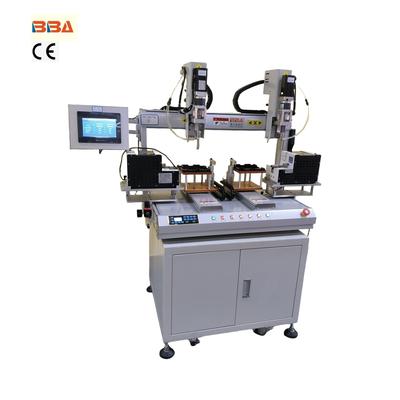
Industrial automation has transformed manufacturing by enabling seamless integration between PLC systems and production lines. As industries strive for higher efficiency and precision, the ability to connect and synchronize programmable logic controllers (PLCs) with production machinery becomes a critical factor in optimizing operations. PLCs serve as the backbone of modern automation, controlling machinery and processes with unparalleled accuracy. Connecting these systems to production lines ensures real-time monitoring, data collection, and responsive adjustments. This integration minimizes downtime, reduces human error, and enhances overall productivity. One of the key challenges in industrial automation is ensuring compatibility between different PLC models and production equipment. Standardized communication protocols, such as Modbus, Profibus, and Ethernet/IP, play a vital role in bridging these gaps. By leveraging these protocols, manufacturers can achieve interoperability across disparate systems, simplifying maintenance and scalability. The integration process begins with configuring the PLC to communicate with sensors, actuators, and other devices on the production line. This setup allows the PLC to receive input signals, process data, and execute commands in real time. Advanced PLCs even support remote access, enabling engineers to monitor and adjust parameters from anywhere, further improving operational flexibility. Data acquisition is another significant benefit of connecting PLCs to production lines. By collecting performance metrics such as cycle times, error rates, and energy consumption, manufacturers gain valuable insights into process efficiency. Analyzing this data helps identify bottlenecks, predict maintenance needs, and optimize resource allocation. Safety is a paramount concern in industrial environments. Integrating safety PLCs with production lines ensures compliance with regulatory standards while protecting workers and equipment. Features like emergency stop functions, fault detection, and automated shutdowns enhance workplace safety and reduce the risk of accidents. The future of PLC and production line integration lies in the adoption of Industry 4.0 technologies. Smart factories leverage IoT-enabled devices, AI-driven analytics, and cloud computing to create fully interconnected ecosystems. PLCs will continue to evolve, supporting more sophisticated algorithms and predictive capabilities to meet the demands of next-generation manufacturing. For businesses looking to stay competitive, investing in reliable PLC systems and seamless production line integration is no longer optional—it’s a necessity. By embracing these advancements, manufacturers can achieve higher throughput, lower operational costs, and improved product quality in an increasingly automated world. Product Name Applicable industries Inline Screw Locking System LED Lighting Industry
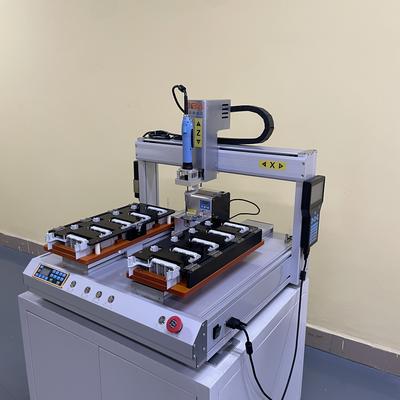
In today's fast-paced industrial landscape, precision and efficiency are paramount. One of the key components driving this efficiency in manufacturing and automation is servo-controlled screw solutions. These advanced systems are revolutionizing the way industrial equipment operates, offering unparalleled accuracy, speed, and reliability. In this article, we explore the benefits and applications of servo-controlled screw solutions and how they can enhance your industrial processes. What Are Servo-Controlled Screw Solutions? Servo-controlled screw solutions are advanced fastening systems that utilize servo motors to deliver precise torque and angle control. Unlike traditional pneumatic or electric screwdrivers, servo-controlled systems offer real-time feedback and adjustability, ensuring consistent and repeatable results. This makes them ideal for applications where precision is critical, such as electronics assembly, automotive manufacturing, and medical device production. Key Benefits of Servo-Controlled Screw Solutions Precision Control: Servo motors provide exact torque and angle control, reducing the risk of over-tightening or under-tightening screws. High Speed: These systems can operate at high speeds without compromising accuracy, making them perfect for high-volume production lines. Data Tracking: Many servo-controlled screw solutions come with integrated data logging, allowing for process monitoring and quality assurance. Versatility: They can handle a wide range of screw sizes and materials, adapting to various industrial applications. Energy Efficiency: Servo motors consume less energy compared to traditional systems, reducing operational costs. Applications in Industrial Equipment Servo-controlled screw solutions are widely used across various industries. In the automotive sector, they ensure secure and precise fastening of critical components, enhancing safety and durability. In electronics manufacturing, they prevent damage to delicate parts by providing controlled torque. Medical device manufacturers rely on these systems for sterile and error-free assembly processes. Additionally, servo-controlled screw solutions are increasingly adopted in aerospace, robotics, and consumer goods production, where precision and reliability are non-negotiable. Choosing the Right Servo-Controlled Screw Solution When selecting a servo-controlled screw solution for your industrial equipment, consider factors such as torque requirements, speed, and the specific demands of your application. Look for systems with user-friendly interfaces, robust construction, and compatibility with your existing production line. Investing in a high-quality servo-controlled screw solution can lead to long-term savings, improved product quality, and increased productivity. In conclusion, servo-controlled screw solutions represent a significant advancement in industrial automation. By integrating these systems into your equipment, you can achieve higher precision, efficiency, and reliability, giving your business a competitive edge in the modern manufacturing landscape. Product Name Applicable industries Smart Screw Driving Machine Laptop and Tablet Assembly
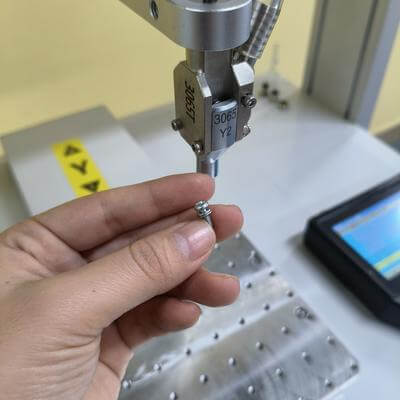
Video Explainer: How a Robotic Screw Machine Works In the fast-paced world of industrial automation, robotic screw machines play a crucial role in enhancing efficiency, precision, and productivity. These advanced machines are designed to automate the process of fastening screws, nuts, and bolts, eliminating human error and significantly speeding up production lines. This article will break down how a robotic screw machine operates and its benefits in modern manufacturing. Key Components of a Robotic Screw Machine A robotic screw machine consists of several critical components that work together to deliver flawless performance: Robotic Arm: The core of the system, equipped with high-precision motors and sensors to position and drive screws accurately. Screw Feeder: Automatically supplies screws to the robotic arm, ensuring a continuous workflow. Vision System: Uses cameras and AI to detect screw positions and align them correctly with the target. Torque Control: Adjusts the tightening force to prevent damage to materials or screws. User Interface: Allows operators to program and monitor the machine easily. How It Works The process begins when the screw feeder delivers screws to the robotic arm, which picks them up using a magnetic or vacuum-based tool. The vision system scans the workpiece to determine the exact location for screw placement. The arm then positions the screw and applies the correct torque to fasten it securely. This cycle repeats seamlessly, handling hundreds or even thousands of screws per hour with minimal downtime. Benefits of Using Robotic Screw Machines Increased Productivity: Robots work faster and more consistently than manual labor. Improved Precision: Eliminates human error, ensuring every screw is perfectly placed. Reduced Costs: Lowers labor expenses and minimizes material waste. Scalability: Easily adaptable to different production volumes and product designs. For manufacturers looking to optimize their assembly lines, robotic screw machines are an invaluable investment. They not only enhance operational efficiency but also ensure consistent quality across all products. Watch our video explainer below to see a robotic screw machine in action and discover how it can transform your production process. With advancements in automation technology, robotic screw machines continue to evolve, offering even greater speed, flexibility, and intelligence. Stay ahead of the competition by integrating these cutting-edge solutions into your manufacturing workflow. Product Name Applicable industries Smart Screw Driving Machine Telecommunication Equipment Assembly

In industrial automation, selecting the right tool for fastening applications is crucial for efficiency and precision. Two common solutions are servo motor screwdrivers and pneumatic screwdrivers. While both serve the same fundamental purpose—driving screws—they differ significantly in operation, performance, and suitability for various applications. Understanding these differences helps manufacturers make informed decisions. 1. Power Source and Mechanism Servo motor screwdrivers are electrically powered, utilizing precise motor control to adjust torque, speed, and angle with high accuracy. They rely on closed-loop feedback systems to ensure consistent performance. In contrast, pneumatic screwdrivers use compressed air to generate torque. They operate via an air motor, which provides rapid rotation but lacks the fine-tuned control of servo systems. Air pressure fluctuations can also impact their consistency. 2. Precision and Control Servo motor screwdrivers excel in precision, offering programmable torque, speed, and rotation angle. This makes them ideal for applications demanding repeatability, such as electronics assembly or delicate components. Pneumatic screwdrivers, while fast, are less precise due to their reliance on air pressure. They suit high-volume tasks where exact torque control isn’t critical, like automotive or heavy machinery assembly. 3. Speed and Efficiency Pneumatic screwdrivers typically operate at higher speeds, making them efficient for rapid, repetitive tasks. However, their speed can lead to over-tightening or inconsistency. Servo motor screwdrivers are slower but provide controlled, repeatable performance. Their ability to store and recall settings for different screws enhances efficiency in mixed-production environments. 4. Maintenance and Durability Pneumatic tools require regular maintenance, including lubrication and air filter checks, to prevent wear from moisture or debris in compressed air. Servo motor screwdrivers have fewer moving parts and don’t rely on external air supply, reducing maintenance needs. Their electronic components, however, may require troubleshooting for software or sensor issues. 5. Cost Considerations Pneumatic screwdrivers are generally cheaper upfront and suitable for budget-conscious operations. Servo motor screwdrivers involve higher initial costs but offer long-term savings through energy efficiency, reduced downtime, and lower maintenance. Their precision also minimizes product defects, improving overall ROI. 6. Environmental Impact Servo motor screwdrivers are more energy-efficient, consuming power only during operation. Pneumatic tools waste energy compressing air, and leaks in air lines can further reduce efficiency. For companies prioritizing sustainability, servo systems are the greener choice. In summary, servo motor screwdrivers provide unmatched precision and adaptability for complex or sensitive tasks, while pneumatic screwdrivers offer speed and affordability for high-volume, less critical applications. The right choice depends on production requirements, budget, and long-term operational goals. Product Name Applicable industries Automatic Screw Feeder LED Lighting Industry