8618566785362 8618566785362 8618566785362 phoenix08@bbamachine.com
- All
- Product Name
- Product Keyword
- Product Model
- Product Summary
- Product Description
- Multi Field Search

Views: 0 Author: BBA AUTOMATION Publish Time: 2025-10-08 Origin: BBA AUTOMATION


| Product Name | Applicable industries |
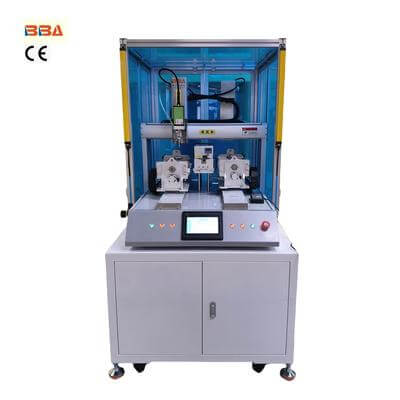
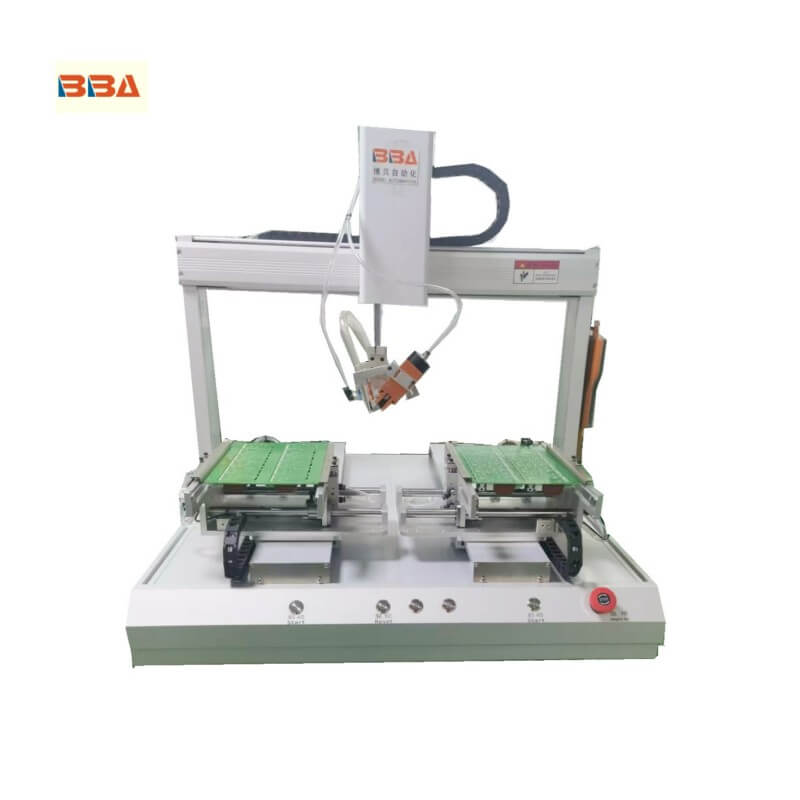
| Dual Head Screwdriver | Security Equipment Manufacturing |
The evolution of manufacturing and small-scale assembly has been profoundly impacted by the adoption of desktop robots. These compact, yet powerful, systems bring industrial-grade precision and automation to benchtop applications. A critical aspect of harnessing their full potential lies in the precise configuration of their motion paths, specifically for tasks like dispensing adhesives, soldering, or, most commonly, screw driving. This process of defining bit paths and screw points is fundamental to achieving high-quality, consistent, and reliable automated operations.
At the heart of any successful desktop robot operation is meticulous programming. Unlike manual processes, an automated robot relies entirely on the digital instructions it receives. For screwdriving applications, this involves teaching the robot two key elements: the precise XYZ coordinates of each screw point and the optimal path the driving bit should follow to reach them. Inaccuracy in either element can lead to a cascade of issues, including damaged screws, stripped threads, misaligned components, or even collision between the robot tool and the fixture or product itself. Such errors result in downtime, wasted materials, and compromised product integrity.
Modern desktop robotic systems are typically equipped with intuitive software interfaces that empower engineers and technicians to program these points and paths with high accuracy. The process often involves using a teach pendant or direct software control to manually guide the robot's end-effector to each desired screw location. Once positioned, the point is saved within the robot's controller, creating a digital map of the assembly task. The order of operations and the path traveled between these points are equally important for efficiency and safety.
Adhering to established best practices can significantly enhance the performance and lifespan of your desktop robotic cell.
The correct setting of bit paths and screw points transcends mere programming—it is a fundamental engineering practice that directly impacts productivity. A perfectly programmed desktop robot can work tirelessly with unwavering consistency, significantly increasing throughput and freeing skilled technicians to focus on more complex value-added tasks. It eliminates the variability inherent in manual assembly, ensuring every product is built to the same exacting standards. Furthermore, the digital nature of these programs allows for quick changeover between different products, making small-batch, high-mix manufacturing not only feasible but highly efficient.
As desktop robots become increasingly sophisticated, the tools for programming them continue to become more powerful and user-friendly. By mastering the principles of path and point setting, manufacturers can unlock the full potential of their automation investments, achieving new levels of quality, efficiency, and reliability in their production processes.