8618566785362 8618566785362 8618566785362 phoenix08@bbamachine.com
- All
- Product Name
- Product Keyword
- Product Model
- Product Summary
- Product Description
- Multi Field Search

Views: 0 Author: BBA AUTOMATION Publish Time: 2025-10-06 Origin: BBA AUTOMATION


| Product Name | Applicable industries |
| Auto Screwdriver Machine | Automotive Electronics Assembly |
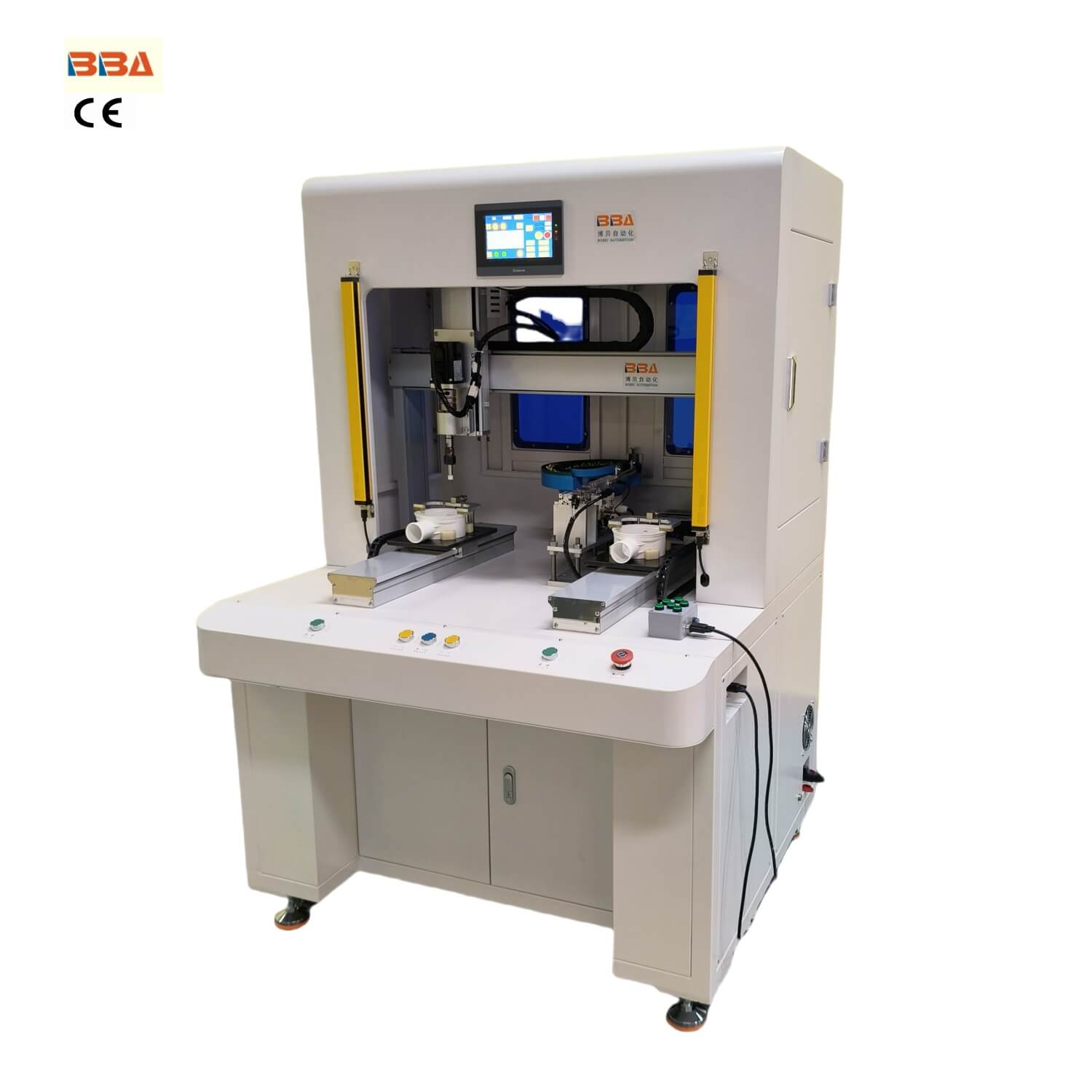
In today's competitive manufacturing landscape, efficiency, precision, and consistency are not just goals—they are necessities for survival and growth. This is why a significant and growing number of factories across various industries are making the strategic shift from manual screw fastening processes to fully automatic screw locking machines. This transition is fundamentally reshaping production floors, leading to remarkable gains in productivity and product quality.
The primary driver behind this shift is the relentless pursuit of enhanced operational efficiency. Manual screw driving is inherently time-consuming and labor-intensive. It is prone to human fatigue, leading to bottlenecks on the assembly line. Automatic screw locking machines, however, operate with relentless speed and accuracy. They can deliver thousands of perfectly driven screws per hour without breaks, dramatically increasing throughput and reducing cycle times. This allows factories to meet higher production demands and shorter time-to-market windows with ease.
Beyond speed, the issue of uncompromising quality control is paramount. Human operators, despite their best efforts, can make mistakes. These can include cross-threading, stripping screws, applying incorrect torque, or even missing screws entirely. Such errors lead to product defects, costly rework, and potential field failures that damage brand reputation. Automatic machines eliminate this variability. Each screw is driven with programmed, precise torque and depth, ensuring perfect consistency every single time. This drastically reduces the defect rate and enhances the overall reliability of the final product.
Another critical factor fueling adoption is the significant reduction in operational costs. While the initial investment in automation equipment is substantial, the long-term return on investment is compelling. Factories can achieve substantial savings by reducing their reliance on manual labor for repetitive tasks, thereby lowering long-term labor costs and reallocating human workers to more value-added roles such as machine supervision, quality inspection, and process improvement. Furthermore, the reduction in errors and material waste directly translates to lower costs per unit produced.
Addressing the challenge of labor shortages and workforce management is also a key consideration. In many regions, finding and retaining skilled labor for monotonous assembly tasks is becoming increasingly difficult. Automatic screw feeders provide a dependable solution, ensuring production continues uninterrupted regardless of workforce availability. They also improve ergonomics and worker safety by removing employees from repetitive strain injuries associated with manual screwdriving.
The versatility of modern automatic screw locking machines makes them suitable for a wide array of applications, from delicate electronics and consumer appliances to heavy-duty automotive assemblies. Advanced models can be integrated into existing production lines and programmed for multiple product types, offering the flexibility needed for high-mix manufacturing environments. This adaptability ensures that manufacturers can future-proof their operations.
In conclusion, the move towards automatic screw locking machines is a strategic decision driven by the tangible benefits of increased productivity, superior quality, reduced costs, and improved operational resilience. As technology continues to advance, these systems are becoming more intelligent, connected, and accessible. For forward-thinking factories aiming to stay ahead of the curve, automating the screw fastening process is no longer an option but an essential step towards building a smarter, more efficient, and competitive manufacturing operation.