8618566785362 8618566785362 8618566785362 phoenix08@bbamachine.com
- All
- Product Name
- Product Keyword
- Product Model
- Product Summary
- Product Description
- Multi Field Search

Views: 0 Author: BBA AUTOMATION Publish Time: 2025-10-05 Origin: BBA AUTOMATION


| Product Name | Applicable industries |
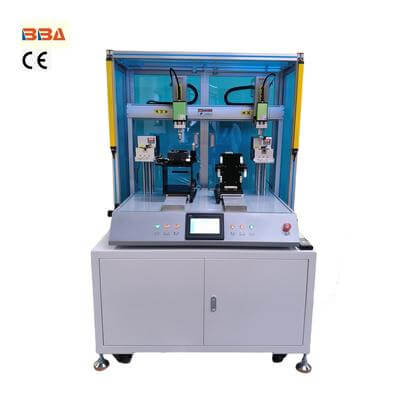
| CNC Screw Fastener | Automotive Electronics Assembly |
The evolution of smart factories is reshaping the industrial landscape, bringing unprecedented levels of efficiency, precision, and connectivity to manufacturing processes. At the heart of this transformation lies the integration of specialized equipment, such as fastening machines, into interconnected cyber-physical systems. These machines, once standalone tools, are now critical components in the automated assembly lines of Industry 4.0.
Fastening machines, including automated screwdrivers, nut runners, and robotic bolting systems, are essential for assembling products with high reliability and repeatability. In traditional settings, these machines operated in isolation, often requiring manual intervention for setup, monitoring, and quality checks. However, in a smart factory environment, they are seamlessly integrated into a networked ecosystem where they communicate with other machines, centralized control systems, and enterprise software.
This integration enables real-time data exchange, allowing manufacturers to monitor torque accuracy, fastener sequencing, and operational status remotely. By leveraging sensors and IoT-enabled devices, fastening machines can detect anomalies—such as cross-threading or under-torquing—and immediately alert operators or trigger corrective actions autonomously. This not only reduces defects but also minimizes downtime and maintenance costs.
The incorporation of fastening machines into smart factories offers several compelling advantages:
Successfully integrating fastening machines into a smart factory requires careful planning and execution. Key technical aspects include:
Moreover, the adoption of modular designs allows for easier upgrades and scalability, ensuring that fastening systems can evolve alongside other smart factory components.
The future of fastening machines in smart factories is poised to be even more innovative. With advancements in artificial intelligence and machine learning, these systems will become increasingly autonomous, capable of self-optimization and predictive maintenance. Collaborative robots (cobots) working alongside human operators will further enhance flexibility and productivity on the assembly floor.
Additionally, the rise of digital twins—virtual replicas of physical systems—will enable manufacturers to simulate and optimize fastening processes before implementation, reducing risks and accelerating time-to-market. As 5G technology becomes more prevalent, the low-latency, high-bandwidth connectivity will support even faster and more reliable machine-to-machine communication.
In conclusion, the integration of fastening machines into smart factories represents a significant leap forward in industrial automation. By embracing connectivity, data-driven insights, and adaptive technologies, manufacturers can achieve new levels of efficiency, quality, and agility in their operations.