8618566785362 8618566785362 8618566785362 phoenix08@bbamachine.com
- All
- Product Name
- Product Keyword
- Product Model
- Product Summary
- Product Description
- Multi Field Search

Views: 0 Author: BBA AUTOMATION Publish Time: 2025-10-04 Origin: BBA AUTOMATION


| Product Name | Applicable industries |
| Smart Screw Driving Machine | Power Tool Assembly Lines |
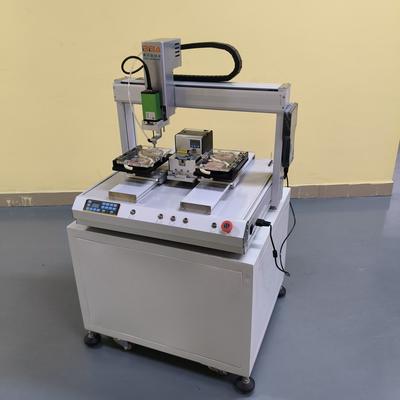
Multi-axis robotic arms are the backbone of modern industrial automation, performing tasks with precision and repeatability. However, like any complex system, they are susceptible to servo errors that can disrupt operations. Understanding how to diagnose these issues is crucial for minimizing downtime and maintaining productivity.
Servo errors in multi-axis arms typically manifest in several ways. Overload errors occur when the motor is subjected to excessive torque, often due to mechanical obstructions or incorrect parameters. Position errors arise when the actual position deviates from the commanded position, potentially caused by encoder issues or mechanical backlash. Communication errors can result from faulty cabling or electromagnetic interference, disrupting data between the controller and drives.
Pro Tip: Regular preventive maintenance, including checking cable integrity and verifying parameter settings, can reduce the occurrence of these errors.
Begin by reviewing the error code displayed on the controller. Each code provides a specific clue about the nature of the problem. For instance, an overload error might indicate mechanical binding, while a position error could point to encoder malfunction.
Next, inspect the mechanical components. Check for any signs of wear, misalignment, or obstruction in the joints and transmission elements. Ensure that the load conditions are within the specified limits and that there are no external forces causing unexpected resistance.
Electrical inspection is equally important. Verify the integrity of all cables and connections, looking for signs of damage or loose terminals. Use a multimeter to check voltage levels and continuity. For encoder-related issues, oscilloscopes can help analyze signal quality and identify noise or dropouts.
For persistent or intermittent issues, leveraging built-in diagnostic tools in the servo drives is essential. Many modern drives offer software that logs operational data, such as torque profiles, error histories, and temperature trends. Analyzing this data can reveal patterns that are not apparent during real-time observation.
Vibration analysis can also be employed to detect abnormalities in the motor or mechanical components. Abnormal vibrations often precede outright failures, providing an early warning sign.
Thermal imaging is another valuable tool. Overheating components, such as motors or drives, can indicate overloading or insufficient cooling. Identifying hot spots early can prevent catastrophic failures.
Prevention is always better than cure. Implement a rigorous maintenance schedule that includes regular calibration of encoders, tightening of mechanical fasteners, and verification of software parameters. Ensure that operators are trained to recognize early signs of potential issues, such as unusual noises or slight deviations in performance.
Environmental factors should not be overlooked. Ensure that the system operates within specified temperature and humidity ranges, and protect it from excessive dust or contaminants that could affect electrical connections or moving parts.
Finally, keep firmware and software up to date. Manufacturers often release updates that address known issues and improve system stability.
By adopting a systematic approach to diagnosing and preventing servo errors, you can enhance the reliability and longevity of your multi-axis automation systems, ensuring they continue to operate at peak performance.