8618566785362 8618566785362 8618566785362 phoenix08@bbamachine.com
- All
- Product Name
- Product Keyword
- Product Model
- Product Summary
- Product Description
- Multi Field Search

Views: 0 Author: BBA AUTOMATION Publish Time: 2025-10-03 Origin: BBA AUTOMATION


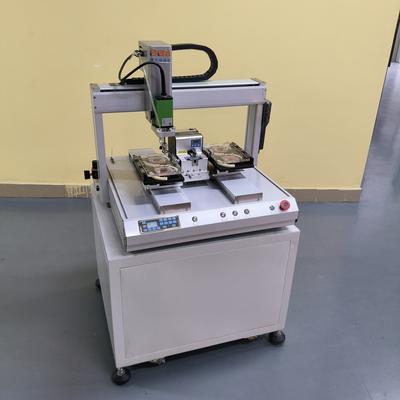
| Product Name | Applicable industries |
| Screw Locking Robot | Industrial Control Panel Assembly |
In the world of industrial manufacturing, maintaining precision and reliability across multiple production shifts is a significant challenge. One critical area where consistency is paramount is screw locking operations. Whether in automotive assembly, electronics manufacturing, or heavy machinery production, the integrity of screw fastening can impact product quality, safety, and performance. Variations in torque, angle, or sequencing between shifts can lead to inconsistencies that result in product defects, equipment failures, or even safety hazards.
To achieve uniformity in screw locking processes, manufacturers must address several key factors. First, standardized operating procedures are essential. Clearly documented guidelines for screw locking parameters—such as torque values, tightening sequences, and tool calibration—ensure that every operator, regardless of shift, follows the same protocol. This reduces human error and promotes repeatability.
Another crucial element is the use of advanced automated screw locking systems. Modern solutions incorporate real-time monitoring and data logging capabilities, allowing supervisors to track performance metrics across shifts. These systems can detect deviations from predefined parameters and alert operators immediately, preventing inconsistent applications. Additionally, automated tools can be programmed to enforce precise torque and angle settings, eliminating variability caused by manual operations.
Training and communication also play vital roles in maintaining consistency. Regular cross-shift training sessions ensure that all team members are up-to-date with the latest procedures and technologies. Open communication channels between shift leaders help address any discrepancies quickly, fostering a culture of continuous improvement.
Furthermore, integrating IoT-enabled devices into screw locking systems offers a proactive approach to consistency. Sensors embedded in tools collect data on each fastening operation, which is then analyzed to identify trends or anomalies across shifts. This data-driven insight enables predictive maintenance, reducing downtime and ensuring that equipment operates at peak performance consistently.
In conclusion, achieving consistency in screw locking across multiple shifts requires a combination of standardized processes, advanced automation, ongoing training, and data integration. By implementing these strategies, manufacturers can enhance product quality, optimize efficiency, and maintain a high level of reliability throughout their operations.