8618566785362 8618566785362 8618566785362 phoenix08@bbamachine.com
- All
- Product Name
- Product Keyword
- Product Model
- Product Summary
- Product Description
- Multi Field Search

Views: 0 Author: BBA AUTOMATION Publish Time: 2025-10-01 Origin: BBA AUTOMATION


In today's rapidly evolving industrial landscape, the push for sustainability is stronger than ever. Manufacturers are continuously seeking ways to minimize their environmental footprint while maintaining high levels of productivity and quality. One often-overlooked area with significant potential for positive environmental impact is the assembly process, specifically screw tightening. The adoption of automated screw tightening systems is not just a step towards enhanced efficiency; it is a leap forward in eco-friendly manufacturing.
Manual screw tightening processes are inherently prone to human error. Over-tightening can strip threads or damage components, while under-tightening can lead to product failures. Both scenarios result in wasted materials—defective parts that must be scrapped and replaced. Automated screw tightening systems apply precise, consistent torque every time, drastically reducing the rate of assembly errors. This precision ensures that components are fastened correctly the first time, minimizing the generation of waste material and conserving the raw resources that would have been used for replacements.
Modern automated screwdriving solutions are engineered for optimal energy consumption. Unlike continuous manual operation, these systems are designed to operate only when necessary and often incorporate energy-efficient motors and smart controls that reduce idle power draw. Furthermore, by streamlining the assembly process and reducing cycle times, they contribute to lower overall energy usage per unit produced. This increased efficiency translates directly into a smaller carbon footprint for manufacturing facilities.
The environmental cost of a product extends beyond the factory floor. It includes the energy and resources used to produce and transport components. By drastically improving precision and reducing the defect rate, automated screw tightening helps prevent the waste of these embedded resources. Fewer defective products mean fewer components need to be manufactured and shipped to replace them, saving the energy and emissions associated with additional production and logistics. This creates a more efficient and less wasteful supply chain from start to finish.
A crucial yet indirect environmental benefit lies in product quality. A product assembled with consistent and accurate torque is inherently more reliable and durable. It is less likely to fail prematurely, which means it won't need to be replaced as quickly. This extended product lifespan is a fundamental principle of sustainability. It reduces the demand for raw materials, energy for manufacturing, and waste generation from discarded goods, contributing to a circular economy model.
The integration of automated screw tightening technology is a clear demonstration that economic and environmental goals can be perfectly aligned. By enhancing precision, reducing waste, lowering energy consumption, and contributing to longer-lasting products, this automation technology offers a tangible path for manufacturers to improve their sustainability metrics. As industries continue to innovate, embracing such smart technologies will be paramount in building a more efficient and environmentally responsible manufacturing future.
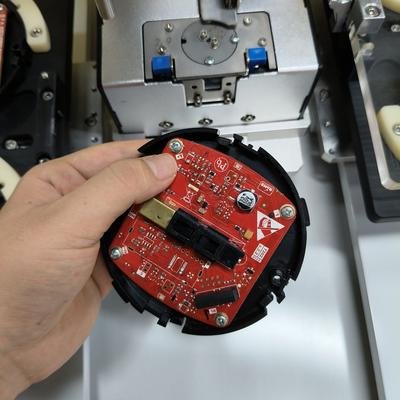
| Product Name | Applicable industries |
| Automatic Screw Feeder | Laptop and Tablet Assembly |