8618566785362 8618566785362 8618566785362 phoenix08@bbamachine.com
- All
- Product Name
- Product Keyword
- Product Model
- Product Summary
- Product Description
- Multi Field Search

Views: 0 Author: BBA AUTOMATION Publish Time: 2025-09-30 Origin: BBA AUTOMATION


| Product Name | Applicable industries |
| Screw Fastening Unit | Toy and Game Console Production |
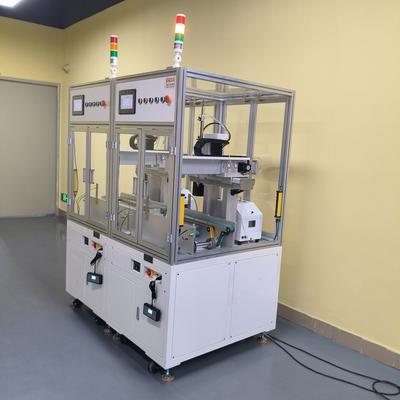
In modern manufacturing, efficiency and precision are more critical than ever. As industries strive to optimize production lines and reduce human error, the integration of robotic screw machines with pick-and-place robots has emerged as a powerful solution. This synergy not only enhances productivity but also improves consistency and flexibility in assembly processes.
Robotic screw machines are designed to automate the fastening process, ensuring that screws are driven with exact torque and depth repeatedly. These systems eliminate variability and reduce the risk of product damage or failure due to improper screw placement. When combined with pick-and-place robots, which handle the precise positioning and movement of components, the entire assembly workflow becomes seamless and highly efficient.
One of the key benefits of this integration is the reduction in cycle times. Pick-and-place robots can swiftly transport parts to the screw machine, which then performs the fastening operation without delay. This continuous flow minimizes idle time and maximizes throughput, making it ideal for high-volume production environments. Additionally, the collaboration between these robotic systems allows for greater adaptability. Manufacturers can easily reprogram the robots to accommodate different product designs or assembly requirements, providing the flexibility needed in today’s dynamic market.
Another significant advantage is the improvement in quality control. Robotic screw machines often include sensors and vision systems to verify each screw’s placement and tightness, ensuring that every product meets strict quality standards. Pick-and-place robots contribute by accurately aligning components, reducing the chance of misalignment or defects. Together, they create a robust quality assurance process that minimizes errors and enhances product reliability.
Furthermore, this integration supports a safer working environment. By automating repetitive and potentially hazardous tasks, such as manual screw driving or heavy lifting, companies can reduce workplace injuries and create more ergonomic operations. Employees can then focus on more value-added activities, such as monitoring the production process and performing quality checks.
Implementing such a system does require careful planning and synchronization. The robotic screw machine and pick-and-place robot must communicate effectively to coordinate their actions. This often involves using advanced software and control systems to manage timing, positioning, and data exchange. However, with the right integration strategy, manufacturers can achieve a highly cohesive and efficient assembly line.
In conclusion, the integration of robotic screw machines with pick-and-place robots represents a significant advancement in industrial automation. It offers numerous benefits, including increased productivity, improved quality, greater flexibility, and enhanced safety. As technology continues to evolve, this combination will likely become even more sophisticated, driving further innovations in manufacturing processes. Companies that adopt these integrated solutions today will be well-positioned to compete in the future landscape of industrial production.