8618566785362 8618566785362 8618566785362 phoenix08@bbamachine.com
- All
- Product Name
- Product Keyword
- Product Model
- Product Summary
- Product Description
- Multi Field Search
Views: 0 Author: BBA AUTOMATION Publish Time: 2025-09-30 Origin: BBA AUTOMATION


| Product Name | Applicable industries |
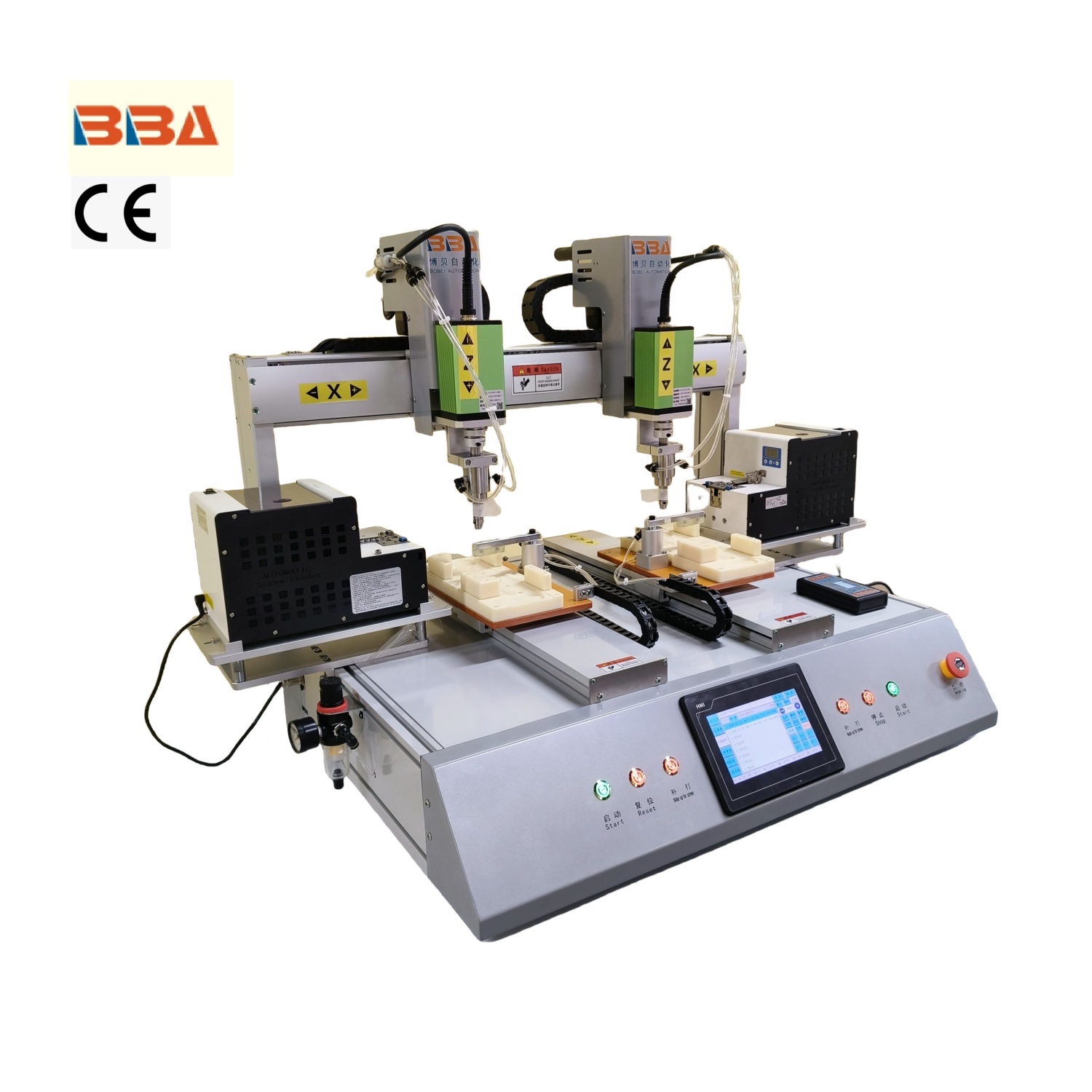
| Servo Screwdriver Robot | Laptop and Tablet Assembly |
The aerospace industry demands unparalleled precision, reliability, and consistency in the manufacturing process. As components become increasingly complex and safety standards more stringent, traditional tightening methods often fall short. Multi-axis tightening systems have emerged as a transformative solution, enabling manufacturers to achieve new levels of accuracy and efficiency in the assembly of critical aerospace parts.
Multi-axis tightening refers to the simultaneous or sequential tightening of multiple fasteners using a coordinated system of tools, often driven by advanced software and robotics. This approach is particularly valuable in aerospace applications where components—such as engine mounts, wing assemblies, or landing gear—require uniform clamping force across multiple joints to ensure structural integrity and performance. Unlike single-point tools, which can introduce variability and require manual repositioning, multi-axis systems deliver consistent results while significantly reducing cycle times.
One of the key advantages of multi-axis tightening is its ability to maintain precise torque and angle control across all fasteners simultaneously. This eliminates the risk of uneven stress distribution, which can lead to component distortion, fatigue, or failure. In aerospace, where every part must withstand extreme operational conditions, such precision is non-negotiable. Additionally, these systems are typically integrated with data logging capabilities, providing real-time monitoring and documentation of each tightening operation. This ensures full traceability and compliance with rigorous industry standards.
Another significant benefit is the reduction in human error. Manual tightening processes are inherently prone to inconsistencies, especially in complex assemblies with numerous fasteners. Multi-axis automation not only improves repeatability but also enhances worker safety by reducing physical strain and exposure to hazardous environments. Operators can oversee the process from a control station, while the system executes the tightening sequence with flawless accuracy.
Modern multi-axis tightening systems are also designed with flexibility in mind. They can be adapted to various assembly layouts and scaled to accommodate different production volumes. Whether for large-scale aircraft manufacturing or specialized component production, these systems offer a future-proof investment that can evolve with changing technological demands.
In conclusion, multi-axis tightening represents a leap forward in aerospace manufacturing technology. By combining precision, efficiency, and data-driven oversight, it addresses the critical needs of the industry while paving the way for smarter, more reliable assembly processes. As aerospace components continue to advance, embracing innovative tightening solutions will be essential to maintaining competitiveness and ensuring the highest standards of quality and safety.