8618566785362 8618566785362 8618566785362 phoenix08@bbamachine.com
- All
- Product Name
- Product Keyword
- Product Model
- Product Summary
- Product Description
- Multi Field Search
Views: 0 Author: BBA AUTOMATION Publish Time: 2025-09-27 Origin: BBA AUTOMATION


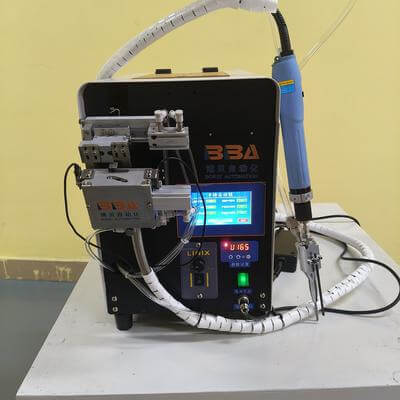
In the fast-paced world of industrial manufacturing, efficiency, precision, and reliability are paramount. The adoption of advanced automation technology has become a cornerstone for companies striving to maintain a competitive edge. Among these technologies, the automatic screw locking machine stands out as a pivotal tool that revolutionizes the assembly process. This powerful equipment streamlines the fastening of screws with remarkable accuracy and speed, transforming production lines and delivering substantial advantages. Here are the top benefits of integrating an automatic screw locking machine into your manufacturing operations.
Manual screw driving is inherently prone to human error. Variations in torque, angle, and even the occasional missed screw can lead to product defects, malfunctions, and inconsistent quality. Automatic screw locking machines eliminate this variability entirely. Programmed with exact torque and depth specifications, these machines ensure every single screw is fastened with identical precision. This unwavering consistency is critical for producing high-quality, reliable products, especially in industries like electronics, automotive, and aerospace where a single loose screw can have catastrophic consequences.
Time is a valuable resource in manufacturing. Automating the screw-fastening process significantly accelerates production cycles. These machines can operate at incredibly high speeds, far surpassing what is humanly possible. They can place and drive multiple screws in the time it takes a worker to handle just one. This boost in throughput allows manufacturers to meet demanding production schedules, fulfill larger orders, and respond more agilely to market fluctuations, all without compromising on quality.
By automating a repetitive and physically demanding task, companies can achieve considerable savings on labor expenses. Automatic screw locking machines can operate continuously with minimal supervision, freeing highly skilled employees to focus on more complex, value-added tasks such as quality control, machine maintenance, and process optimization. This not only reduces the number of operators required on the assembly line but also helps mitigate the challenges associated with workforce shortages and high employee turnover in manual roles.
Repetitive strain injuries (RSIs) are a common concern in manual assembly work. The constant motion of screwing can lead to musculoskeletal disorders in the hands, wrists, and arms of operators. By deploying automatic machines, manufacturers can create a safer work environment. These systems handle the physical labor, thereby reducing the risk of RSIs and related worker compensation claims. This investment in employee well-being also boosts morale and contributes to a more positive and productive workplace culture.
Modern automatic screw locking machines are often equipped with sophisticated software and sensors. This technology provides valuable data for Industry 4.0 initiatives. Manufacturers can monitor and record torque values for every screw in real-time. This data creates a complete history for each assembled product, enabling full traceability. If a quality issue arises, it is possible to pinpoint exactly which screw and which unit might be affected, facilitating targeted recalls and precise root cause analysis. This level of data intelligence is indispensable for continuous improvement and upholding stringent quality standards.
In conclusion, the automatic screw locking machine is far more than a simple convenience; it is a strategic asset for any modern manufacturing facility. Its ability to deliver superior precision, accelerate production, lower operational costs, improve workplace safety, and provide actionable data makes it an indispensable component of an efficient and future-proof production line. Investing in this technology is a definitive step toward achieving manufacturing excellence.
| Product Name | Applicable industries |
| Auto Screwdriver Machine | Toy and Game Console Production |