8618566785362 8618566785362 8618566785362 phoenix08@bbamachine.com
- All
- Product Name
- Product Keyword
- Product Model
- Product Summary
- Product Description
- Multi Field Search

Views: 0 Author: BBA AUTOMATION Publish Time: 2025-09-27 Origin: BBA AUTOMATION


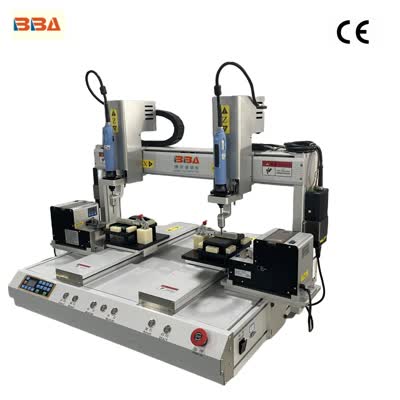
| Product Name | Applicable industries |
| Automatic Screw Feeder | Automotive Electronics Assembly |
In the world of industrial automation, efficiency and precision are paramount. One critical component that often goes overlooked is the feeder bowl—a workhorse responsible for orienting and delivering screws and small parts accurately to assembly lines. While standard feeder bowls work well for common fasteners, unique screw types present a significant challenge. Customizing feeder bowls for these specialized fasteners is not just an option; it is a necessity for maintaining productivity and minimizing downtime.
Unique screw types can vary dramatically in design. From tamper-resistant heads and multi-threaded bodies to non-standard lengths and unconventional drive types, each variation demands a tailored approach. Off-the-shelf feeder bowls are designed for uniformity and may fail to handle screws with unusual geometries or delicate features. This is where customization becomes essential. By engineering feeder bowls specifically for these unique fasteners, manufacturers can ensure smooth, reliable operation and avoid common issues like jamming, misorientation, or part damage.
The process of customizing a feeder bowl begins with a thorough analysis of the screw’s physical characteristics. Factors such as head shape, thread pitch, length-to-diameter ratio, and overall weight must be carefully evaluated. Using advanced CAD software and simulation tools, engineers design bowl tracks with precise geometries that guide each screw into the correct orientation. The bowl’s interior surface may be polished, coated, or textured to reduce friction and prevent parts from sticking. In some cases, custom tooling such as orienting blades, grooves, or traps are integrated to handle particularly complex designs.
Material selection is another crucial aspect of customization. Depending on the application, bowls may be constructed from stainless steel for durability, aluminum for lightweight properties, or polycarbonate for visual inspection needs. The choice of material impacts not only the lifespan of the bowl but also its performance with specific screw types. For instance, stainless steel is ideal for heavy-use environments, while polycarbonate allows operators to monitor the feeding process in real time.
Beyond the bowl itself, complementary components like linear tracks, escapements, and sensors play a vital role in the system’s overall effectiveness. Customized systems often include intelligent sensors to detect and reject incorrectly oriented screws, ensuring only properly aligned fasteners proceed down the line. This level of precision reduces waste and enhances the quality of the final assembled product.
Investing in customized feeder bowls offers long-term benefits that far outweigh the initial development cost. It leads to higher throughput, reduced maintenance, and greater flexibility in production. Moreover, it future-proofs operations by accommodating new or evolving screw designs without requiring complete system overhauls.
As industrial automation continues to advance, the ability to adapt to unique components will remain a key differentiator for manufacturers. Customized feeder bowls are a perfect example of how targeted engineering solutions can solve specific challenges, driving efficiency and innovation on the factory floor.