8618566785362 8618566785362 8618566785362 phoenix08@bbamachine.com
- All
- Product Name
- Product Keyword
- Product Model
- Product Summary
- Product Description
- Multi Field Search

Views: 0 Author: BBA AUTOMATION Publish Time: 2025-09-25 Origin: BBA AUTOMATION


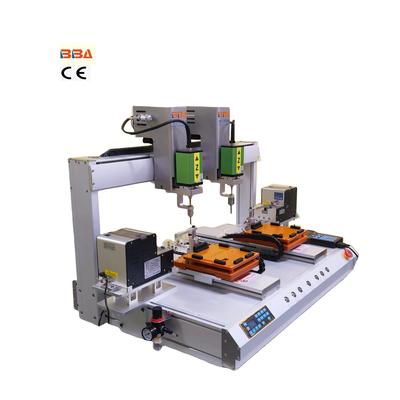
| Product Name | Applicable industries |
| Desktop Screwdriver Robot | LED Lighting Industry |
The global industrial landscape is undergoing a profound transformation, driven by the increasing adoption of automation technologies. Among these, automated fastening systems have emerged as a critical component, revolutionizing assembly processes across various sectors. The demand for these systems is experiencing significant growth, fueled by the need for higher efficiency, improved quality, and reduced operational costs.
Automated fastening systems encompass a wide range of solutions, including robotic screwdriving, nut running, and precision tightening applications. These systems are designed to handle repetitive tasks with unparalleled accuracy and consistency, eliminating human error and enhancing overall productivity. In industries such as automotive, electronics, aerospace, and consumer goods, the integration of automated fastening technology has become essential for maintaining competitive advantage.
One of the primary drivers behind the growing demand is the relentless pursuit of precision. Manual fastening processes are inherently variable, often leading to inconsistencies in torque application, which can compromise product quality and safety. Automated systems, however, ensure that every fastener is applied with exact specifications, reducing the risk of defects and recalls. This level of reliability is particularly crucial in sectors where safety and performance are paramount.
Another key factor contributing to the rise in demand is the need for scalability. As markets evolve and production volumes fluctuate, manufacturers require flexible solutions that can adapt to changing requirements. Automated fastening systems offer the versatility to handle diverse product designs and production rates without significant reconfiguration. This adaptability allows companies to respond swiftly to market demands while optimizing resource utilization.
Labor shortages and rising labor costs are also prompting industries to invest in automation. By deploying automated fastening systems, manufacturers can reduce their reliance on manual labor, mitigate the impact of workforce challenges, and reallocate human resources to more value-added tasks. This shift not only improves operational efficiency but also enhances employee satisfaction by reducing repetitive and physically demanding work.
Technological advancements are further accelerating the adoption of automated fastening systems. Innovations such as vision-guided robotics, intelligent torque control, and IoT-enabled monitoring have elevated the capabilities of these systems. Real-time data collection and analysis enable predictive maintenance, minimize downtime, and provide valuable insights for process optimization. These smart features are transforming fastening from a mundane task into a strategic function within the manufacturing ecosystem.
The global push for sustainability is also influencing the demand for automated fastening solutions. By optimizing material usage and reducing waste through precise application, these systems contribute to more environmentally friendly manufacturing practices. Additionally, the energy efficiency of modern automated equipment aligns with corporate sustainability goals, making them an attractive investment for forward-thinking organizations.
In conclusion, the global demand for automated fastening systems is poised for continued growth as industries recognize their multifaceted benefits. From enhancing precision and scalability to addressing labor challenges and supporting sustainability initiatives, these systems are integral to the future of manufacturing. As technology continues to evolve, automated fastening will undoubtedly play an even more pivotal role in shaping efficient, reliable, and innovative industrial processes worldwide.