8618566785362 8618566785362 8618566785362 phoenix08@bbamachine.com
- All
- Product Name
- Product Keyword
- Product Model
- Product Summary
- Product Description
- Multi Field Search

Views: 0 Author: BBA AUTOMATION Publish Time: 2025-09-21 Origin: BBA AUTOMATION


In the world of industrial automation, reliability is everything. One of the most common yet overlooked issues affecting machinery performance is loose screws. Vibration, thermal cycling, and dynamic loads can cause fasteners to loosen over time, leading to equipment failure, unplanned downtime, and safety hazards. Traditional methods like manual thread locking or mechanical locking devices are time-consuming and inconsistent. This is where screw locking automation offers a transformative solution.
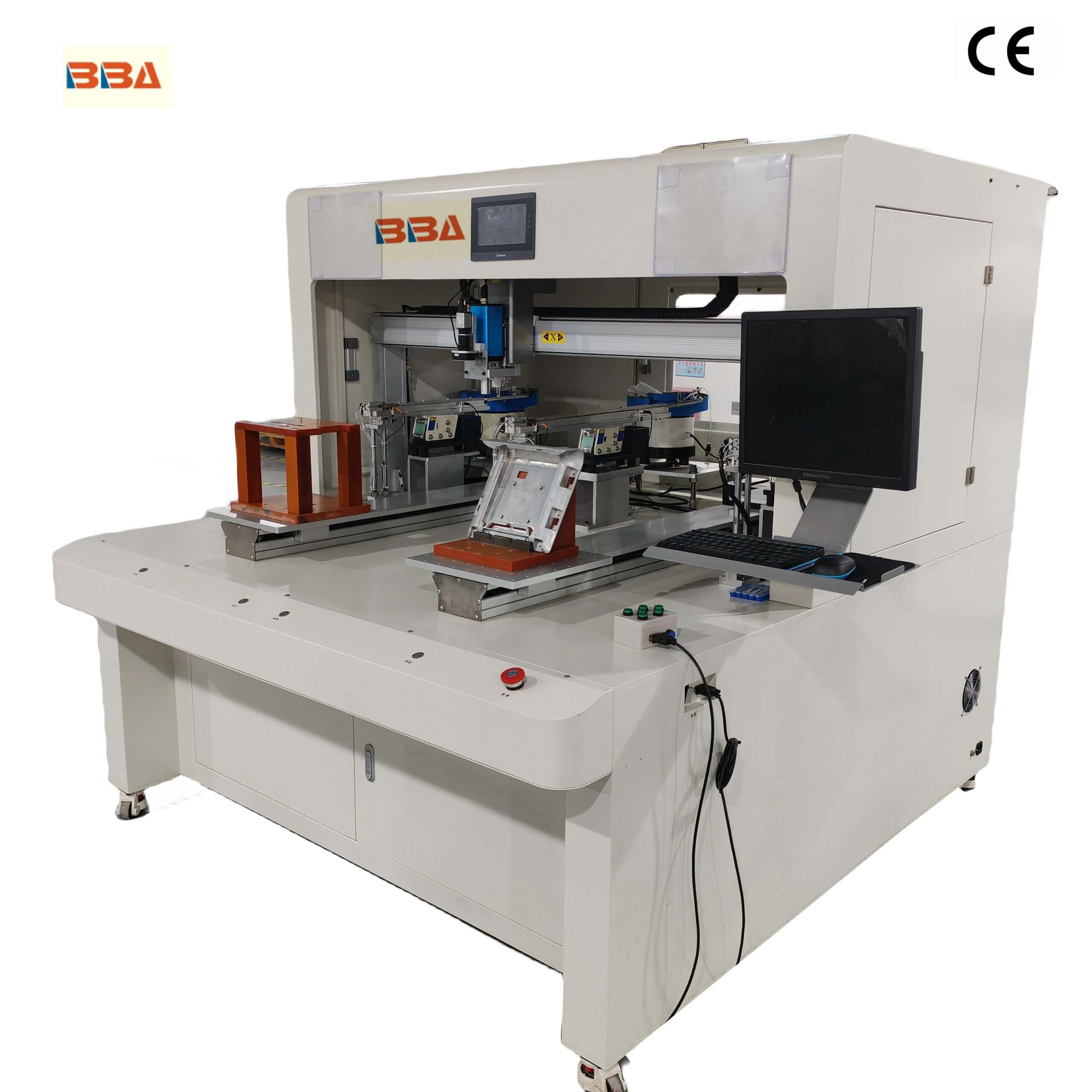
Screw locking automation integrates advanced robotic systems with precision dispensing technology to apply thread-locking adhesives accurately and efficiently. These automated systems are designed to identify fasteners, apply the exact amount of locking compound, and tighten screws to the required torque—all without human intervention. The process begins with a vision system or sensor that locates each screw. A robotic arm then positions the dispenser over the fastener and deposits a controlled dose of liquid threadlocker, such as anaerobic adhesive, into the threads. Finally, the screw is driven to specification, ensuring consistent and reliable locking.
The benefits of automation are substantial. First, it eliminates human error. Manual application can lead to overuse or underuse of adhesive, contaminating nearby components or failing to secure the screw properly. Automated systems apply the same amount of compound every time, ensuring uniformity. Second, it enhances productivity. Robots work at high speeds and can process hundreds of screws per hour, reducing assembly time and labor costs. Third, it improves quality control. Integrated sensors can verify whether the adhesive has been applied and whether the screw is tightened correctly, logging data for traceability and compliance.
Implementing screw locking automation requires careful planning. The system must be tailored to the specific fasteners, adhesives, and production environment. For example, low-strength threadlockers might be used for screws requiring future adjustment, while high-strength formulas are suited for permanent fixtures. The automation equipment must also be compatible with existing assembly lines, often through modular designs that allow easy integration. Training maintenance staff to operate and service the system is crucial for long-term success.
Beyond manufacturing, industries such as automotive, aerospace, and electronics benefit greatly from this technology. In automotive assembly, where thousands of screws are used in each unit, automation ensures engine components, brakes, and interior fittings remain secure under extreme conditions. In aerospace, where safety is paramount, automated screw locking prevents failures caused by vibration during flight. Electronics manufacturers use it to secure delicate components without risking damage from manual handling.
As industrial automation evolves, screw locking systems become smarter. Machine learning algorithms can optimize adhesive dispensing based on historical data, while IoT connectivity allows real-time monitoring and predictive maintenance. These advancements not only fix loose screws but also prevent them from ever becoming a problem. For companies aiming to boost reliability and efficiency, screw locking automation is no longer an option—it is a necessity.
| Product Name | Applicable industries |
| Smart Screw Driving Machine | Telecommunication Equipment Assembly |