8618566785362 8618566785362 8618566785362 phoenix08@bbamachine.com
- All
- Product Name
- Product Keyword
- Product Model
- Product Summary
- Product Description
- Multi Field Search
Views: 0 Author: BBA AUTOMATION Publish Time: 2025-09-14 Origin: BBA AUTOMATION


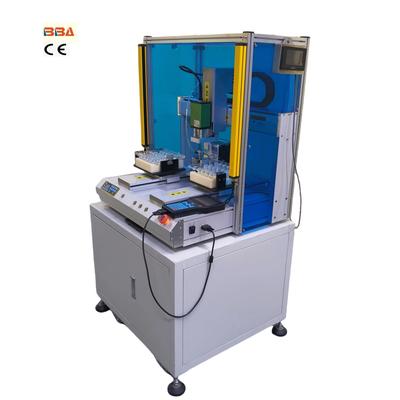
| Product Name | Applicable industries |
| Desktop Screwdriver Robot | Electric Bicycle Assembly |
The landscape of industrial automation is continuously evolving, and screw automation is no exception. While hardware components like feeders, drivers, and manipulators form the physical backbone of these systems, the software that controls them is increasingly becoming the critical differentiator. Modern software solutions are transforming screw automation from a simple repetitive task into a sophisticated, data-driven, and intelligent process. This article explores the key software trends shaping the future of screw automation systems.
Traditional automation software focused primarily on basic motion control and sequencing. Today, advanced algorithms enable intelligent process control. Software can now dynamically adjust parameters in real-time based on feedback from vision systems, torque sensors, and other inputs. For instance, if a screw is cross-threaded, the software can detect the anomaly through torque patterns, halt the process, and alert operators or even initiate a corrective action routine. This significantly reduces error rates and prevents potential damage to products and equipment.
Artificial Intelligence (AI) and Machine Learning (ML) are moving from buzzwords to practical tools on the factory floor. In screw automation, ML algorithms are used to analyze vast amounts of process data—such as torque-angle curves, insertion times, and error logs—to predict maintenance needs, optimize tightening strategies for different materials, and identify subtle patterns that precede failures. This shift from reactive to predictive maintenance minimizes unplanned downtime and maximizes production efficiency.
The Industrial Internet of Things (IIoT) is a major driving force. Modern screw automation software is designed to be inherently connected. It seamlessly integrates with factory-wide Manufacturing Execution Systems (MES), Enterprise Resource Planning (ERP) software, and cloud platforms. This connectivity allows for centralized monitoring and management of multiple automated screwdriving cells from a single dashboard. Real-time data on production counts, quality metrics, and machine status can be accessed remotely, facilitating better decision-making and streamlined operations.
User interfaces are becoming more intuitive and powerful. Touch-screen Human-Machine Interfaces (HMIs) are now standard, featuring rich graphics, simplified programming wizards, and step-by-step guidance. This reduces the training required for operators and technicians, allowing them to set up new products, change parameters, and troubleshoot issues quickly. The focus is on making complex automation accessible without requiring deep programming expertise.
As systems become more connected, the importance of robust cybersecurity in automation software has skyrocketed. Leading software platforms now incorporate hardened security features, including encrypted data communication, role-based access control, and secure boot processes. Protecting the integrity of the manufacturing process and safeguarding sensitive production data from cyber threats is now a fundamental requirement, not an afterthought.
The demand for high-mix, low-volume production requires software that is both flexible and scalable. Software platforms are now designed to be easily adaptable to new product designs. Features like recipe management allow for quick changeovers between different screw types, sizes, and tightening specifications simply by loading a saved file. Furthermore, the software architecture is often modular, allowing capabilities to be scaled up as production needs grow.
In Conclusion
The evolution of software is fundamentally enhancing the capabilities of screw automation systems. The trends point towards smarter, more connected, and user-friendly platforms that not only drive efficiency and quality but also provide valuable insights and adaptability. For companies looking to upgrade their assembly lines, investing in a modern software-driven screw automation solution is a strategic step towards building a more resilient, efficient, and intelligent manufacturing operation.