8618566785362 8618566785362 8618566785362 phoenix08@bbamachine.com
- All
- Product Name
- Product Keyword
- Product Model
- Product Summary
- Product Description
- Multi Field Search

Views: 0 Author: BBA AUTOMATION Publish Time: 2025-09-14 Origin: BBA AUTOMATION


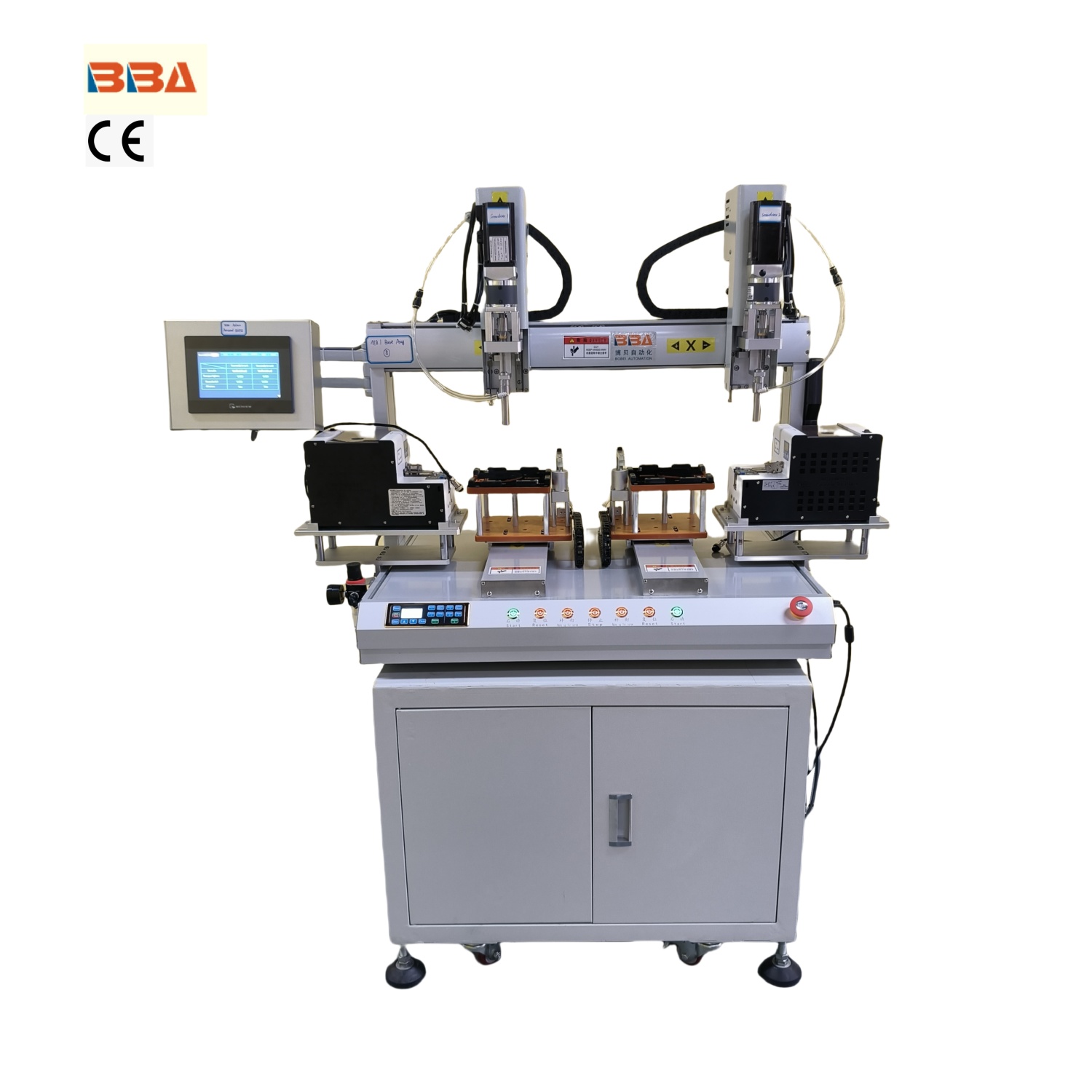
| Product Name | Applicable industries |
| Dual Head Screwdriver | Automotive Electronics Assembly |
In the realm of industrial automation, floor-type screw locking machines represent a significant advancement in assembly line technology. These robust systems are engineered to deliver high precision, reliability, and efficiency in fastening applications across various industries, including automotive, electronics, and heavy machinery manufacturing.
A floor-type screw locking machine is a stationary, heavy-duty automated system designed for driving and tightening screws with exceptional accuracy. Unlike benchtop models, these machines are mounted directly onto the factory floor, providing stability for handling larger workpieces or higher torque requirements. They typically incorporate advanced servo motors, precision sensors, and programmable logic controllers (PLCs) to ensure consistent performance. Key components often include a rigid frame, a multi-axis positioning system, automatic screw feeding units, and torque monitoring systems, all integrated to operate seamlessly within automated production environments.
These machines offer numerous features that enhance productivity. One standout attribute is their ability to achieve precise torque control, critical for applications where under-tightening or over-tightening could lead to product failure. With programmable settings, operators can easily switch between different screw sizes and tightening specifications, reducing changeover time. The floor-mounted design minimizes vibrations, ensuring accuracy even at high speeds. Additionally, many models come equipped with vision systems or RFID technology to verify correct screw placement and track process data for quality assurance. This level of automation reduces labor costs and human error while increasing throughput.
Floor-type screw locking machines are versatile and can be customized for specific tasks. In the automotive sector, they are used to assemble engine components, chassis parts, and interior fixtures. Electronics manufacturers employ them to secure delicate circuit boards or housing units without damaging sensitive components. The machines' adaptability allows integration into existing assembly lines, working alongside robots or conveyor systems. Their robustness also makes them suitable for industries requiring high torque, such as aerospace or energy, where safety-critical fastening is paramount.
Recent innovations have further elevated the capabilities of these machines. IoT connectivity enables real-time monitoring and predictive maintenance, alerting operators to potential issues before they cause downtime. Advanced algorithms optimize tightening sequences based on historical data, improving consistency. Some systems also incorporate artificial intelligence to self-adjust parameters during operation, compensating for material variations or wear. These smart features contribute to higher overall equipment effectiveness (OEE) and lower total cost of ownership.
Floor-type screw locking machines are indispensable in today's automated manufacturing landscape. Their precision, durability, and adaptability make them a valuable investment for companies seeking to enhance assembly quality and efficiency. As technology continues to evolve, these machines will likely incorporate even more advanced features, solidifying their role in the future of industrial automation. For businesses looking to streamline their production processes, understanding and leveraging such equipment is key to maintaining a competitive edge.