8618566785362 8618566785362 8618566785362 phoenix08@bbamachine.com
- All
- Product Name
- Product Keyword
- Product Model
- Product Summary
- Product Description
- Multi Field Search

Views: 0 Author: BBA AUTOMATION Publish Time: 2025-09-14 Origin: BBA AUTOMATION


In today's competitive industrial landscape, maximizing productivity is paramount. Unplanned equipment downtime remains one of the most significant obstacles to achieving peak efficiency and profitability. It disrupts production schedules, leads to delivery delays, and incurs substantial costs in both repairs and lost output. While traditional automation solutions have made great strides, a new generation of multi-axis automation systems is providing a transformative approach to virtually eliminating these costly interruptions.
Before delving into the solution, it is crucial to understand the true impact of downtime. It is not merely the time a machine is idle. The financial ramifications extend far beyond that. Costs associated with urgent maintenance calls, overtime labor to catch up on lost production, wasted raw materials, and potential penalties for missed deadlines can quickly escalate. Furthermore, unexpected stoppages increase the wear and tear on machinery, as abrupt shutdowns and restarts place additional stress on mechanical and electrical components, potentially leading to more frequent failures in the future.
Multi-axis automation refers to sophisticated systems that control movement across several different axes simultaneously. These systems, often powered by advanced controllers and precision servo drives, enable complex, coordinated motions that mimic or even surpass human dexterity. This capability is key to building more resilient and flexible production lines.
The core strength of multi-axis systems lies in their integrated intelligence. Unlike a collection of independent single-axis machines, a truly synchronized multi-axis solution is designed from the ground up to work as a cohesive unit. This deep integration offers several distinct advantages for minimizing downtime:
Implementing a multi-axis automation solution is an investment in the long-term stability and efficiency of your operation. The move towards a fully integrated system simplifies the production floor, replacing complex mechanical linkages with streamlined, software-driven motion. This reduction in mechanical complexity inherently boosts reliability. When a process is controlled by software and a few precision actuators, rather than an intricate series of cams, levers, and relays, there are simply fewer physical components that can break down.
The data collected by the system’s diagnostics also provides invaluable insights into your production process. You gain a clear understanding of machine utilization rates, cycle times, and common bottlenecks. This data-driven approach empowers you to make continuous improvements, further optimizing your workflow and preemptively addressing areas that could become future sources of delay.
Viewing multi-axis automation solely as a tool for increasing speed is to overlook its most powerful benefit: its role as a critical component for ensuring uninterrupted production. In an era where reliability is directly tied to competitiveness, the ability to predict and prevent downtime is a strategic imperative. By embracing the intelligence, flexibility, and precision of multi-axis systems, manufacturers can not only enhance their productivity but also build a foundation for a more predictable, efficient, and profitable future.
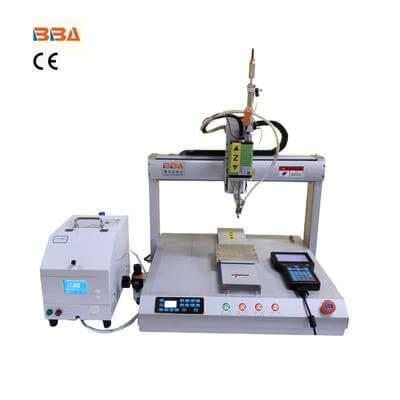
| Product Name | Applicable industries |
| Desktop Screwdriver Robot | Telecommunication Equipment Assembly |