8618566785362 8618566785362 8618566785362 phoenix08@bbamachine.com
- All
- Product Name
- Product Keyword
- Product Model
- Product Summary
- Product Description
- Multi Field Search

Views: 0 Author: BBA AUTOMATION Publish Time: 2025-08-02 Origin: BBA AUTOMATION


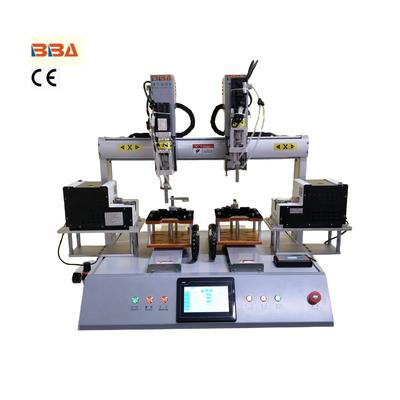
In the realm of industrial automation, screw assembly machines play a pivotal role in streamlining manufacturing processes. A fully automatic screw assembly machine is designed to handle high-volume production with precision, efficiency, and minimal human intervention. Understanding the key components of such a machine can provide valuable insights into how automation enhances productivity. Below, we delve into the essential components that make up a fully automatic screw assembly machine.
The screw feeder is the heart of the assembly machine, responsible for supplying screws in an orderly manner. It typically consists of a vibratory bowl or a linear feeder that orients screws correctly before they are transported to the next stage. Advanced models may include sensors to detect jams or misfeeds, ensuring uninterrupted operation.
The screwdriver unit is the component that drives the screws into the workpiece. Depending on the application, it may be an electric, pneumatic, or servo-driven screwdriver. Precision torque control is critical here to avoid over-tightening or under-tightening, which could compromise product quality.
A conveyor system transports workpieces through the assembly line, positioning them accurately under the screwdriver unit. Belt-type or chain conveyors are commonly used, and they may incorporate sensors to synchronize the movement of parts with the screwing process.
The control panel houses the machine's programmable logic controller (PLC) and human-machine interface (HMI). Operators can configure settings such as torque, speed, and screwing sequences through the HMI, while the PLC ensures all components operate in harmony.
For high-precision applications, a vision system may be integrated to verify screw placement and detect defects. Cameras and image-processing software analyze each screw insertion to ensure consistency and adherence to quality standards.
Sensors play a crucial role in monitoring the machine's operation. Proximity sensors, torque sensors, and photoelectric detectors help prevent errors and ensure safe operation. Safety mechanisms, such as emergency stop buttons and protective barriers, safeguard operators from accidental injuries.
A hopper or storage unit holds a large quantity of screws, replenishing the feeder as needed. This component minimizes downtime by ensuring a continuous supply of screws during extended production runs.
A fully automatic screw assembly machine is a sophisticated system composed of multiple integrated components, each serving a specific function to ensure efficient and precise screw fastening. By leveraging automation, manufacturers can achieve higher output, reduce labor costs, and maintain consistent product quality. Investing in such machinery is a step toward optimizing production lines for competitive advantage.
| Product Name | Applicable industries |
| Inline Screw Locking System | Automotive Electronics Assembly |