8618566785362 8618566785362 8618566785362 phoenix08@bbamachine.com
- All
- Product Name
- Product Keyword
- Product Model
- Product Summary
- Product Description
- Multi Field Search

Views: 0 Author: BBA AUTOMATION Publish Time: 2025-07-31 Origin: BBA AUTOMATION


| Product Name | Applicable industries |
| Desktop Screwdriver Robot | Automotive Electronics Assembly |
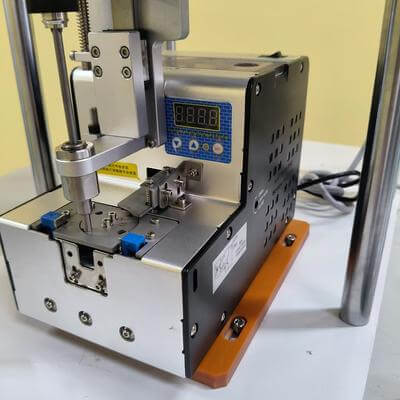
The industrial automation sector is witnessing a significant surge in demand for automated fastening systems, driven by the need for precision, efficiency, and cost-effectiveness in manufacturing processes. As industries increasingly embrace automation, the role of advanced fastening solutions has become pivotal in ensuring seamless operations across assembly lines, automotive production, aerospace, and electronics manufacturing.
Automated fastening systems are designed to enhance productivity by reducing human error and speeding up production cycles. These systems incorporate advanced technologies such as robotics, torque control, and vision systems to deliver consistent and reliable fastening performance. The ability to precisely control torque and alignment ensures high-quality joints, minimizing the risk of product defects and recalls.
One of the key drivers behind the growing demand for automated fastening solutions is the rise of smart factories. Industry 4.0 has paved the way for interconnected production environments where data-driven decision-making is paramount. Automated fastening systems equipped with IoT capabilities can monitor and adjust parameters in real-time, ensuring optimal performance and predictive maintenance. This reduces downtime and extends the lifespan of equipment, contributing to long-term cost savings.
The automotive industry, in particular, has been a major adopter of automated fastening technologies. Electric vehicle (EV) manufacturing, with its emphasis on lightweight materials and complex assembly requirements, has further accelerated the adoption. Automated systems can handle a variety of fastening tasks, from securing battery modules to assembling intricate chassis components, while maintaining stringent safety and quality standards.
Beyond automotive, industries such as aerospace and electronics are also leveraging these systems to meet the demands of miniaturization and high-precision assembly. The ability to work with diverse materials, including composites and delicate substrates, makes automated fastening indispensable in these sectors. Additionally, labor shortages and the need for lean manufacturing practices are pushing companies to invest in automation to maintain competitiveness.
The future of automated fastening systems lies in continuous innovation. Emerging trends such as cobots (collaborative robots) and AI-driven quality assurance are set to revolutionize the field. These advancements will further enhance flexibility, allowing systems to adapt to varying production needs while maintaining high accuracy and reliability.
In conclusion, the global demand for automated fastening systems is poised for sustained growth as industries prioritize efficiency, quality, and scalability. Businesses that invest in these cutting-edge solutions today will be well-positioned to lead in the era of advanced manufacturing.