8618566785362 8618566785362 8618566785362 phoenix08@bbamachine.com
- All
- Product Name
- Product Keyword
- Product Model
- Product Summary
- Product Description
- Multi Field Search

Views: 0 Author: BBA AUTOMATION Publish Time: 2025-07-16 Origin: BBA AUTOMATION


| Product Name | Applicable industries |
| Inline Screw Locking System | Home Appliance Production |
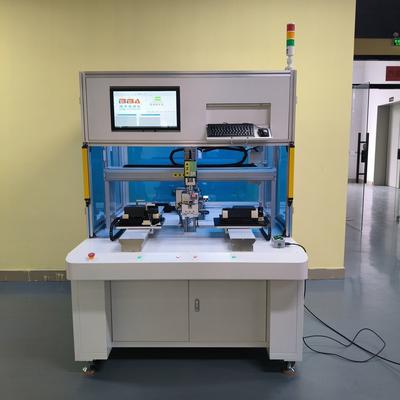
In the evolving landscape of industrial automation, touchscreen controls have become a cornerstone for enhancing the efficiency and usability of screw fastening robots. These advanced interfaces simplify complex operations, streamline workflows, and improve precision, making them indispensable in modern manufacturing environments.
Touchscreen controls offer an intuitive way to interact with screw fastening robots, reducing the learning curve for operators. Traditional control panels with buttons and knobs often require extensive training, but touchscreens provide a more user-friendly experience. With clear visuals, drag-and-drop functionality, and customizable layouts, operators can quickly adjust settings, monitor performance, and troubleshoot issues with minimal effort.
One of the standout benefits of touchscreen controls is their ability to display real-time data. Operators can view torque values, tightening sequences, and error alerts at a glance, ensuring consistent quality in fastening applications. This immediate feedback loop reduces the risk of defects and helps maintain high production standards. Additionally, touchscreens can store historical data, enabling manufacturers to analyze performance trends and optimize processes over time.
Another advantage is the flexibility touchscreens bring to screw fastening robots. Unlike fixed control panels, touchscreen interfaces can be easily reprogrammed to accommodate new product designs or fastening requirements. This adaptability is crucial in industries where production lines frequently change to meet shifting consumer demands. Manufacturers can update software to introduce new features or modify workflows without the need for hardware adjustments.
Durability is also a key consideration in industrial settings, and modern touchscreens are built to withstand harsh environments. High-quality materials and robust designs ensure resistance to dust, moisture, and vibrations, making them reliable even in demanding conditions. Anti-glare coatings and bright displays further enhance visibility, allowing operators to work efficiently under varying lighting conditions.
Integration with other automation systems is another area where touchscreen controls excel. Screw fastening robots equipped with these interfaces can seamlessly connect to factory networks, enabling centralized monitoring and control. This connectivity supports Industry 4.0 initiatives by facilitating data exchange between machines, improving coordination, and enabling predictive maintenance strategies.
In conclusion, touchscreen controls are transforming the way screw fastening robots operate in industrial environments. By offering intuitive interfaces, real-time data visualization, flexibility, durability, and seamless integration, they empower manufacturers to achieve higher productivity and precision. As automation continues to advance, touchscreen technology will play an increasingly vital role in shaping the future of screw fastening applications.