8618566785362 8618566785362 8618566785362 phoenix08@bbamachine.com
- All
- Product Name
- Product Keyword
- Product Model
- Product Summary
- Product Description
- Multi Field Search

Views: 0 Author: BBA AUTOMATION Publish Time: 2025-07-10 Origin: BBA AUTOMATION


| Product Name | Applicable industries |
| Auto Screwdriver Machine | Medical Device Manufacturing |
The Evolution of Screw Assembly Machines in Modern Manufacturing
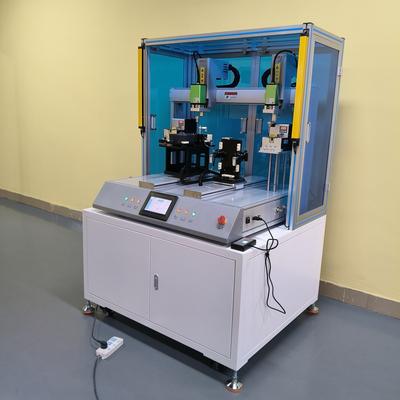
Screw assembly machines have become a cornerstone of modern manufacturing, revolutionizing the way industries handle fastening processes. Over the years, these machines have evolved significantly, adapting to the increasing demands for precision, speed, and automation. This article explores the key advancements in screw assembly technology and their impact on manufacturing efficiency.
The early iterations of screw assembly machines were simple mechanical devices, often requiring manual intervention for loading screws and positioning parts. While they improved productivity compared to entirely manual processes, their limitations in speed and accuracy became apparent as manufacturing requirements grew more complex.
The introduction of pneumatic systems marked a significant leap forward. These machines utilized compressed air to drive screws, offering greater consistency in torque application and faster cycle times. However, they still relied heavily on operators for part presentation and quality control.
The real transformation began with the integration of electronic controls and servo motors. Modern screw assembly machines now feature precise torque control, often with real-time monitoring and data logging capabilities. This advancement has dramatically improved product quality while reducing the risk of under- or over-tightening screws.
Automation has taken screw assembly to new heights. Contemporary systems often include vision systems for component recognition, robotic arms for part handling, and sophisticated software for process optimization. These intelligent machines can adapt to variations in part positioning and automatically compensate for any inconsistencies.
Another notable development is the miniaturization of screw assembly equipment. As products become smaller and more compact, manufacturers require machines capable of handling tiny screws with diameters under 1mm. This has led to the creation of ultra-precision assembly systems with specialized feeding mechanisms and microscopic vision systems.
The latest generation of screw assembly machines incorporates Industry 4.0 technologies, enabling seamless integration with smart factory systems. IoT connectivity allows for remote monitoring, predictive maintenance, and data analytics to optimize performance and minimize downtime.
Looking ahead, the evolution of screw assembly machines continues with advancements in artificial intelligence and machine learning. These technologies promise to further enhance process flexibility, with systems that can learn and adapt to new assembly challenges without extensive reprogramming.
As manufacturing becomes increasingly automated and precise, screw assembly machines will remain vital components of production lines across various industries. Their ongoing evolution reflects the broader trends in industrial automation, where flexibility, efficiency, and data-driven decision-making are paramount.