8618566785362 8618566785362 8618566785362 phoenix08@bbamachine.com
- All
- Product Name
- Product Keyword
- Product Model
- Product Summary
- Product Description
- Multi Field Search

Views: 0 Author: BBA AUTOMATION Publish Time: 2025-07-09 Origin: BBA AUTOMATION


| Product Name | Applicable industries |
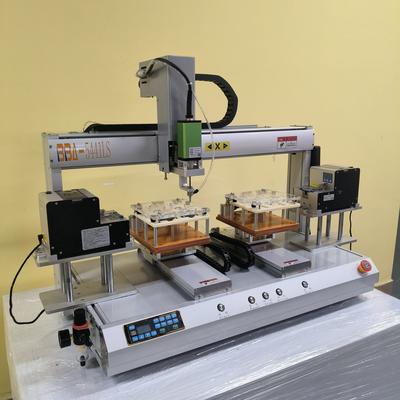
| CNC Screw Fastener | Consumer Electronics Assembly |
The automotive industry is constantly evolving, with manufacturers seeking ways to enhance efficiency, precision, and productivity. One of the key advancements in this sector is the adoption of robotic screw drivers, which are revolutionizing assembly lines by automating repetitive tasks and ensuring consistent quality. In this article, we explore how robotic screw drivers are transforming the automotive industry and the benefits they bring to modern manufacturing processes.
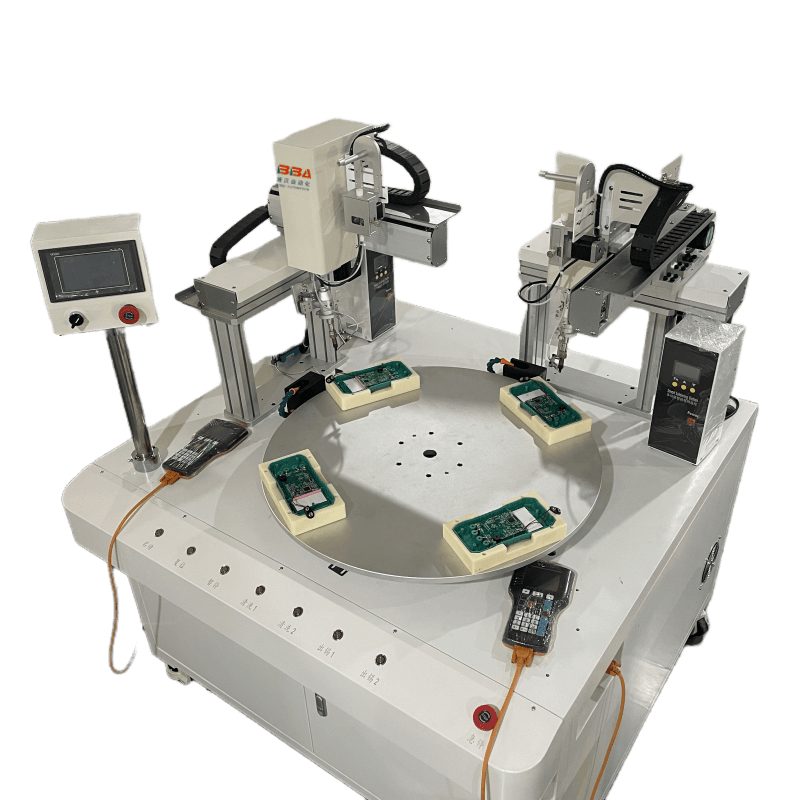
In automotive manufacturing, the assembly of components often involves the precise fastening of screws, bolts, and other fasteners. Traditionally, this task was performed manually, which could lead to inconsistencies, fatigue-related errors, and slower production rates. Robotic screw drivers eliminate these challenges by delivering unmatched accuracy and speed. Equipped with advanced sensors and programmable controls, these robots can handle screws of varying sizes and specifications, adapting seamlessly to different assembly requirements.
1. Enhanced Precision: Robotic screw drivers ensure each screw is fastened with the exact required torque, reducing the risk of over-tightening or under-tightening, which can compromise product integrity.
2. Increased Efficiency: Automation allows for continuous operation without breaks, significantly speeding up production cycles and reducing downtime.
3. Improved Worker Safety: By taking over repetitive and physically demanding tasks, robotic screw drivers minimize the risk of workplace injuries, such as repetitive strain or musculoskeletal disorders.
4. Consistent Quality: Automated systems maintain uniform standards across all products, ensuring every vehicle component meets stringent quality control measures.
5. Scalability: These systems can be easily reprogrammed for new models or design changes, making them ideal for high-mix, low-volume production environments.
Modern automotive plants are increasingly adopting Industry 4.0 technologies, and robotic screw drivers are a natural fit for this transformation. When integrated with IoT-enabled systems, these robots can provide real-time data on performance metrics, such as torque accuracy and cycle times. This data can then be analyzed to optimize workflows, predict maintenance needs, and further enhance efficiency. The result is a smarter, more responsive manufacturing ecosystem that aligns with the demands of next-generation automotive production.
As the automotive industry continues to embrace automation, the use of robotic screw drivers is expected to grow exponentially. Future advancements may include AI-driven adaptive learning, where robots can self-optimize screw fastening techniques based on material variations or environmental factors. Additionally, collaborative robots (cobots) equipped with screw driving capabilities could work alongside human operators, further bridging the gap between manual and automated processes.
In conclusion, robotic screw drivers are a game-changer for the automotive industry, delivering precision, efficiency, and scalability that traditional methods cannot match. By integrating these advanced systems into their operations, manufacturers can stay ahead in a competitive market while ensuring the highest standards of quality and productivity.