8618566785362 8618566785362 8618566785362 phoenix08@bbamachine.com
- All
- Product Name
- Product Keyword
- Product Model
- Product Summary
- Product Description
- Multi Field Search

Views: 0 Author: BBA AUTOMATION Publish Time: 2025-07-08 Origin: BBA AUTOMATION


| Product Name | Applicable industries |
| Desktop Screwdriver Robot | Smartphone Manufacturing |
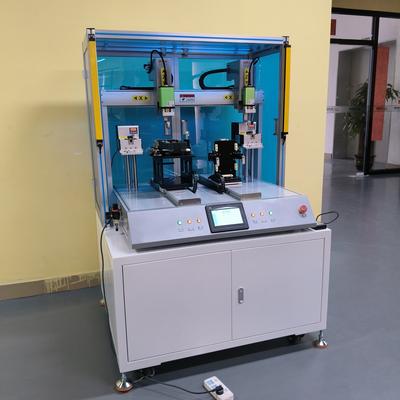
The integration of vision systems in tightening equipment represents a significant advancement in industrial automation, enhancing precision, efficiency, and quality control in manufacturing processes. As industries increasingly demand higher accuracy and repeatability, vision systems have become indispensable tools for ensuring that fastening operations meet stringent standards. This blog explores the benefits, applications, and implementation strategies of vision systems in tightening equipment.
Vision systems provide real-time visual feedback during tightening operations, enabling automated equipment to detect and correct deviations before they result in defects. By capturing high-resolution images of fasteners, threads, and surrounding components, these systems verify proper alignment, torque application, and final assembly integrity. This ensures that each fastener is correctly placed and tightened to the required specifications, reducing the risk of product failures or recalls.
1. Enhanced Accuracy: Vision systems eliminate human error by automating inspection tasks, ensuring consistent and repeatable results.
2. Improved Efficiency: By detecting issues in real time, production lines can avoid costly stoppages and rework, maximizing throughput.
3. Data Traceability: Vision systems store images and measurements for each assembly, providing a digital record for quality assurance and compliance.
4. Flexible Adaptation: Advanced vision algorithms can be trained to recognize various fastener types, making the system adaptable to different product lines.
Vision-integrated tightening equipment is widely used in industries such as automotive, electronics, and aerospace, where precision fastening is critical. In automotive manufacturing, for example, vision systems ensure that bolts are properly torqued in engine assemblies, while in electronics, they verify screw placement on circuit boards. The ability to inspect and validate each step of the tightening process reduces defects and enhances overall product reliability.
To successfully integrate vision systems into tightening equipment, manufacturers must consider factors such as lighting conditions, camera resolution, and software compatibility. High-quality optics and precision lighting ensure clear image capture, while advanced algorithms enable rapid processing and decision-making. Additionally, seamless integration with existing PLCs and control systems is essential for maintaining workflow efficiency.
As automation continues to evolve, the adoption of vision systems in tightening equipment will only grow, driving higher standards of quality and performance across industries. By leveraging these advanced technologies, manufacturers can achieve greater consistency, reduce waste, and deliver superior products to their customers.