8618566785362 8618566785362 8618566785362 phoenix08@bbamachine.com
- All
- Product Name
- Product Keyword
- Product Model
- Product Summary
- Product Description
- Multi Field Search

Views: 0 Author: BBA AUTOMATION Publish Time: 2025-07-07 Origin: BBA AUTOMATION


In the world of industrial manufacturing, efficiency and precision are paramount. One critical process that impacts both is screw locking, which ensures fasteners remain secure under varying conditions. As industries evolve, the debate between manual and automatic screw locking systems continues. This article explores the key differences, advantages, and drawbacks of each method to help you make an informed decision for your production line.
Manual screw locking relies on human operators to tighten screws using handheld tools like torque wrenches or electric screwdrivers. This traditional approach is straightforward and requires minimal upfront investment, making it accessible for small-scale operations or low-volume production. Operators can adapt to varying screw sizes and materials without significant tooling changes, providing flexibility in certain scenarios.
However, manual systems have notable limitations. Consistency is heavily dependent on operator skill and attention, which can lead to variations in torque application. Over-tightening or under-tightening may result in product defects, reduced durability, or even safety hazards. Additionally, manual processes are time-consuming and labor-intensive, which can become a bottleneck in high-volume manufacturing environments.
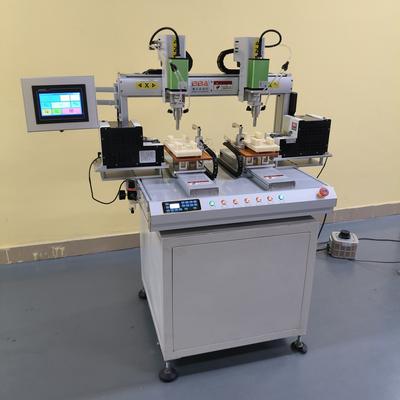
Automatic screw locking systems use robotic arms, conveyor belts, or specialized machinery to drive and torque screws with minimal human intervention. These systems are programmable, allowing precise control over torque, speed, and positioning for each screw. Automation ensures uniformity across products, reducing the risk of errors and improving overall quality. High-speed operation also significantly boosts productivity, making it ideal for large-scale manufacturing.
Despite these benefits, automatic systems require higher initial capital and technical expertise for setup and maintenance. They may also lack the adaptability of manual methods when frequent product changes or custom configurations are involved. However, advancements in modular designs and smart sensors are gradually addressing these challenges, enabling greater flexibility in automated solutions.
When selecting between manual and automatic screw locking, consider factors like production volume, budget, and precision requirements. For prototype development or bespoke manufacturing, manual systems offer cost-effective adaptability. In contrast, high-volume industries—such as automotive or electronics—benefit from the speed and repeatability of automation.
Hybrid solutions are also emerging, combining manual oversight with automated precision for specialized applications. Ultimately, the right choice depends on balancing operational needs with long-term scalability goals.
Both manual and automatic screw locking systems have distinct roles in modern manufacturing. By understanding their strengths and limitations, businesses can optimize their processes for quality, efficiency, and growth.
| Product Name | Applicable industries |
| Automatic Screw Feeder | Smart Wearables Production |