8618566785362 8618566785362 8618566785362 phoenix08@bbamachine.com
- All
- Product Name
- Product Keyword
- Product Model
- Product Summary
- Product Description
- Multi Field Search

Views: 0 Author: BBA AUTOMATION Publish Time: 2025-07-07 Origin: BBA AUTOMATION


| Product Name | Applicable industries |
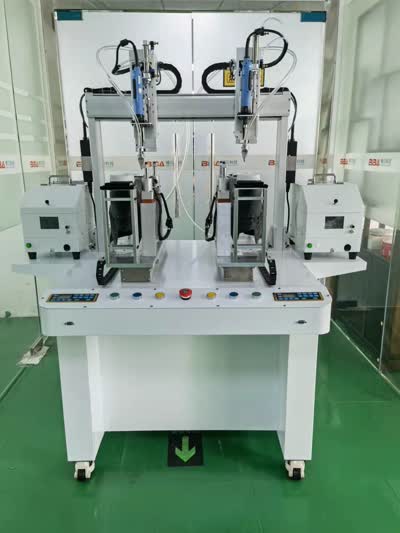
| Screw Fastening Unit | Home Appliance Production |
Machine learning is transforming the industrial automation landscape, and torque adjustment is no exception. As industries strive for higher efficiency, accuracy, and predictive maintenance capabilities, machine learning (ML) has emerged as a game-changer in optimizing torque control systems. In this article, we explore how ML enhances torque adjustment processes, delivering smarter automation solutions for modern manufacturing.
Torque control is critical in assembly lines, robotics, and machinery where precision fastening and motion control are paramount. Traditional torque adjustment methods rely on predefined parameters, which may not account for real-time variables such as material variations, tool wear, or environmental conditions. This can lead to inconsistencies, over-tightening, or under-tightening, impacting product quality and operational efficiency.
Machine learning algorithms analyze vast amounts of sensor data to dynamically adjust torque settings. By training models on historical and real-time data, ML systems learn optimal torque values for different scenarios. Key benefits include:
A recent implementation in an automotive assembly line demonstrated the power of ML in torque adjustment. By integrating sensors and ML algorithms, the system achieved a 25% reduction in torque-related defects while improving production speed. The adaptive model continuously refined its predictions, accounting for variations in bolt materials and tool wear over time.
For companies looking to integrate machine learning into torque adjustment systems, consider these steps:
As machine learning advances, torque adjustment systems will become increasingly autonomous. Future developments may include:
The integration of machine learning in torque adjustment represents a significant leap forward for industrial automation. By harnessing the power of data-driven insights, manufacturers can achieve unprecedented levels of precision, efficiency, and predictive capability in their operations.