8618566785362 8618566785362 8618566785362 phoenix08@bbamachine.com
- All
- Product Name
- Product Keyword
- Product Model
- Product Summary
- Product Description
- Multi Field Search
Views: 0 Author: BBA AUTOMATION Publish Time: 2025-07-06 Origin: BBA AUTOMATION


| Product Name | Applicable industries |
| Automatic Screw Feeder | Laptop and Tablet Assembly |
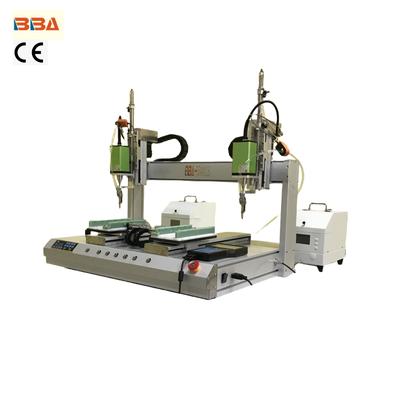
When it comes to securing threaded fasteners in industrial applications, screw locking machines are an essential tool. Two popular options in the market are desktop and inline screw locking machines. Each type has its own advantages and is suited for different production environments. This article will help you understand the differences between them and guide you in making the right choice for your operations.
Desktop Screw Locking Machines
Desktop screw locking machines are compact, easy to set up, and ideal for low- to medium-volume production. These machines are typically placed on workbenches and are manually operated, making them perfect for smaller assembly lines or precision tasks. Their portability allows for flexible placement within a facility, and they are often used in industries where space optimization is crucial.
One of the key benefits of desktop screw locking machines is their affordability. They are generally more cost-effective than inline systems, making them a great choice for businesses with budget constraints. Additionally, their simple operation reduces the need for extensive training, allowing workers to quickly adapt and maintain productivity.
However, desktop machines may not be the best fit for high-speed production lines. Since they require manual loading and positioning, they can slow down the workflow in large-scale manufacturing settings. Their limited capacity for automation may also be a drawback for companies looking to streamline their processes.
Inline Screw Locking Machines
Inline screw locking machines, on the other hand, are designed for high-speed, automated production lines. These machines are integrated into conveyor systems, allowing for continuous operation with minimal human intervention. They are especially beneficial for industries that handle large volumes of fastening tasks, such as automotive or electronics manufacturing.
The primary advantage of inline machines is their efficiency. They can process a high number of parts in a short time, significantly boosting productivity. Automated feeding systems ensure consistent screw placement, reducing errors and improving quality control. Furthermore, inline models often come with advanced features like torque monitoring and data logging, which enhance process reliability.
Despite their advantages, inline screw locking machines require a higher initial investment and more extensive setup. The integration with existing production lines may also involve additional engineering work. Maintenance can be more complex, and operators may need specialized training to handle these systems effectively.
Choosing the Right Machine for Your Needs
The decision between a desktop and inline screw locking machine depends on your production volume, budget, and operational goals. For small-scale or flexible manufacturing, a desktop machine may be the better option due to its affordability and ease of use. If you run a high-volume production line with a focus on automation and speed, an inline machine will likely provide the efficiency and precision you need.
Before making a purchase, assess your workflow requirements, available space, and long-term production goals. Consulting with industry experts can also help you determine the best solution for your specific application. Ultimately, investing in the right screw locking machine will improve your assembly processes and contribute to higher-quality output.