8618566785362 8618566785362 8618566785362 phoenix08@bbamachine.com
- All
- Product Name
- Product Keyword
- Product Model
- Product Summary
- Product Description
- Multi Field Search

Views: 0 Author: BBA AUTOMATION Publish Time: 2025-06-28 Origin: BBA AUTOMATION


| Product Name | Applicable industries |
| Screw Fastening Unit | Telecommunication Equipment Assembly |
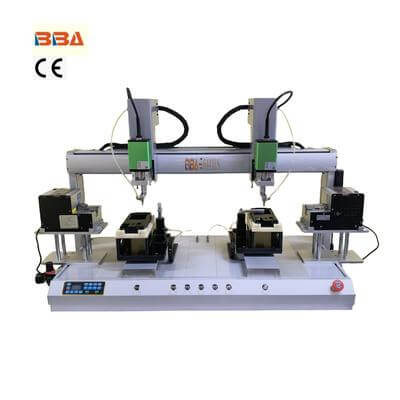
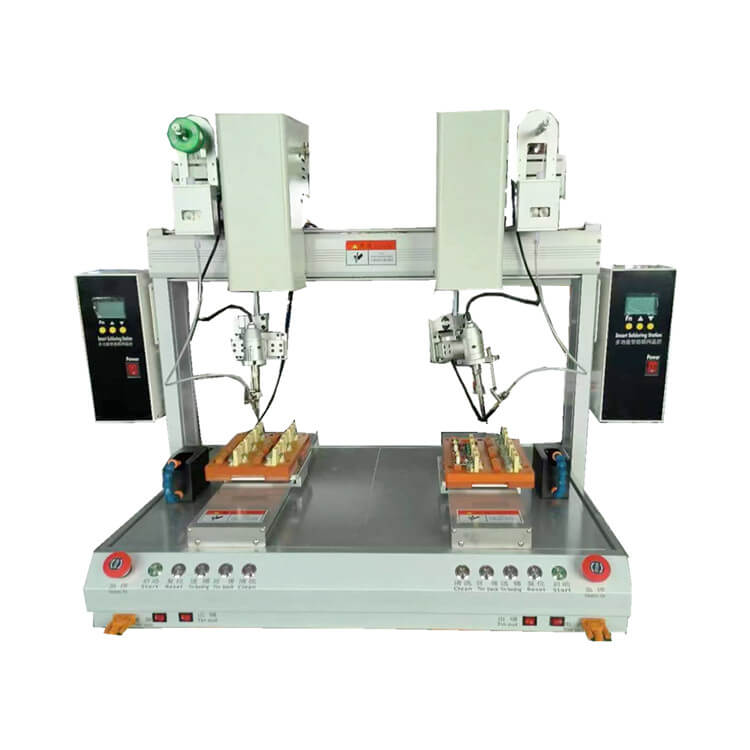
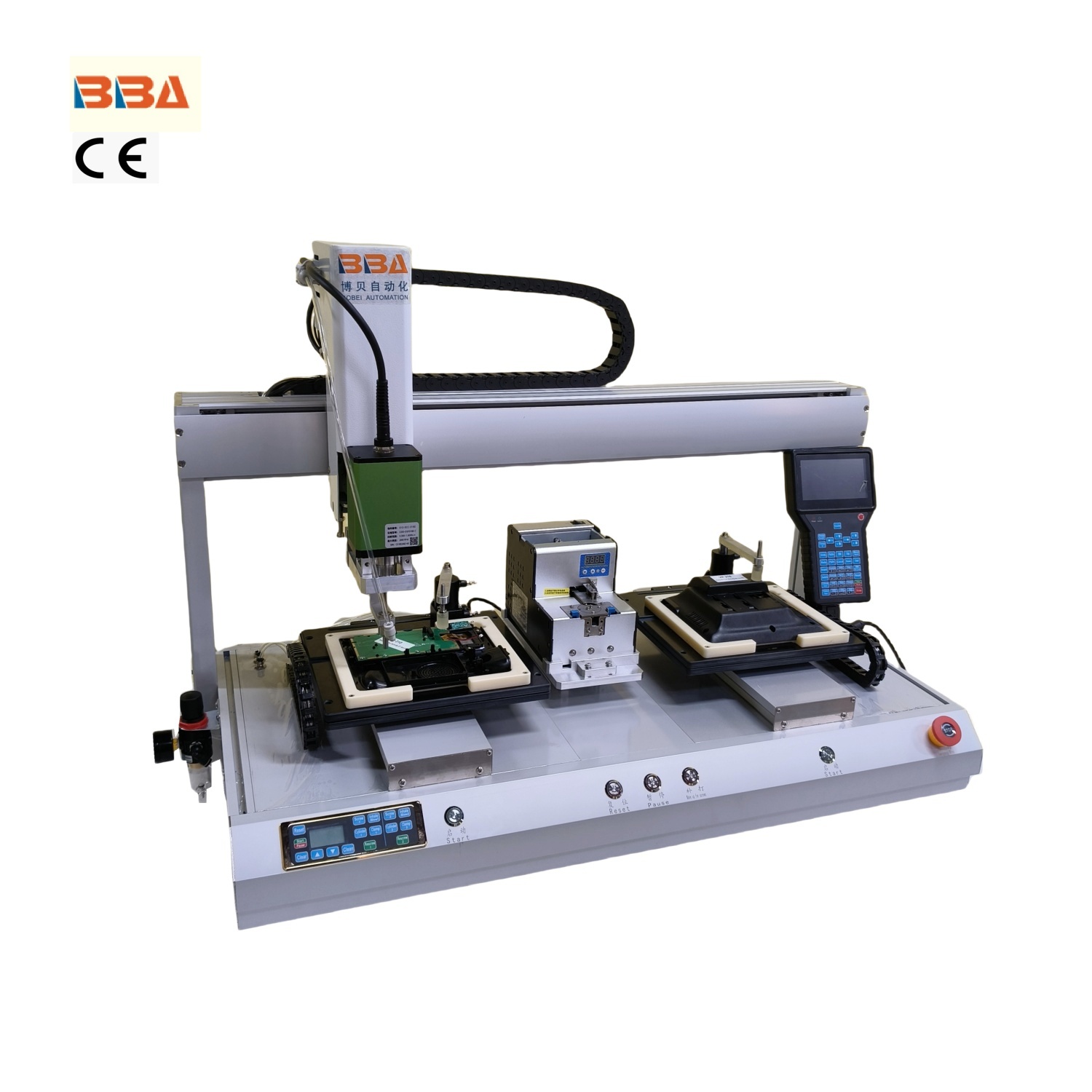
Modern electronics manufacturing faces the challenge of securing increasingly complex PCB assemblies efficiently and reliably. Traditional manual screw driving struggles with dense layouts featuring multiple screw positions, where even minor inconsistencies can compromise structural integrity and electrical connectivity. By automating this critical process, manufacturers achieve precision and repeatability impossible through human operators alone.
Modern robotic systems integrate high-resolution cameras and adaptable algorithms to overcome positioning challenges. Before screw driving initiates, these vision systems automatically scan the PCB surface, recognizing board fiducials within ±0.025mm accuracy. Sophisticated software dynamically maps all screw positions, compensating for board warping or rotational misalignments. This capability is vital for flex circuits or angled fixation points where traditional jigs fail.
Modular servo-electric drivers mounted on multi-axis robots handle diverse screw specifications within a single workstation. Key components include:
Factories overcoming automation hesitations discover how adaptable systems manage intricate scenarios. Tilting drive heads reach screws near tall heat sinks or connectors. Collision-avoidance algorithms recalculate paths when unexpected obstruction is detected during operation. Meanwhile, pressure-sensitive retraction prevents damage to delicate circuits if abnormal resistance occurs – a critical safeguard for expensive assemblies.
Moving from manual stations brings transformative efficiency gains. Automated solutions consistently achieve:
These capabilities fully justify ROI within 48 weeks in mid-volume SMT environments. Production managers particularly value the rapid changeovers between product variants – programmable presets recall exact screw coordinates and torque profiles in seconds.
As PCBs grow denser across sectors like automotive ADAS modules and medical implant controllers, automated screw driving becomes non-negotiable. Manufacturers implementing this technology today establish critical infrastructure for microscopic fasteners below 0.1 grams and exotic materials requiring specialized drive parameters. What appears as mere process automation actually builds the foundation for next-generation electronics where manual intervention ceases to be physically possible.
Automated multi-position screw driving represents the evolution from brute-force automation to intelligent micro-assembly. By mastering positional complexity with adaptable robotics and machine vision, manufacturers transform a traditionally inconsistent process into their structural quality cornerstone. The technology no longer merely installs screws – it engineers reliable electromechanical bonds essential for tomorrow's mission-critical devices.