8618566785362 8618566785362 8618566785362 phoenix08@bbamachine.com
- All
- Product Name
- Product Keyword
- Product Model
- Product Summary
- Product Description
- Multi Field Search

Views: 0 Author: BBA AUTOMATION Publish Time: 2025-09-26 Origin: BBA AUTOMATION


| Product Name | Applicable industries |
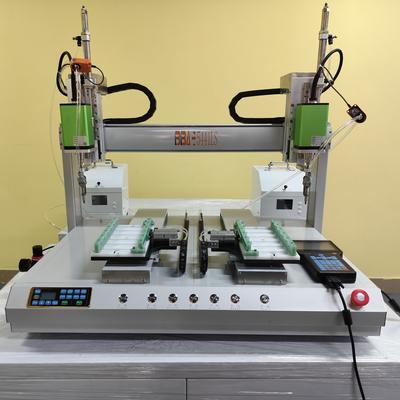
| Screw Locking Robot | Medical Device Manufacturing |
In modern manufacturing, efficiency, precision, and reliability are non-negotiable. Robotic screw driving systems have become essential in assembly lines across industries—from electronics and automotive to consumer goods and medical devices. But what separates a basic automated screwdriver from a truly smart robotic screw driving system? It’s not just about mechanization; it’s about intelligence, adaptability, and seamless integration.
Traditional automated screwdrivers follow pre-programmed paths and torque settings. While functional, they lack the ability to respond to real-time variables. A smart system, however, incorporates advanced sensors and vision systems. These components detect subtle changes in the work environment—such as misaligned parts, surface variations, or even screw defects. By adjusting torque, angle, and depth in real time, the system ensures consistent quality and reduces errors, preventing costly rework or product damage.
Intelligence is rooted in learning. Smart robotic screw driving systems often leverage machine learning algorithms to improve performance over time. They analyze data from each driving cycle—recording success rates, torque patterns, and common issues. This data helps the system predict potential failures, optimize parameters for different materials, and even suggest maintenance schedules. The result is a self-improving tool that boosts productivity and minimizes downtime.
Another key feature of a smart system is connectivity. Integrated with IoT (Internet of Things) capabilities, these systems communicate with central manufacturing execution systems (MES) or enterprise resource planning (ERP) software. Operators receive real-time updates on production metrics, such as units assembled, torque accuracy, and error rates. This data-driven approach enables proactive decision-making, traceability, and comprehensive quality assurance.
Ease of use is critical. Smart systems offer intuitive interfaces, often with graphical programming options or teach-and-repeat functionality. Operators can quickly set up new tasks or modify existing ones without extensive coding knowledge. Moreover, these systems are designed for flexibility—accommodating various screw types, sizes, and applications with minimal retooling. This adaptability is vital for high-mix, low-volume production environments.
Safety is paramount in shared workspaces. Modern smart screw driving robots are equipped with force-limiting mechanisms, collision detection, and safety-rated sensors. Some models are designed for collaborative operation (cobots), working alongside human operators without the need for bulky safety cages. This not only saves floor space but also promotes efficient human-robot teamwork.
A robotic screw driving system becomes “smart” when it transcends simple automation. By combining sensory feedback, adaptive intelligence, connectivity, and user-centric design, it delivers unparalleled accuracy, efficiency, and versatility. In an era where manufacturing demands are constantly evolving, investing in a smart system isn’t just an upgrade—it’s a strategic advantage.