8618566785362 8618566785362 8618566785362 phoenix08@bbamachine.com
- All
- Product Name
- Product Keyword
- Product Model
- Product Summary
- Product Description
- Multi Field Search

Views: 0 Author: BBA AUTOMATION Publish Time: 2025-09-25 Origin: BBA AUTOMATION


| Product Name | Applicable industries |
| Smart Screw Driving Machine | Smart Wearables Production |
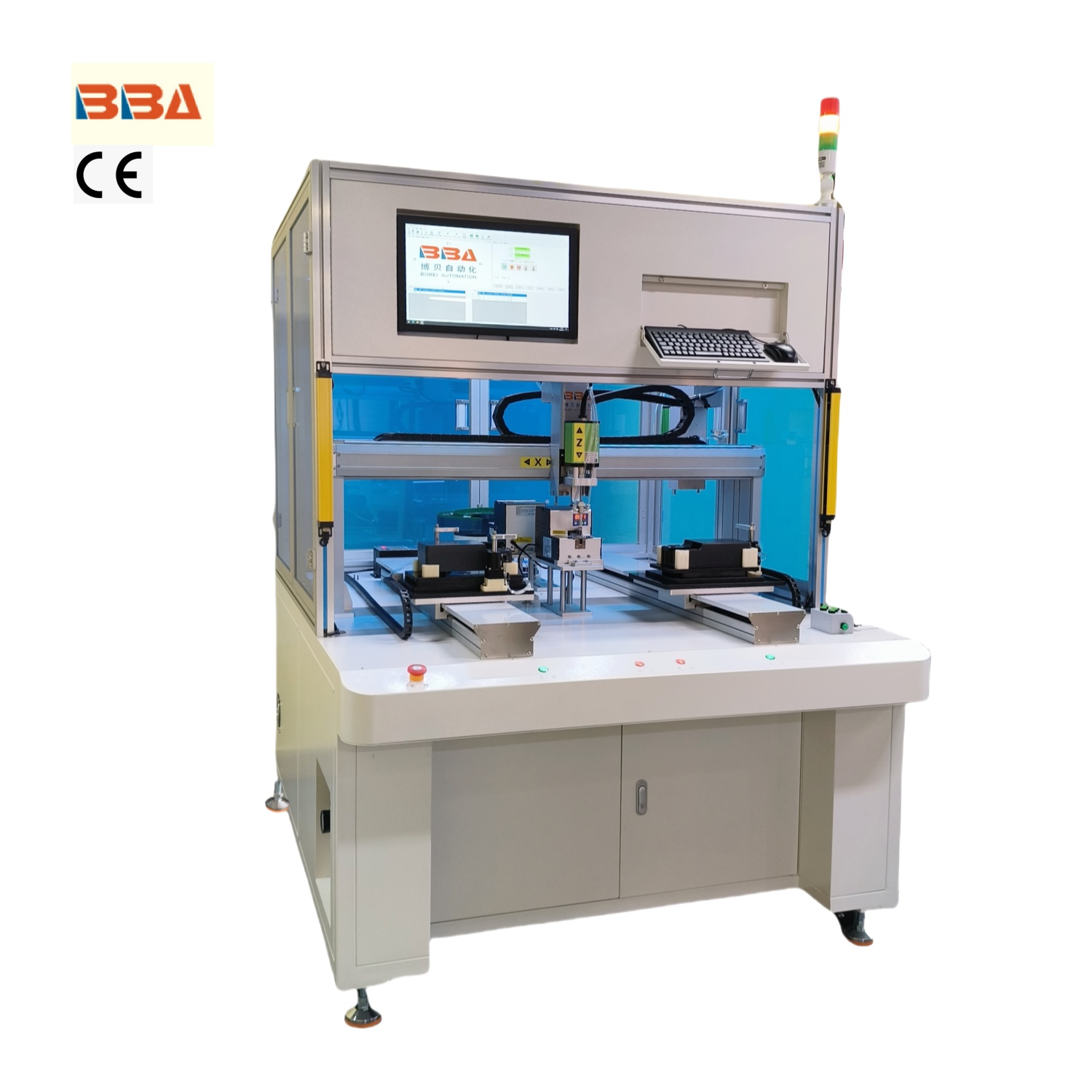
The industrial automation landscape is undergoing a profound transformation, driven by the relentless integration of artificial intelligence. One of the most critical and traditionally manual processes—screw locking and fastening—is now at the forefront of this revolution. AI-driven screw locking systems are moving beyond simple mechanization to become intelligent, adaptive, and predictive solutions that redefine precision, efficiency, and reliability on the production line.
Traditional automated screwdriving systems excel at repetitive tasks but often lack the nuance to handle variability. A slightly warped component, a worn screw, or a subtle misalignment can lead to a defective product or costly line stoppages. This is where AI makes its decisive impact. By leveraging advanced machine learning algorithms and real-time data processing, modern systems can perceive, decide, and adapt on the fly.
These intelligent systems utilize high-resolution vision sensors and force-feedback mechanisms to analyze each fastening point. The AI doesn't just turn a screw; it understands the context. It calculates the exact torque required, detects cross-threading the moment it begins, and compensates for material flex or subtle positional shifts. This results in a unprecedented level of first-pass yield and eliminates the need for costly rework.
The next leap forward is the shift from reactive to predictive quality control. AI-driven screw locking systems are not just executing commands; they are continuously learning from every single operation. They collect vast amounts of process data—torque-angle curves, motor current, vibration signatures, and visual data—to build a sophisticated digital model of the ideal fastening process.
Over time, the system can predict potential failures before they occur. For instance, it can identify a batch of screws with minor manufacturing defects that might lead to head stripping or indicate when a tool tip is beginning to wear out and needs replacement. This predictive capability is a cornerstone of zero-defect manufacturing strategies, drastically reducing downtime and waste while ensuring consistent product quality.
The future of AI-driven automation lies in seamless flexibility. Next-generation screw locking solutions are designed for agile production environments where product lines change frequently. Through AI, a single system can be quickly reprogrammed to handle multiple product variants without lengthy mechanical adjustments or manual recalibration. Simply show the system a new product via a digital blueprint or a sample unit, and the AI algorithms configure the optimal fastening strategy autonomously.
This adaptability is crucial for high-mix, low-volume production, enabling manufacturers to respond swiftly to market demands without sacrificing speed or quality. The production line becomes a dynamic, responsive system rather than a static sequence of machines.
Looking forward, we can anticipate even greater autonomy. AI systems will evolve to fully self-optimize their performance parameters in real-time, seeking the perfect balance between cycle time, energy consumption, and tool wear. Furthermore, these systems will not operate in isolation. They will be integral components of a connected smart factory, sharing data with other machines and central production control systems.
This creates a holistic feedback loop where insights from the fastening process inform broader production decisions, from supply chain management (e.g., flagging consistent issues with a specific component supplier) to predictive maintenance schedules for entire assembly cells.
The integration of AI into screw locking is more than an incremental upgrade; it is a fundamental reimagining of the process. It brings us closer to the vision of fully autonomous, lights-out manufacturing facilities where quality is inherent, efficiency is maximized, and human operators are empowered to focus on higher-level innovation and oversight. The next chapter in automation is intelligent, and it is being written one perfectly fastened screw at a time.