8618566785362 8618566785362 8618566785362 phoenix08@bbamachine.com
- All
- Product Name
- Product Keyword
- Product Model
- Product Summary
- Product Description
- Multi Field Search

Views: 0 Author: BBA AUTOMATION Publish Time: 2025-09-26 Origin: BBA AUTOMATION


In the rapidly evolving landscape of industrial manufacturing, precision, consistency, and efficiency are paramount. One critical process that embodies these requirements is screw fastening. Traditional methods often fall short, leading to product defects, assembly line downtime, and increased costs. This is where advanced servo-based screw tightening solutions come into play, representing a significant leap forward in assembly technology.
Servo-based screw tightening systems utilize sophisticated electric servo motors to control every aspect of the fastening process with unparalleled accuracy. Unlike older pneumatic or DC tooling, these intelligent systems provide complete control over torque, angle, and speed. This enables a data-driven approach to assembly, ensuring every screw is fastened to exact specifications, every single time.
The core advantage of a servo-driven system lies in its exceptional precision. The integrated servo motor allows for programmable control of the tightening parameters. Operators can define exact torque values with minimal deviation and specify precise angles of rotation. This eliminates the common issues of over-tightening, which can strip threads or damage components, and under-tightening, which can lead to loose connections and product failure. The result is a drastic reduction in assembly errors and a substantial improvement in final product quality and reliability.
Modern manufacturing demands not only quality but also verifiable data. Servo-based tightening solutions are inherently intelligent. They collect and log data for every fastening operation in real-time. This creates a complete digital record, including the achieved torque, rotation angle, and time stamp for each screw. This data is crucial for traceability, allowing manufacturers to prove compliance with industry standards and quickly trace the root cause of any assembly-related issues. Furthermore, these systems can be seamlessly integrated into factory networks for centralized monitoring and process optimization.
Beyond quality, these systems drive significant gains in productivity. Their high-speed capabilities allow for faster cycle times compared to traditional tools. The consistency of the automated process reduces the need for manual rework or quality checks, freeing up valuable operator time. Additionally, servo motors are highly energy-efficient, consuming power only during the actual tightening cycle, unlike pneumatic systems that constantly leak compressed air. This leads to lower operational costs and a reduced environmental footprint.
These advanced solutions are transforming assembly lines across various demanding industries.
The benefits are clear: higher quality products, reduced scrap and rework, full process traceability, and lower total cost of ownership.
Servo-based screw tightening is more than just an improvement on old tools; it is a fundamental shift towards Industry 4.0. As smart factories become the norm, these systems serve as vital data points on the production floor. The future will see even tighter integration with manufacturing execution systems (MES) and the industrial internet of things (IIoT), enabling predictive maintenance and fully adaptive, self-optimizing assembly cells.
For any manufacturer looking to improve their assembly process, investing in servo-based technology is a strategic move towards greater precision, efficiency, and intelligence. It is an essential step in building the reliable, high-quality products of tomorrow.
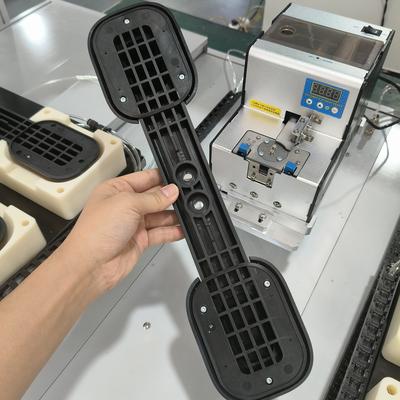
| Product Name | Applicable industries |
| Auto Screwdriver Machine | Smartphone Manufacturing |