8618566785362 8618566785362 8618566785362 phoenix08@bbamachine.com
- All
- Product Name
- Product Keyword
- Product Model
- Product Summary
- Product Description
- Multi Field Search

Views: 0 Author: BBA AUTOMATION Publish Time: 2025-10-08 Origin: BBA AUTOMATION


In today’s competitive manufacturing landscape, contract manufacturers are increasingly turning to automation to enhance precision, efficiency, and scalability. Among the most impactful technologies adopted in this shift are screw assembly robots. These automated systems are revolutionizing how assembly tasks are performed, offering significant advantages in speed, accuracy, and consistency.
Screw assembly robots are designed to handle the repetitive task of driving screws with unparalleled reliability. Unlike manual assembly, which is prone to errors such as cross-threading, over-torquing, or missing screws, robots perform this operation with exacting precision every time. This is particularly critical in industries like electronics, automotive, and medical devices, where product quality and safety are non-negotiable.
One of the primary benefits these robots provide is increased throughput. Automated screwdriving systems can operate continuously without fatigue, dramatically reducing cycle times and enabling production lines to achieve higher output levels. This allows contract manufacturers to meet tight deadlines and manage large order volumes without compromising on quality.
Moreover, screw assembly robots contribute to cost reduction over time. While the initial investment may be significant, the long-term savings in labor costs, reduced rework, and minimized material waste offer a strong return on investment. These systems also free up human workers to focus on more complex, value-added tasks, thereby optimizing overall productivity.
Flexibility is another key advantage. Modern screw assembly robots can be programmed to handle multiple product variants quickly, making them ideal for high-mix production environments. With easy-to-change software settings and adaptable end-of-arm tooling, manufacturers can switch between different screw types, sizes, and torque requirements with minimal downtime.
Integration with existing production systems is seamless. Advanced vision systems and sensors ensure that robots can identify and align screws accurately, even in challenging orientations. Many systems also feature real-time monitoring and data collection, enabling manufacturers to track performance, identify bottlenecks, and maintain comprehensive quality records for compliance purposes.
As the demand for smarter manufacturing grows, screw assembly robots are becoming an essential tool for contract manufacturers aiming to stay ahead. They not only improve operational efficiency but also enhance product reliability and customer satisfaction. By adopting this technology, manufacturers can build a reputation for excellence and secure a stronger position in a rapidly evolving market.
In conclusion, the use of screw assembly robots is no longer a luxury but a necessity for contract manufacturers seeking to improve quality, increase output, and reduce costs. This technology represents a fundamental step toward the future of industrial automation, where precision and efficiency drive success.
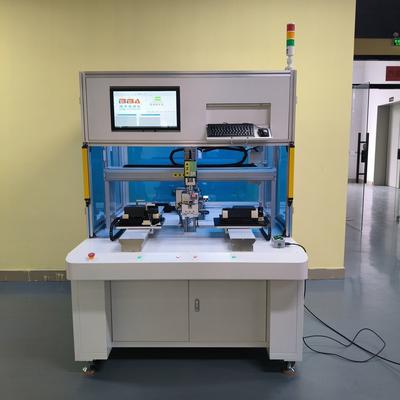
| Product Name | Applicable industries |
| CNC Screw Fastener | Automotive Electronics Assembly |