8618566785362 8618566785362 8618566785362 phoenix08@bbamachine.com
- All
- Product Name
- Product Keyword
- Product Model
- Product Summary
- Product Description
- Multi Field Search

Views: 0 Author: BBA AUTOMATION Publish Time: 2025-09-20 Origin: BBA AUTOMATION


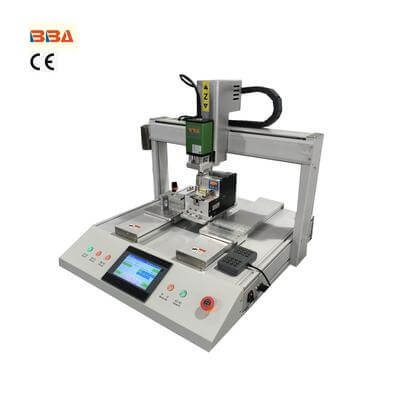
The landscape of industrial automation is evolving at an unprecedented pace, and at the heart of this transformation are robotics and fastening automation technologies. These innovations are not only redefining manufacturing processes but also setting new standards for efficiency, precision, and scalability. As we look toward the future, it is clear that the integration of advanced robotics with intelligent fastening systems will play a pivotal role in shaping the next generation of industrial automation.
Robotics has already made significant strides in various industries, from automotive to electronics, by performing repetitive tasks with unmatched accuracy and speed. However, the future lies in the synergy between robotics and fastening automation. Fastening, though seemingly simple, is a critical step in assembly lines. Traditional methods often involve manual labor, which can be time-consuming and prone to errors. With the advent of automated fastening solutions, manufacturers can now achieve consistent quality, reduce operational costs, and enhance overall productivity.
One of the most exciting developments is the emergence of collaborative robots, or cobots, designed to work alongside human operators. These cobots are equipped with sophisticated sensors and vision systems that allow them to handle complex fastening tasks with minimal human intervention. For instance, they can adapt to variations in part sizes or orientations, ensuring that every fastener is applied correctly. This level of flexibility is crucial for modern manufacturing, where customisation and quick changeovers are increasingly in demand.
Moreover, the integration of Internet of Things (IoT) technologies with fastening automation is set to revolutionise the industry. Smart fastening tools can now collect and analyse data in real-time, providing valuable insights into the assembly process. This data-driven approach enables predictive maintenance, reduces downtime, and ensures that every product meets stringent quality standards. For example, if a fastener is under-torqued or over-torqued, the system can immediately flag the issue and make necessary adjustments, preventing potential defects down the line.
Another key trend is the use of artificial intelligence (AI) and machine learning in robotics. AI algorithms can optimise fastening sequences, predict potential failures, and even learn from past operations to improve future performance. This not only enhances efficiency but also allows systems to become more autonomous over time. Imagine a robotic cell that can self-calibrate, self-diagnose, and continuously refine its processes without human input—this is the direction in which the industry is heading.
As we move forward, sustainability will also be a major driver for innovation. Energy-efficient robots and fastening systems that minimise waste and reduce environmental impact will become increasingly important. For instance, electric fastening tools consume less power compared to their pneumatic counterparts, while advanced control systems ensure that materials are used optimally. This focus on sustainability aligns with global efforts to create greener manufacturing practices.
In conclusion, the future of robotics and fastening automation is bright and full of potential. By leveraging technologies such as cobots, IoT, AI, and sustainable design, manufacturers can build smarter, more responsive, and more efficient production environments. These advancements will not only streamline operations but also open doors to new possibilities, from mass customisation to fully autonomous factories. As industry leaders, we are committed to driving this evolution and helping our customers stay ahead in a competitive market.
| Product Name | Applicable industries |
| Inline Screw Locking System | Medical Device Manufacturing |